Why male and female pattern hair loss can look different
Both men and women develop pattern loss. Differences in distribution do not make women’s hair loss trivial or automatically reversible.

On this page
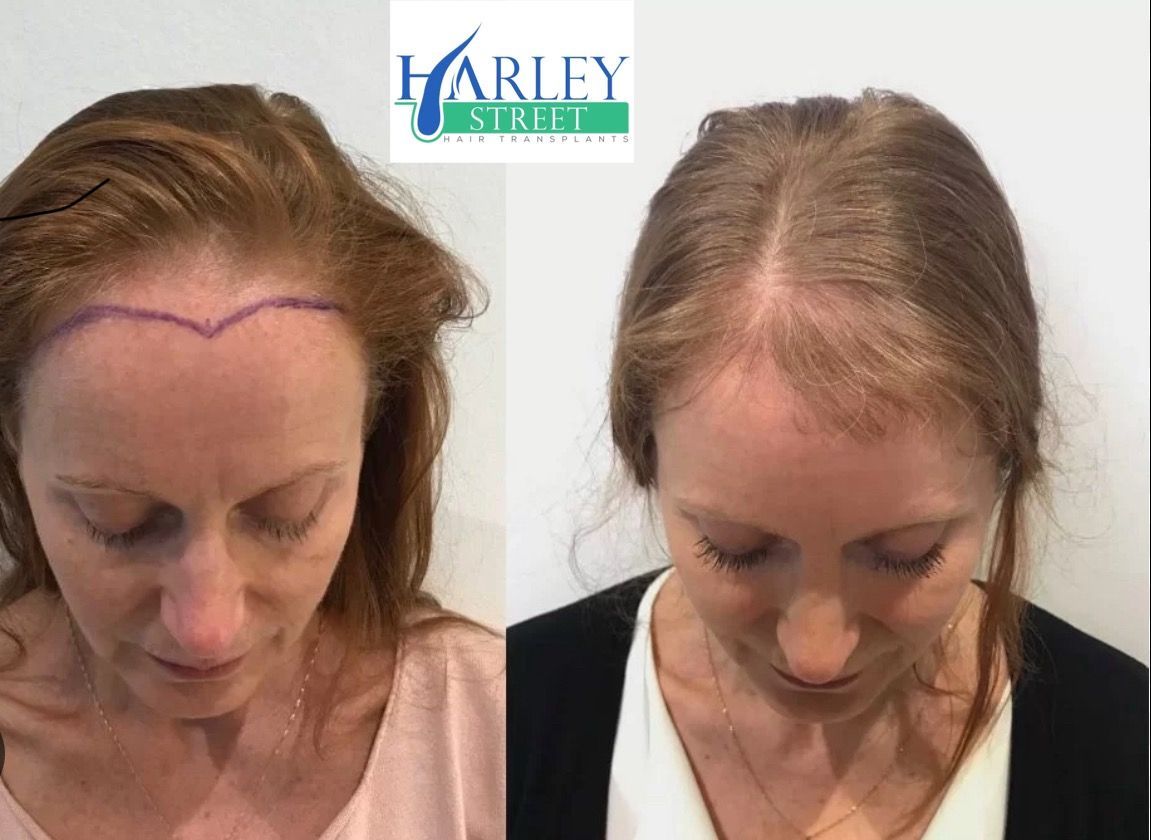
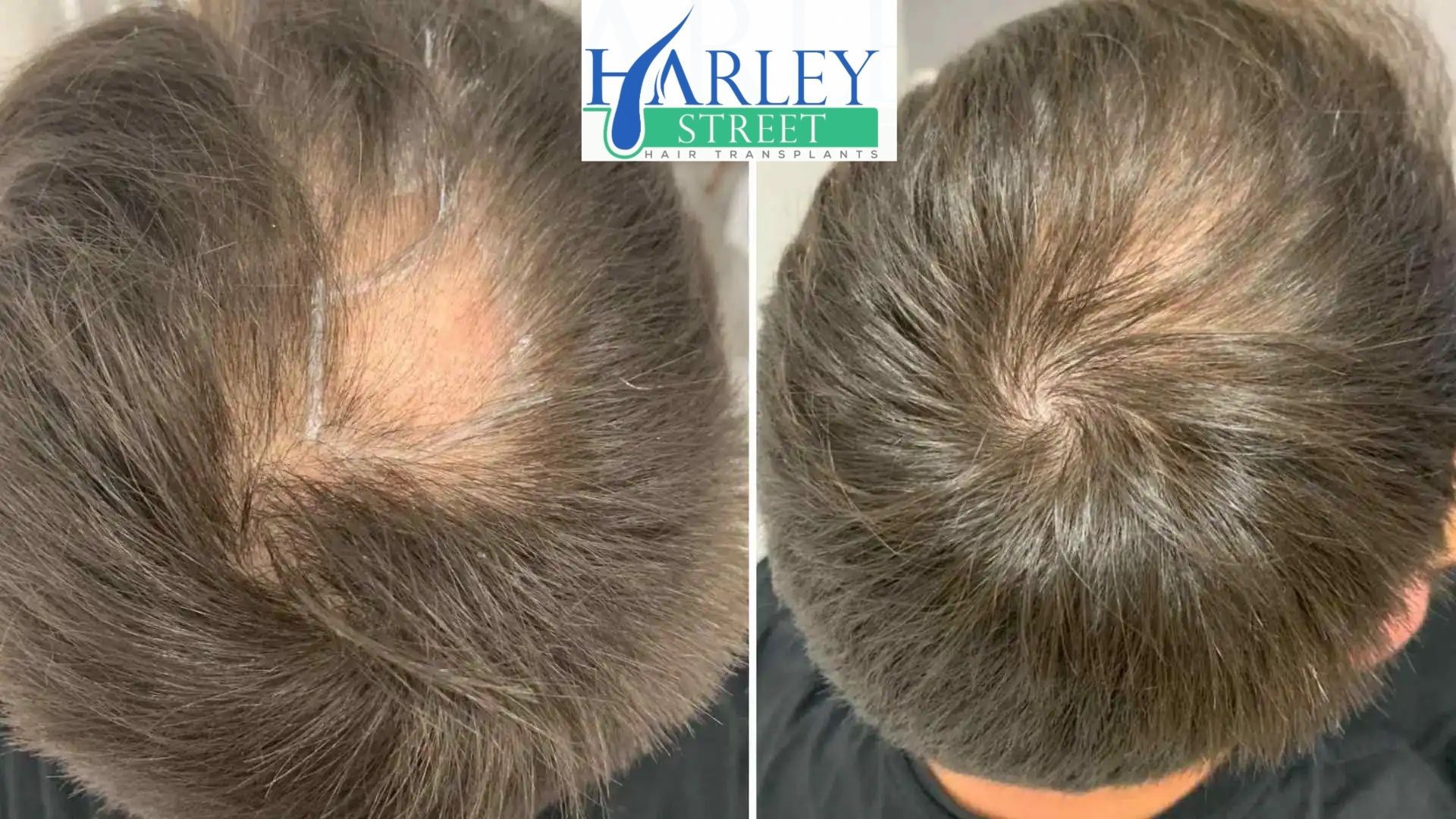
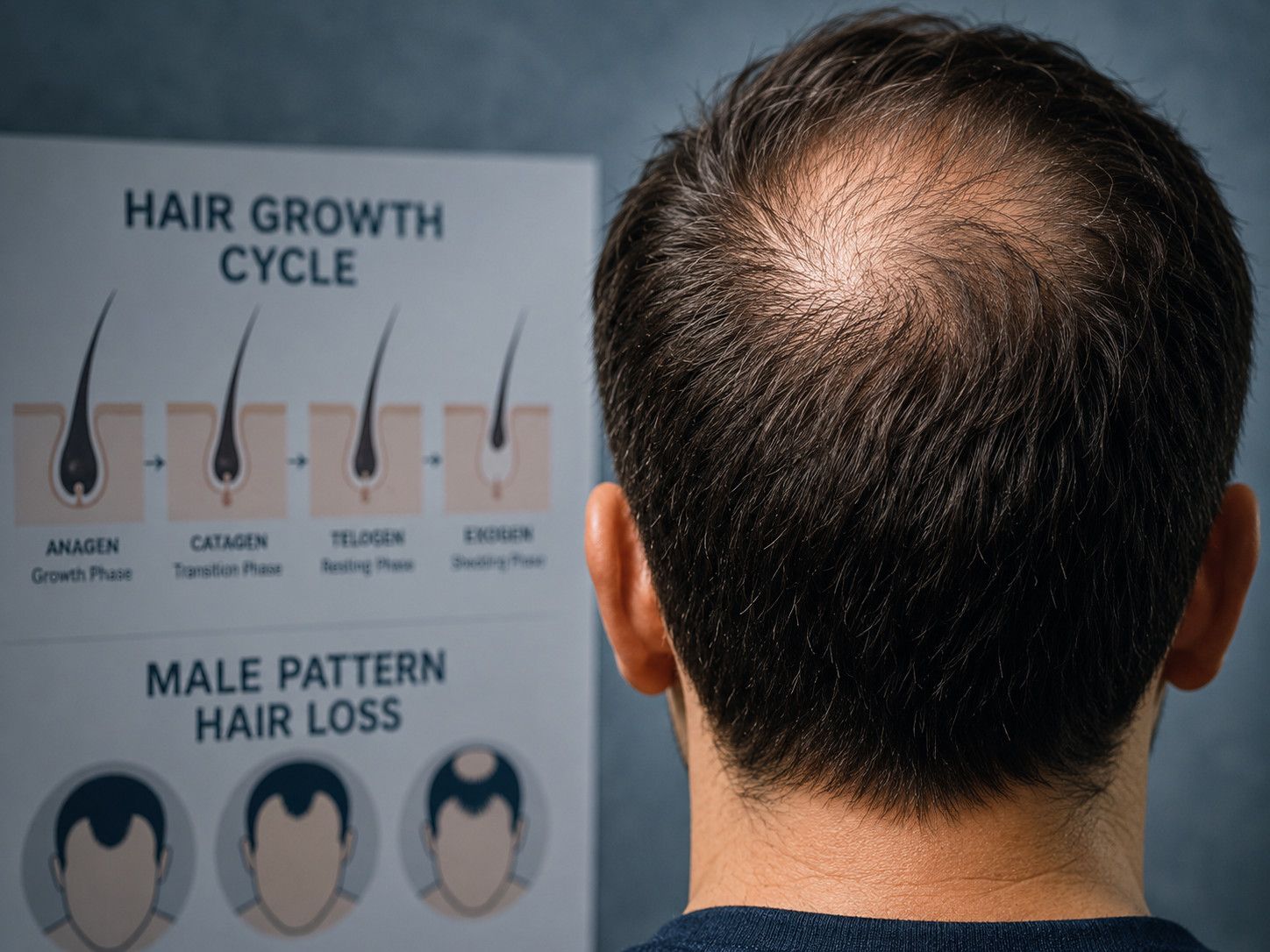
Men often develop more obvious temple recession and crown loss, while women commonly notice thinning over the top of the scalp or a widening parting. These are common patterns, not rules for every person. Women can have substantial, persistent hair loss, and men can have causes other than inherited pattern loss.
The shared process: follicular miniaturisation
In pattern hair loss, affected follicles gradually produce finer, shorter hairs. Genetic susceptibility and hormonal influences are involved, but the relationship is not identical in every patient. A visible pattern does not, by itself, establish a hormone abnormality.
The British Association of Dermatologists provides separate information on male pattern hair loss and female pattern hair loss. These explain why the diagnosis and treatment discussion need to fit the individual.
Appearance affects what people notice
A receding frontal outline can be obvious in photographs, while diffuse thinning may initially be concealed by longer hair or a different parting. Styling choices therefore affect how noticeable the loss is, as well as the underlying distribution.
A smaller visible change can still be distressing. Conversely, someone with extensive loss may not want cosmetic treatment. The need for support or a treatment discussion should not be decided from the number of centimetres of visible scalp.
Why simple comparisons of percentages can mislead
Prevalence figures depend on the ages studied, the population and how hair loss is defined. A statistic for men of all ages cannot be meaningfully compared with a figure for women at one age without explaining those differences.
For a reader deciding what to do, the more useful questions are whether the loss is progressing, what is causing it and whether treatment would be worthwhile. Population averages do not predict an individual's final hairline or treatment response.
Other causes can affect anyone
Illness, major weight change, medicines and scalp conditions can affect hair in men and women. Childbirth is a particular context for temporary shedding, but not all hair loss in women is postpartum, nutritional or stress-related.
Scarring alopecias can permanently damage follicles. Alopecia areata is an autoimmune condition with a variable course. A healthy diet or reduced stress should not be promised to reverse all of these problems. Our alopecia guide explains the differences.
Treatment should follow the diagnosis
Medication suitability varies with the condition, medical history and reproductive circumstances. A treatment used for one group cannot automatically be recommended to another. Discuss pregnancy and breastfeeding where relevant and follow the specific prescribing or product advice.
Transplantation requires a suitable donor region. Diffuse thinning at the back and sides can limit what is available, regardless of sex. The Ludwig and Norwood scales help describe patterns but cannot decide surgical suitability alone.
Questions and answers
Is female pattern hair loss always temporary?
No. It can be progressive and persistent. The cause and options should be assessed rather than attributed automatically to diet or stress.
Does male pattern baldness mean unusually high testosterone?
Not necessarily. Follicular susceptibility matters, and a hairline does not provide a hormone measurement.
Can women have a hair transplant?
Some can, when the diagnosis, donor supply, scalp health and expectations are suitable. An individual assessment is necessary.