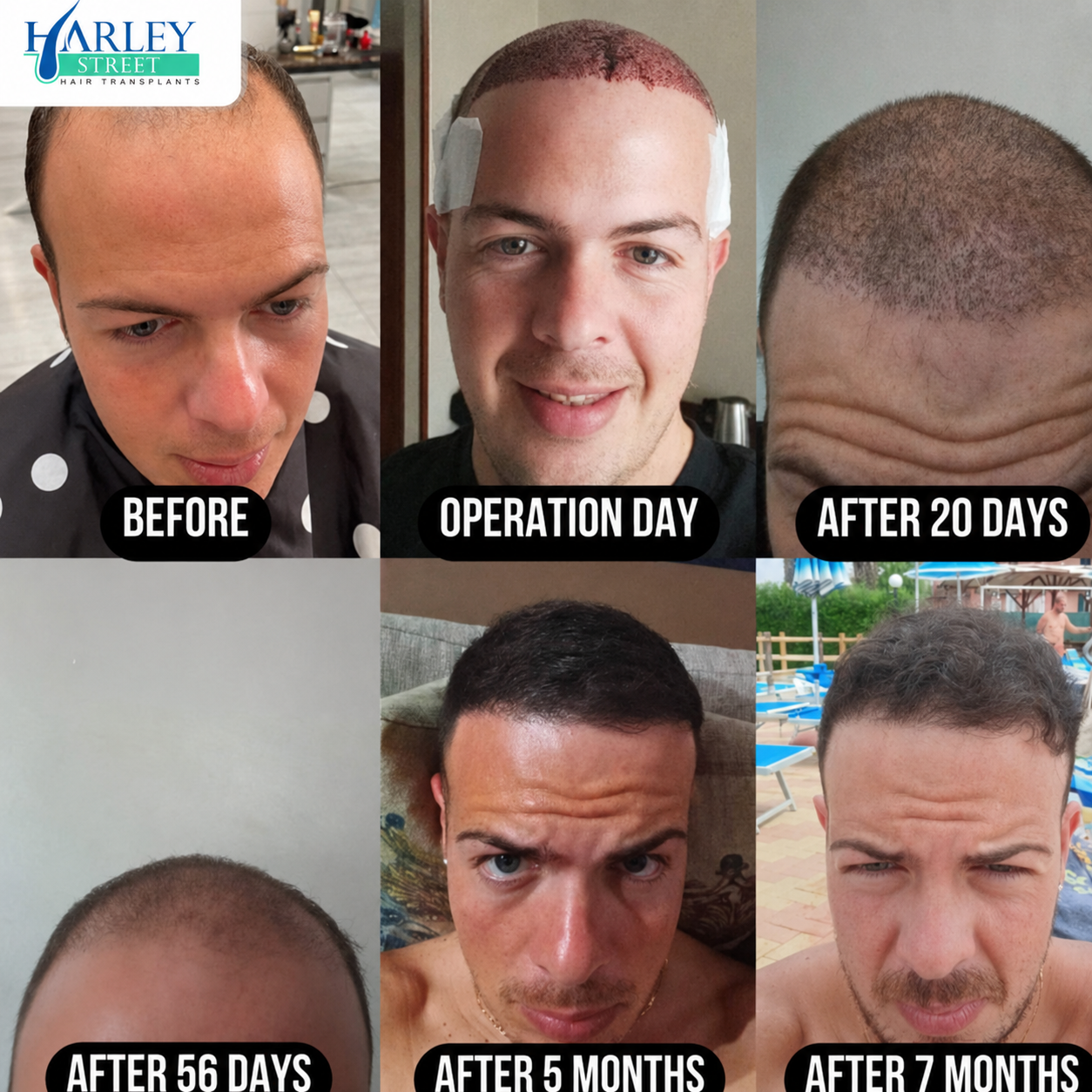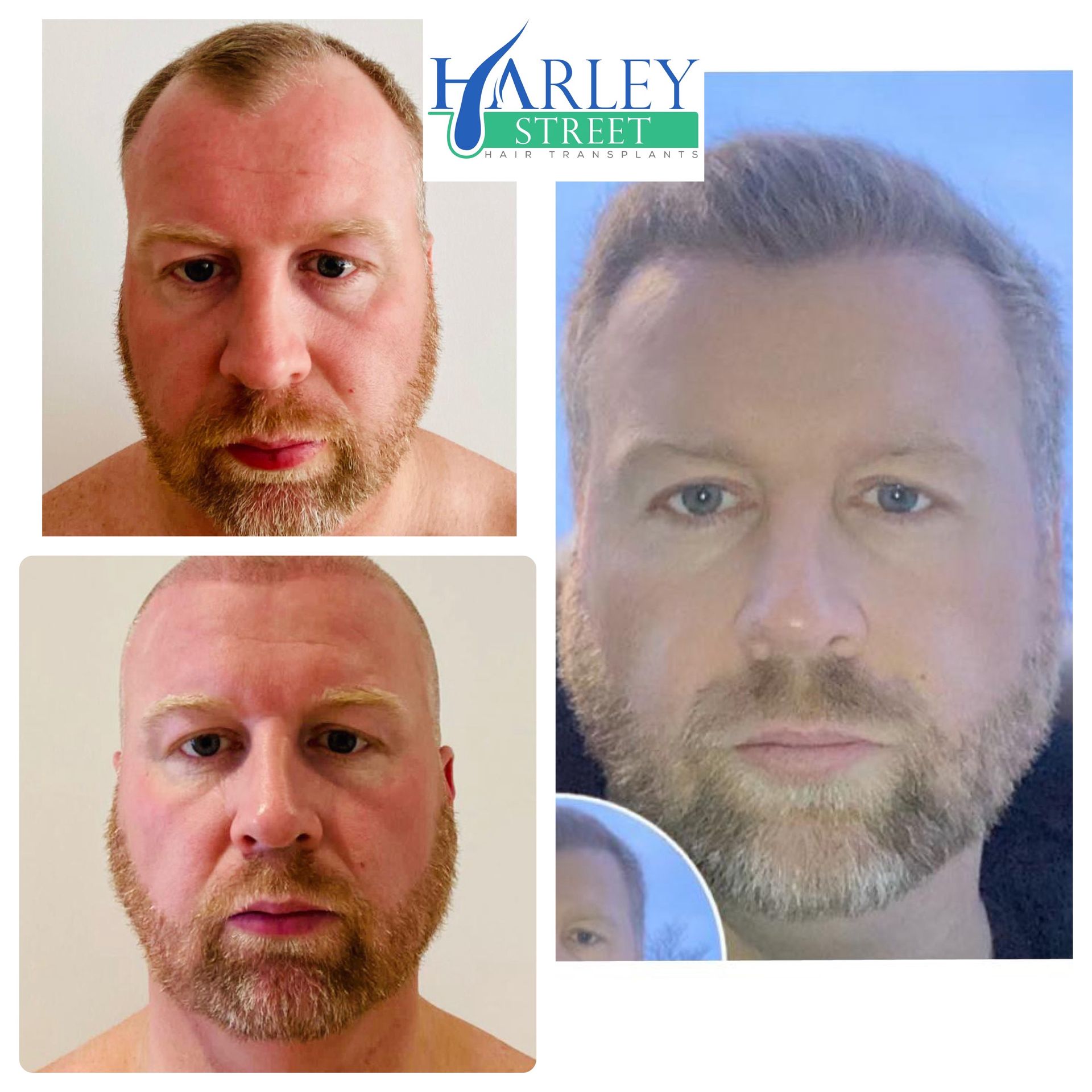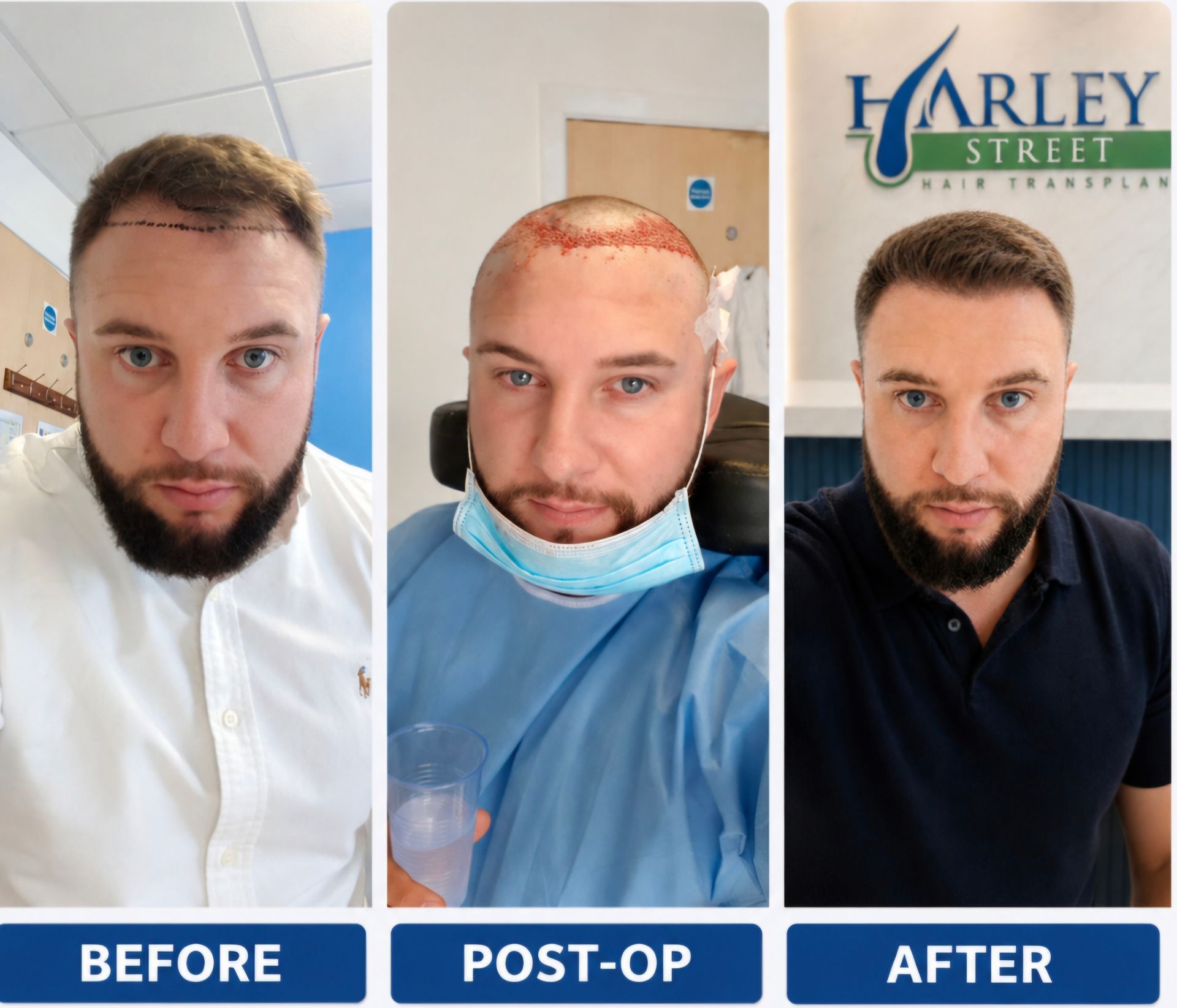
Consultation and Hair-Loss Assessment
The frontal recession, temples, scalp condition, medical history, previous treatment and likely future progression are reviewed.
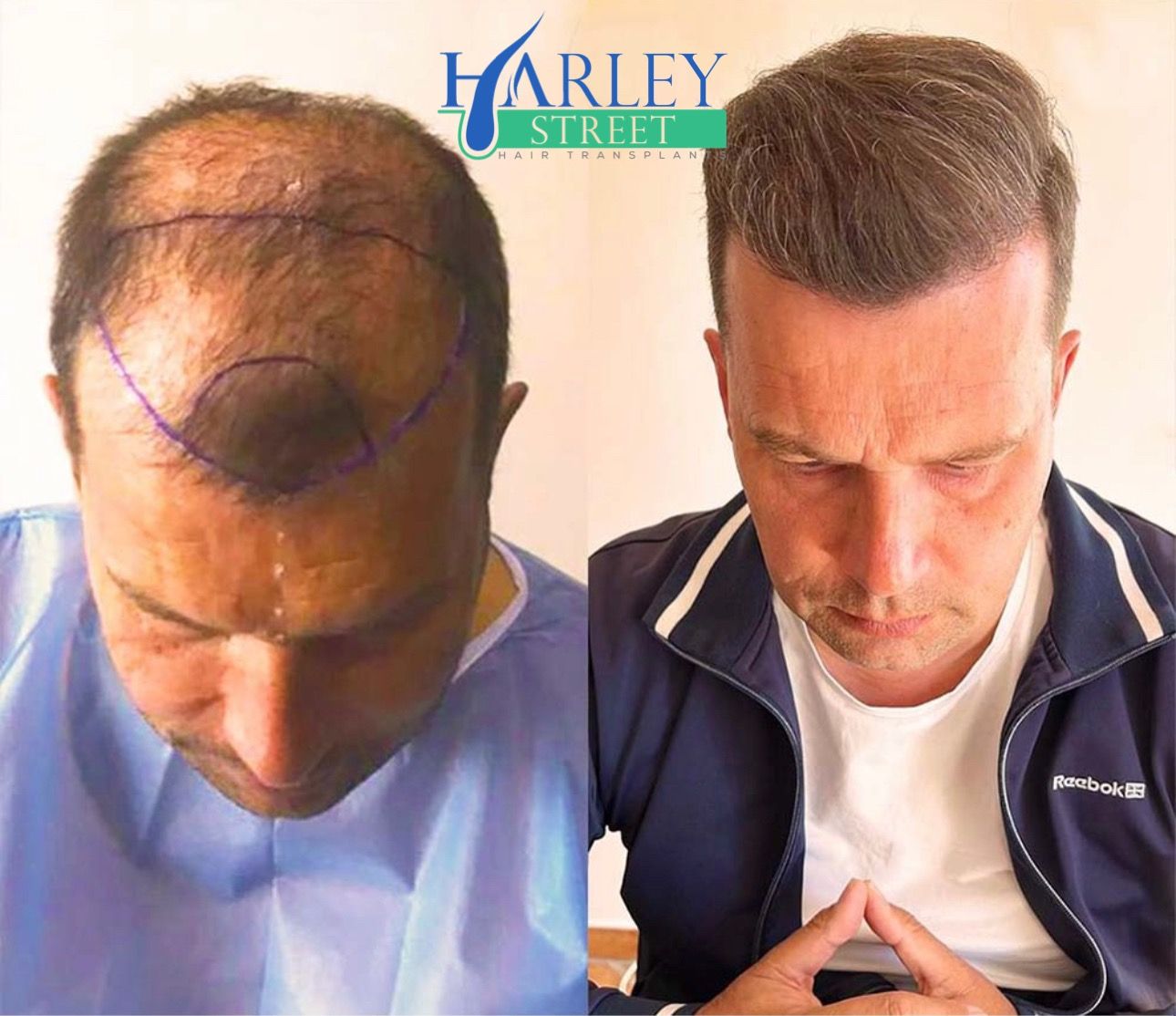
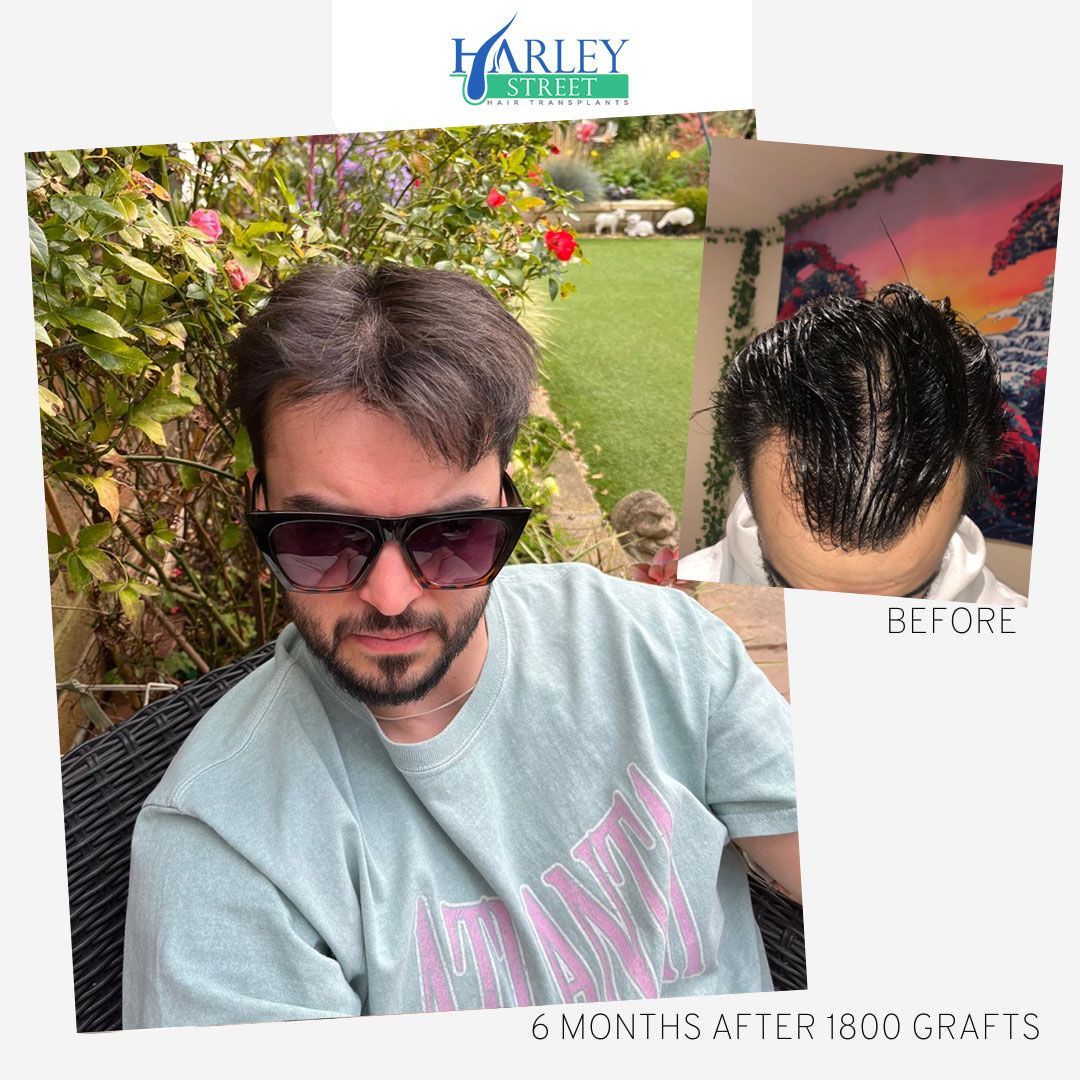
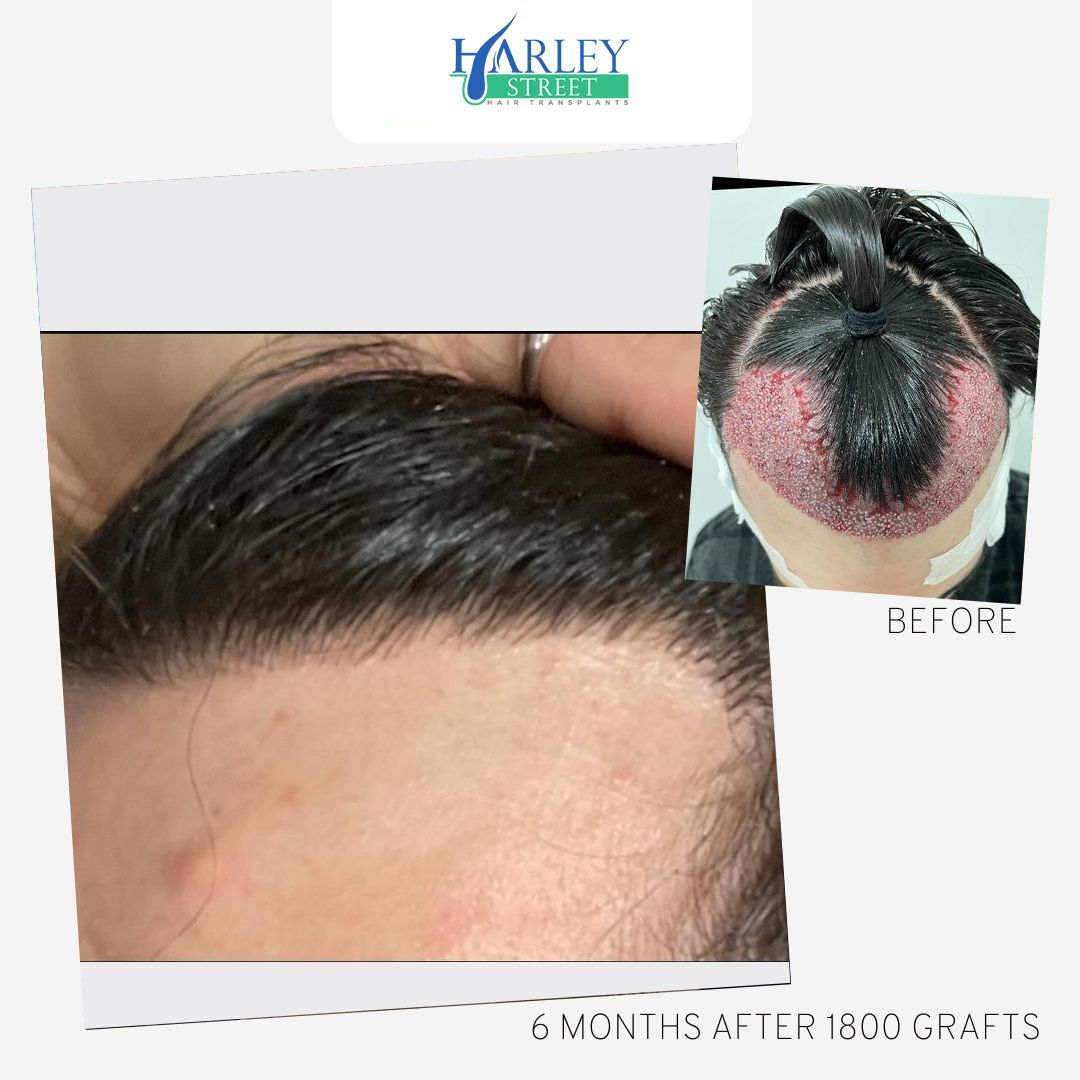
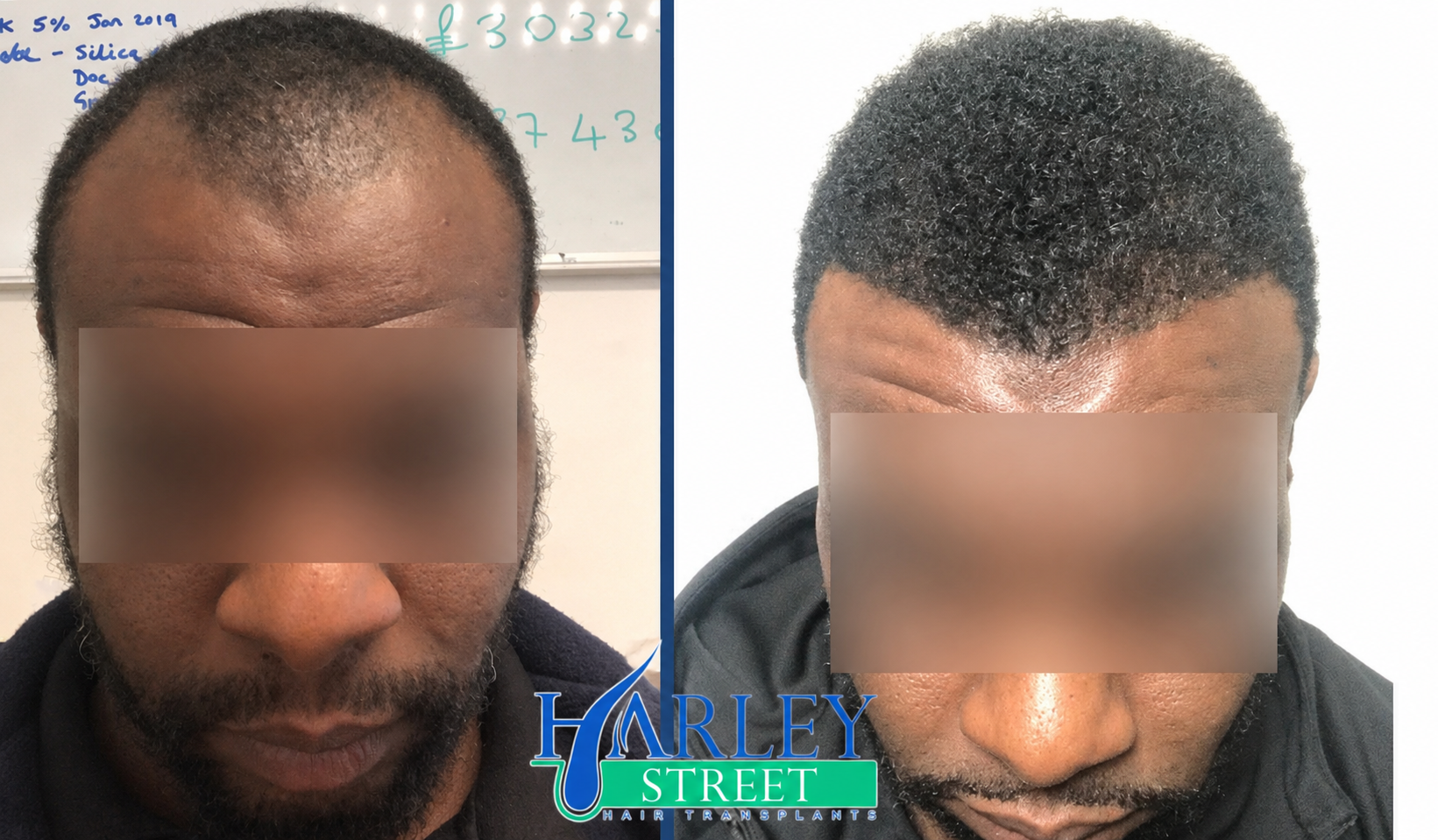
A hairline transplant can help restore a receding, uneven or naturally high frontal hairline and improve thinning around the temples and frontal corners.
At your consultation at 22a Harley Street, London W1G 9PF, we assess your frontal hairline and temples together. The proposed height and shape need to suit your face, existing hair, donor supply and possible future thinning. Guide prices start from £3,499, subject to assessment.


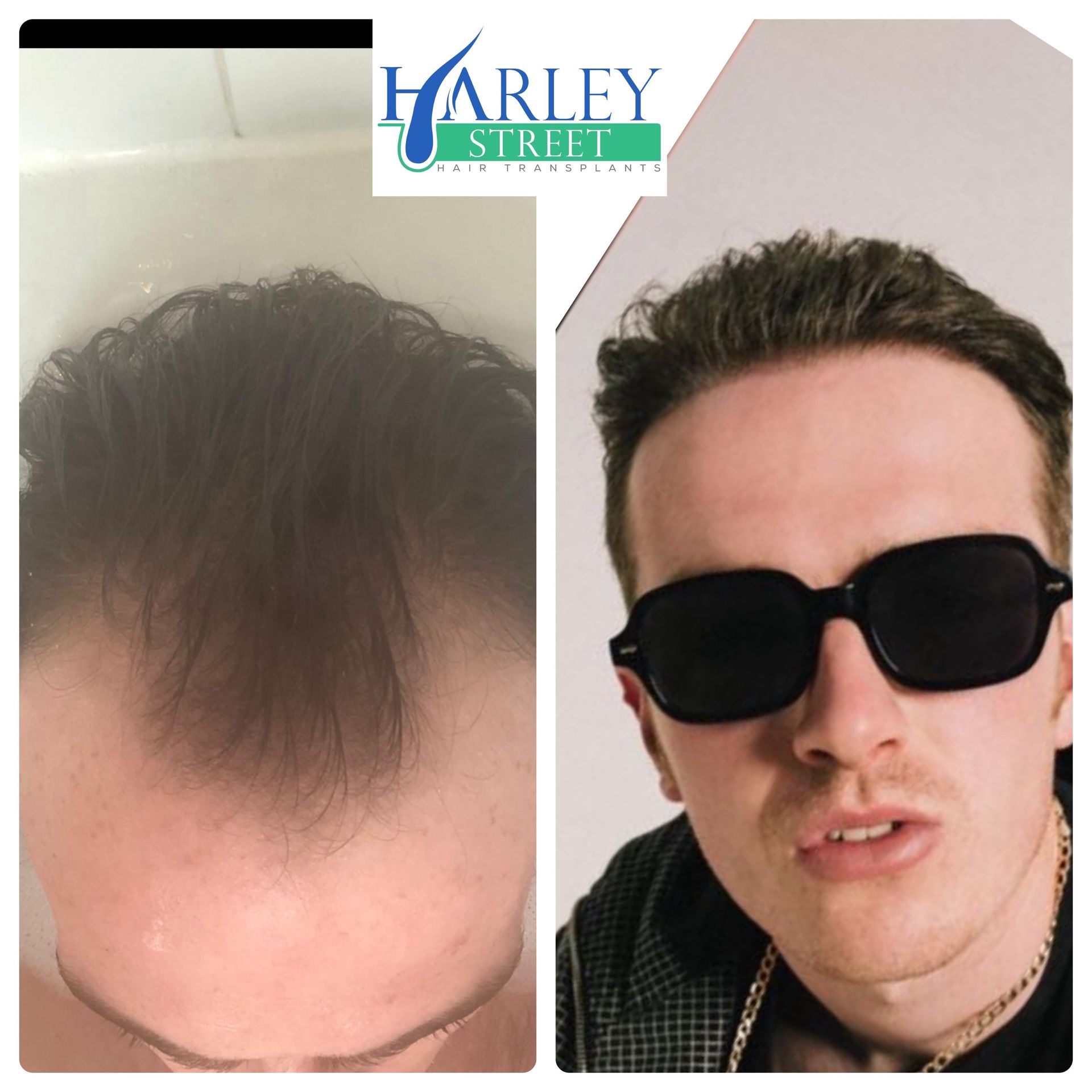
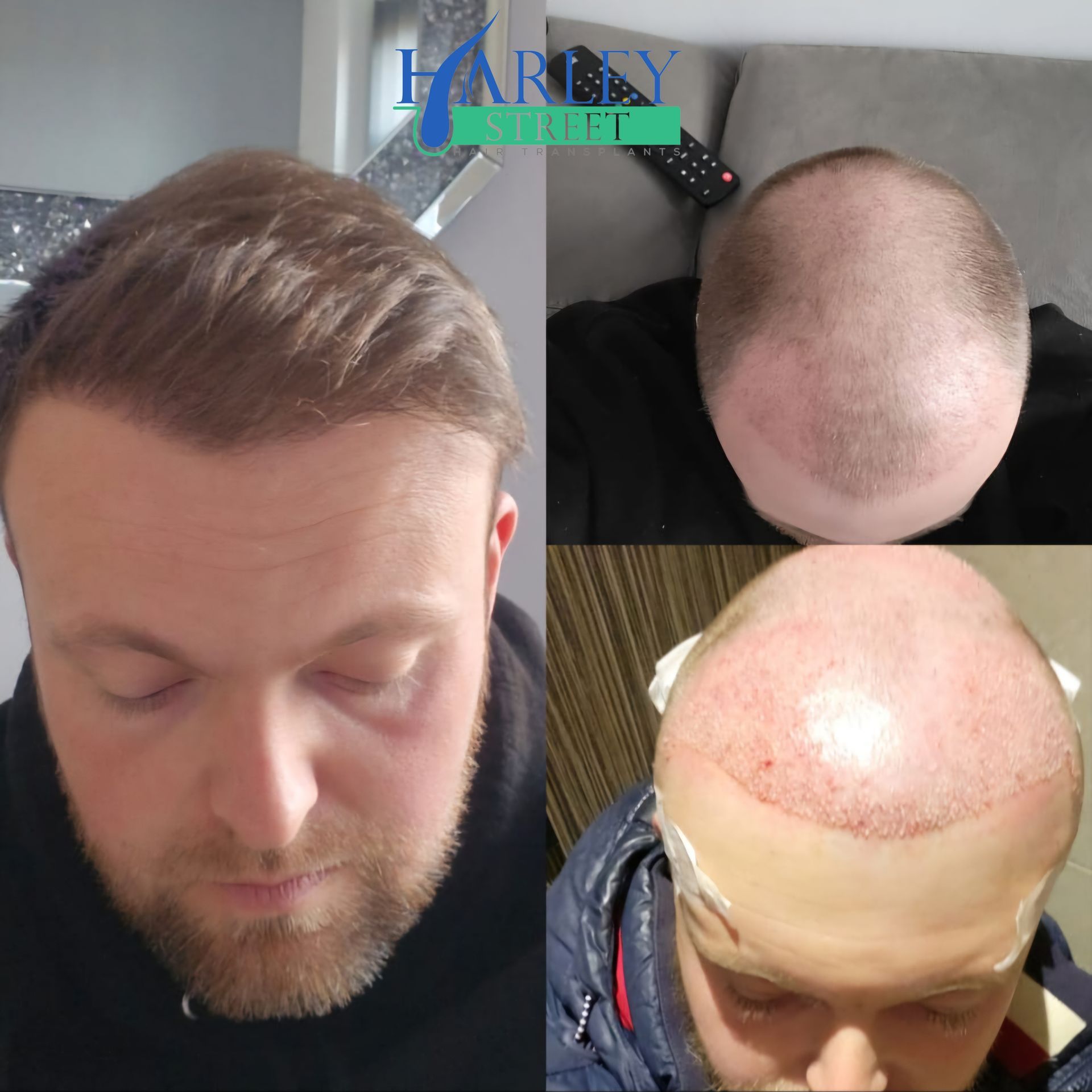
A hairline transplant moves suitable follicular-unit grafts from a donor area at the back or sides of the scalp into the frontal hairline and, where appropriate, the temples.
The objective is not simply to create the lowest possible hairline. A suitable design should frame the face naturally while protecting donor hair for possible future thinning.
Single-hair grafts are particularly important along the front edge. Larger follicular units may be placed behind them to support density without creating a harsh or artificial-looking line.
Read more about temple hairline restoration and donor-area assessment .
Treatment is planned around the frontal recession pattern, temple shape, donor supply, hair characteristics and long-term hair-loss risk.
The frontal recession, temples, scalp condition, medical history, previous treatment and likely future progression are reviewed.
Donor density, hair calibre, texture, safe graft availability and signs of miniaturisation are assessed.
The proposed height, frontal shape, corners and temple transitions are planned while you are upright.
Follicular-unit grafts are obtained using the agreed FUE, DHI donor process or selected FUT method.
Single-hair grafts are placed along the front edge with carefully controlled angle, direction, spacing and irregularity.
Personal instructions cover washing, sleeping, swelling, scabbing, shedding, exercise and gradual hair growth.
Suitability depends on the cause and stability of recession, donor strength, scalp health, medical history and whether the proposed design can be supported safely.
A conservative position can remain more natural if surrounding native hair continues to recede.
Natural hairlines are not perfectly straight. Small variations help prevent a sharply drawn appearance.
Fine single-hair follicular units are normally selected for the visible leading edge.
Frontal and temple hairs require shallow, changing placement angles that follow the surrounding pattern.
Density should provide useful coverage without exhausting the donor supply needed for future treatment.
The frontal shape, temple corners and overall width should suit the patient’s facial proportions.
The appropriate method depends on donor quality, treatment area, hair type, graft requirement and the planned approach to extraction and placement.
| Method | How it works | Hairline planning point |
|---|---|---|
| FUE | Individual follicular-unit grafts are removed from the donor area and placed into planned recipient sites. | Allows individual graft selection and avoids a linear strip scar, although small extraction marks remain. |
| DHI | FUE-style donor extraction is combined with placement using an implanter device. | May provide detailed placement control for selected cases but is not automatically better for every hairline. |
| Selected FUT | A strip of donor scalp is removed and divided into individual follicular-unit grafts. | Can provide grafts for selected cases but leaves a permanent linear donor scar. |
| PRP Support | Platelet-rich plasma may be discussed for selected surrounding thinning areas where active follicles remain. | PRP does not recreate a missing frontal hairline or replace absent follicles. |
Early recovery may include redness, tenderness, swelling, small scabs and temporary visibility of both donor and recipient areas.
The newly placed frontal grafts must be protected from rubbing, pressure and accidental contact while they settle.
Hairline transplant guide prices currently start from £3,499. The final cost depends on the treatment area, graft requirement, donor quality, selected method and case complexity.
A small temple or frontal-corner procedure requires different planning from a wider hairline-lowering or frontal-third restoration.
A personalised written quotation should follow consultation and donor-area assessment.
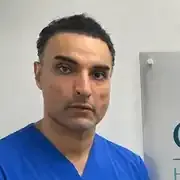
GMC reference 7126076. Dr Harpreet Kalra assesses the recession pattern, donor-area strength, scalp condition, hair characteristics, medical history and the result realistically achievable.
Your consultation should explain the proposed hairline position, temple design, graft requirement, treatment method, donor impact, recovery and long-term planning.
Selected feedback from patients across our clinic group. Treatment locations and procedures differ between reviews.
Paul Bassoo
Google reviewExcellent overall service.
Enzo
Google reviewVery satisfied with my results.
Subhan Buzdar
Google reviewGreat experience.
Muhammad Mohsin Saddique
Google reviewI felt listened to.
Ummad Rehman
Google reviewA very professional service.
Muhammad Saleem Popalzai
Google reviewStaff were friendly.
Discuss your hairline recession, temple shape, donor-area suitability, FUE or DHI options, expected recovery, finance and personalised cost before deciding whether treatment is suitable.