Curl and Follicle Pattern
Hair curl, calibre and the likely shape of the follicle beneath the skin affect extraction and placement planning.
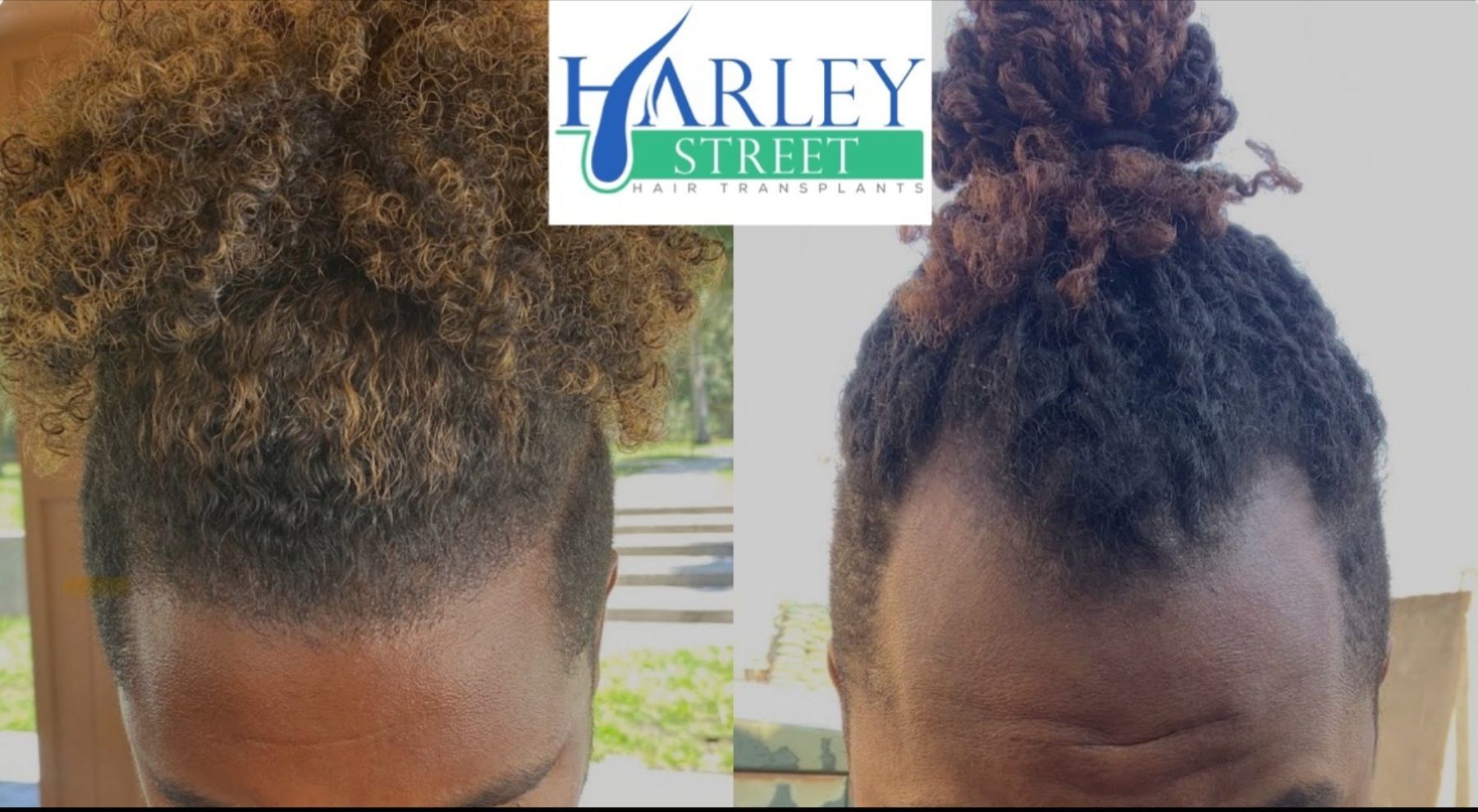
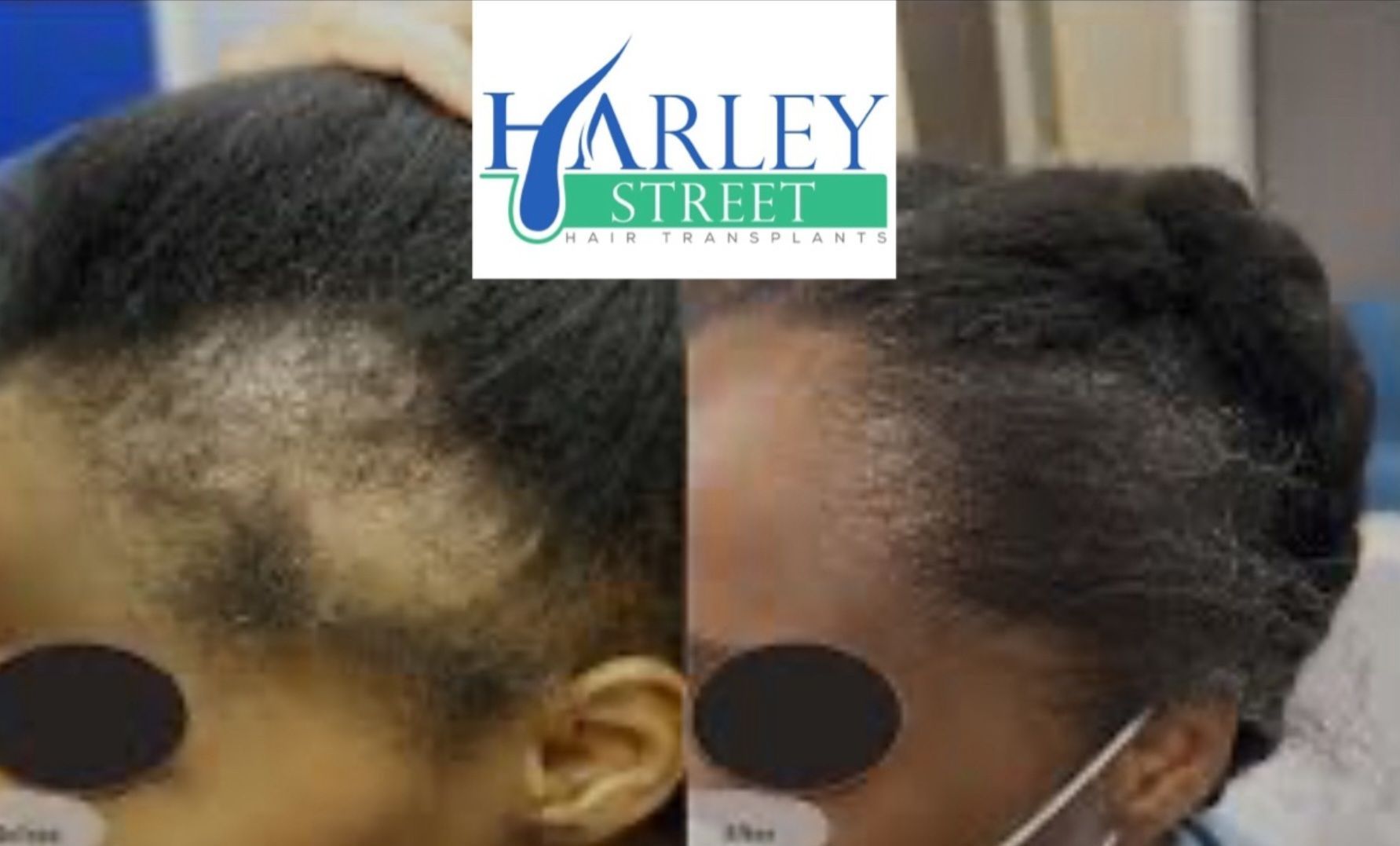
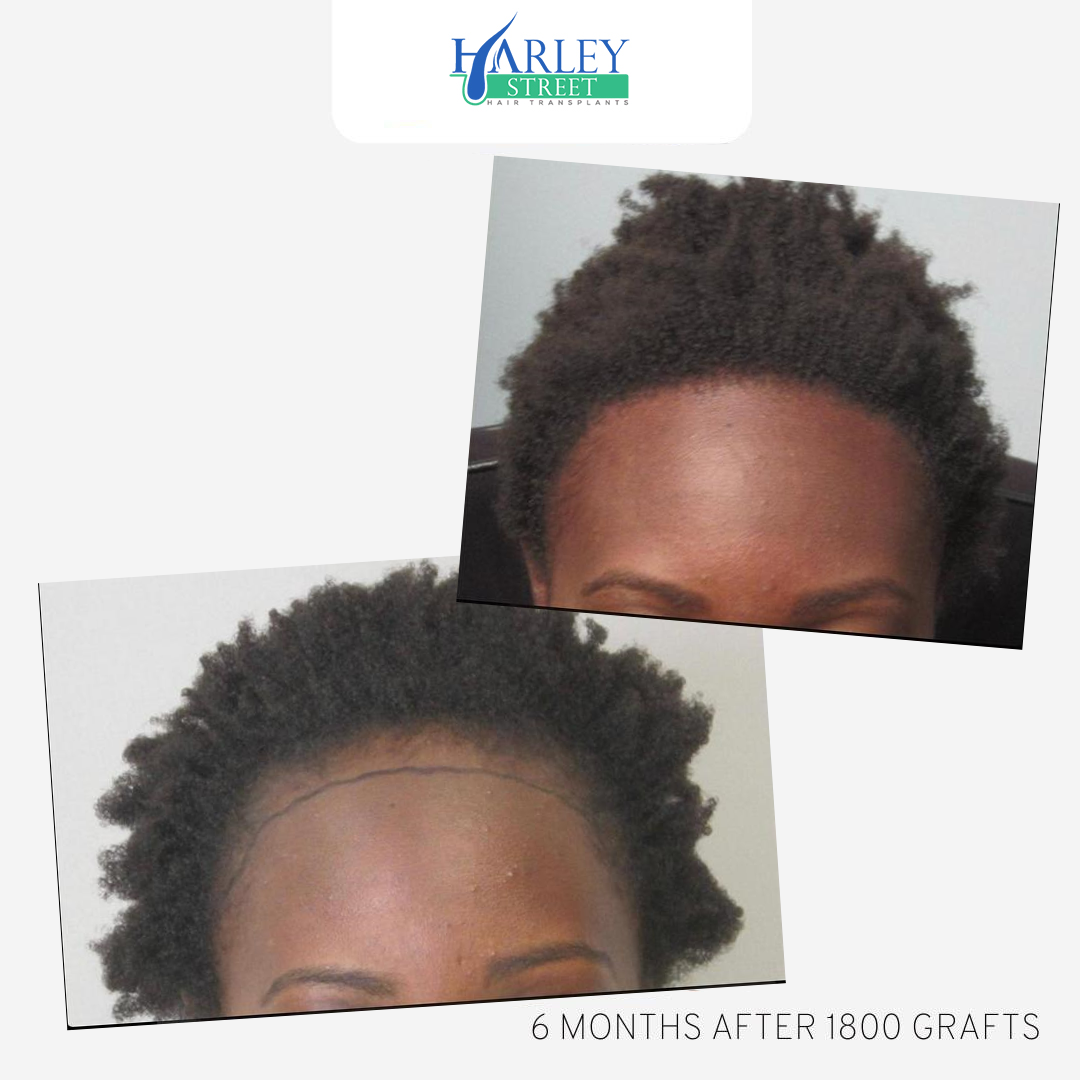
Afro hair transplantation is planned specifically for curly, coily and tightly textured hair, including hairline recession, temple loss, crown thinning and selected traction-related hair loss.
At 22a Harley Street, London W1G 9PF, your consultation considers curl pattern, scalp health, styling history and donor hair. The assessment establishes whether the cause of loss is stable enough for surgery and what coverage the available grafts could provide.


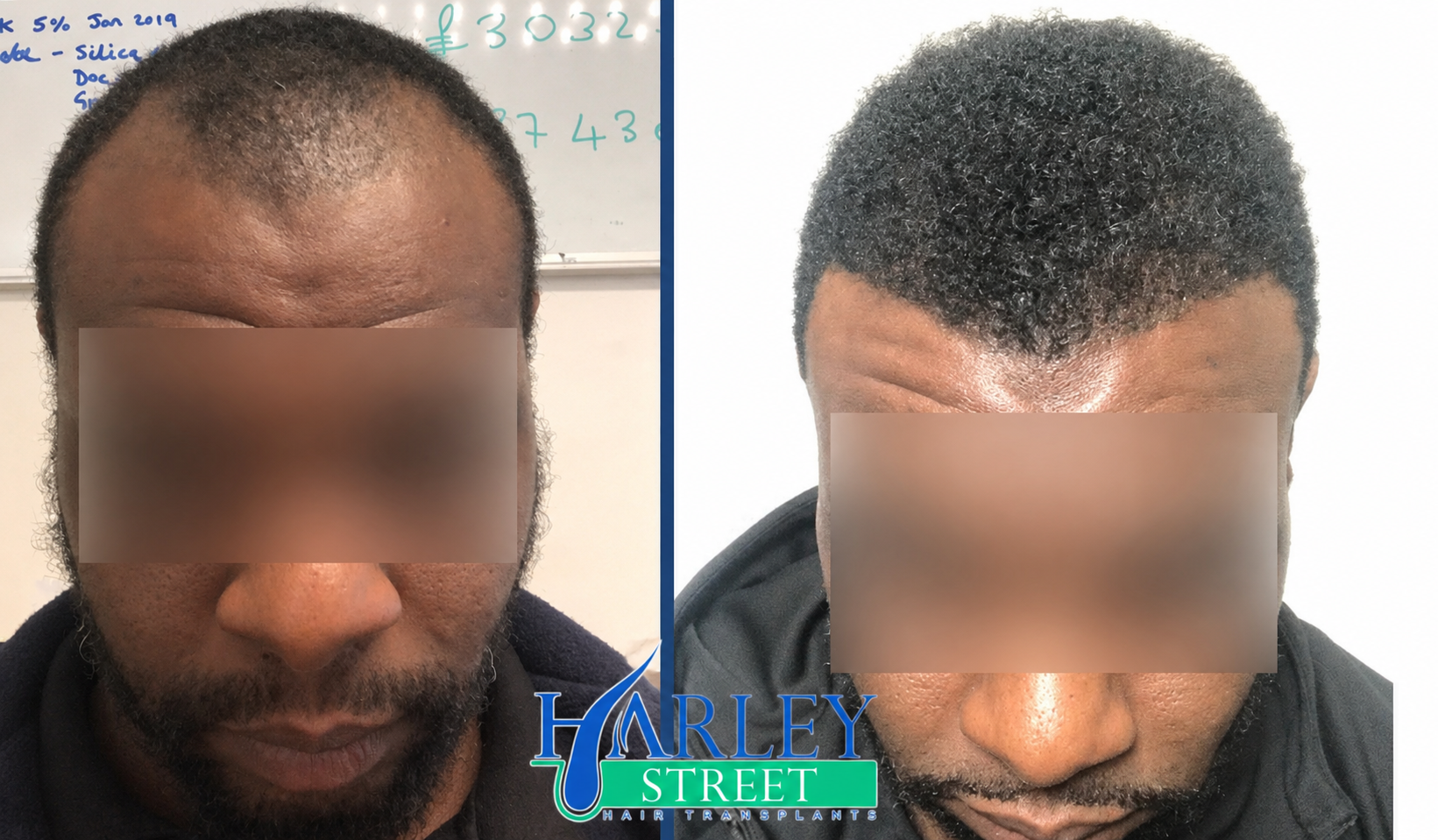
Curly and coily hair may follow a curved path both above and beneath the scalp. The visible direction of the hair does not always show the complete shape of the follicle below the skin.
This means extraction, graft handling and recipient-site planning require careful control to reduce follicle damage and preserve the donor area.
Textured hair can provide strong visual coverage because curl and hair calibre can create volume. However, the result still depends on the available graft supply, hair-loss area and individual hair characteristics.
Read more about donor-area assessment before considering treatment.
Hair curl, calibre and the likely shape of the follicle beneath the skin affect extraction and placement planning.
The back and sides of the scalp are assessed to determine how many grafts may be collected without creating visible thinning.
Previous procedures, scalp inflammation and any personal or family history of raised or keloid scarring should be discussed.
Pattern hair loss, traction, scarring conditions and active inflammatory hair loss require different assessment.
The proposed hairline, crown or density plan should protect donor hair for possible future thinning.
The procedure is adapted to the individual curl pattern, follicle shape, donor supply and treatment area.
The hair-loss pattern, scalp health, styling history, medical history and treatment goals are reviewed.
Donor density, curl, calibre and safe graft availability are assessed before extraction is planned.
The treatment area is designed around facial proportions, natural growth direction and possible future hair loss.
Follicular units are removed individually using an approach adapted to the likely curve of the follicle beneath the skin.
Grafts are checked and placed at the planned angle, direction, spacing and density.
Personal instructions cover washing, graft protection, donor care, styling, shedding and gradual growth.
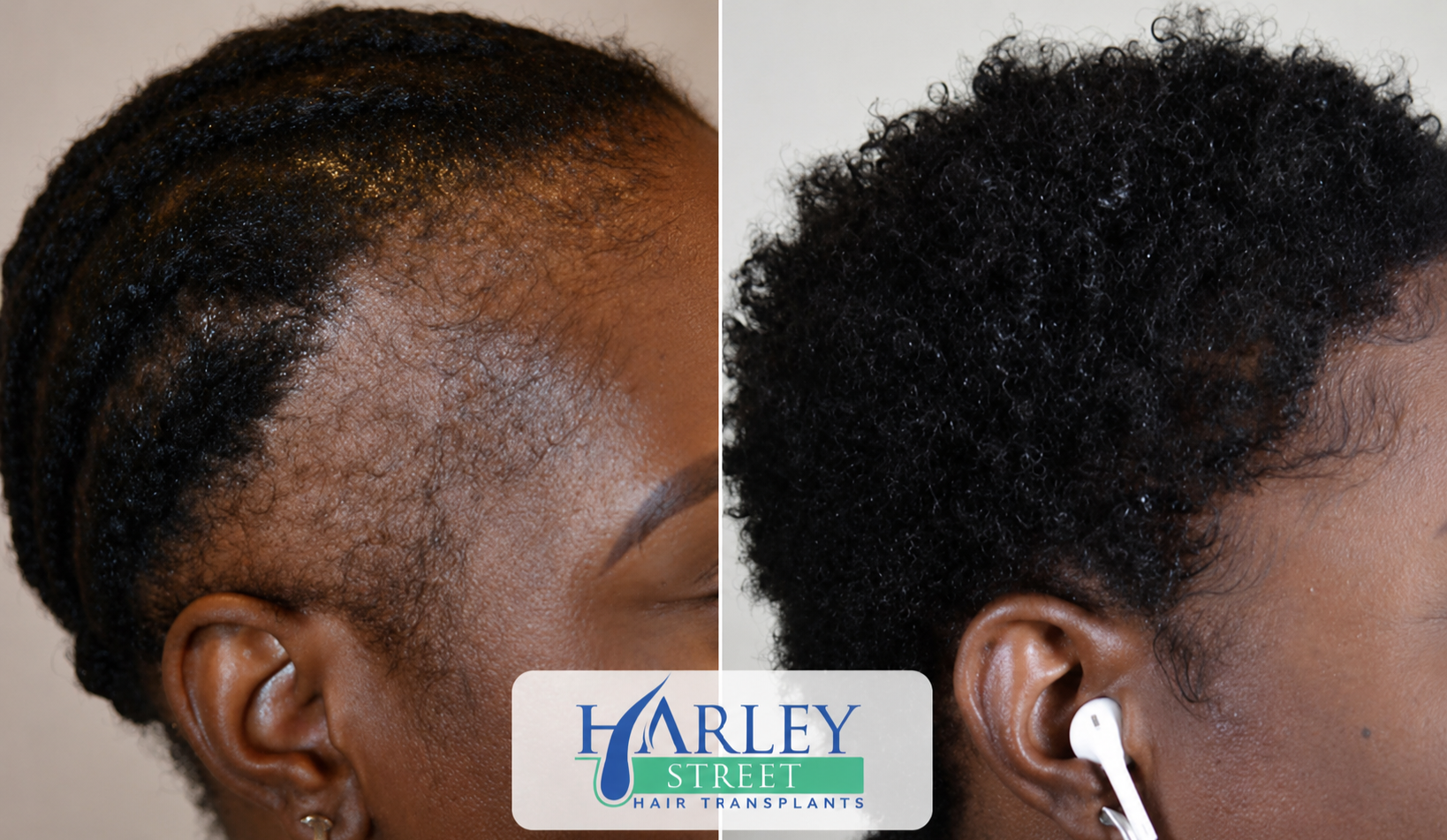
Suitability depends on the cause and stability of hair loss, donor density, curl pattern, scalp condition and whether the requested coverage is realistic.
Hairline restoration is planned around facial proportions, natural texture, temple shape and future hair-loss risk.
Temple work requires careful angle and direction to blend with the natural curl and existing frontal hairline.
Crown restoration requires careful graft use and placement around the natural whorl.
Stable hairline or temple loss caused by long-term tension may be considered once damaging styling practices have stopped.
Selected facial-hair restoration may be discussed depending on donor supply, hair characteristics and treatment goals.
The appropriate method depends on the donor area, follicle shape, treatment location, graft requirement and individual surgical plan.
| Option | How it works | Important consideration |
|---|---|---|
| FUE | Individual follicular units are removed from the donor area and placed into the planned recipient area. | Extraction must account for the possible curve of the follicle beneath the scalp. |
| DHI | FUE-style donor extraction is combined with placement using an implanter device. | DHI may suit selected cases but is not automatically better for every Afro-textured hair transplant. |
| Selected FUT | A strip of donor scalp is removed and divided into individual follicular-unit grafts. | FUT leaves a permanent linear donor scar and requires individual discussion. |
| PRP | Platelet-rich plasma may be discussed as non-surgical support for selected areas where active follicles remain. | PRP does not replace follicles in completely bare areas. |
| Medical or Scalp Assessment | Dermatology or medical investigation may be appropriate where loss is active, inflammatory, patchy or unexplained. | Treating or stabilising the cause may be more appropriate than immediate surgery. |
Early recovery may include redness, tenderness, swelling, visible scabbing and temporary sensitivity in the donor and recipient areas.
Washing and styling instructions should account for the treated area, natural texture and the need to avoid pulling or pressure on newly placed grafts.
The final cost depends on the treatment area, graft requirement, donor-area suitability, chosen method, curl pattern and complexity of the extraction and placement plan.
A smaller temple or hairline procedure will require different planning from wider frontal, crown or multi-area restoration.
A personalised quotation should be provided after your donor area, hair characteristics and treatment goals have been assessed.
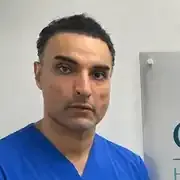
GMC reference 7126076. Dr Harpreet Kalra assesses the hair-loss pattern, donor density, curl characteristics, scalp condition, medical history and the treatment outcome realistically achievable.
Your consultation should explain the proposed treatment area, method, estimated graft requirement, donor limitations, recovery and long-term planning.
Selected feedback from patients across our clinic group. Treatment locations and procedures differ between reviews.
Paul Bassoo
Google reviewExcellent overall service.
Enzo
Google reviewVery satisfied with my results.
Subhan Buzdar
Google reviewGreat experience.
Muhammad Mohsin Saddique
Google reviewI felt listened to.
Ummad Rehman
Google reviewA very professional service.
Muhammad Saleem Popalzai
Google reviewStaff were friendly.
Discuss your curl pattern, donor area, hair-loss history, treatment options, expected recovery, finance and personalised cost.