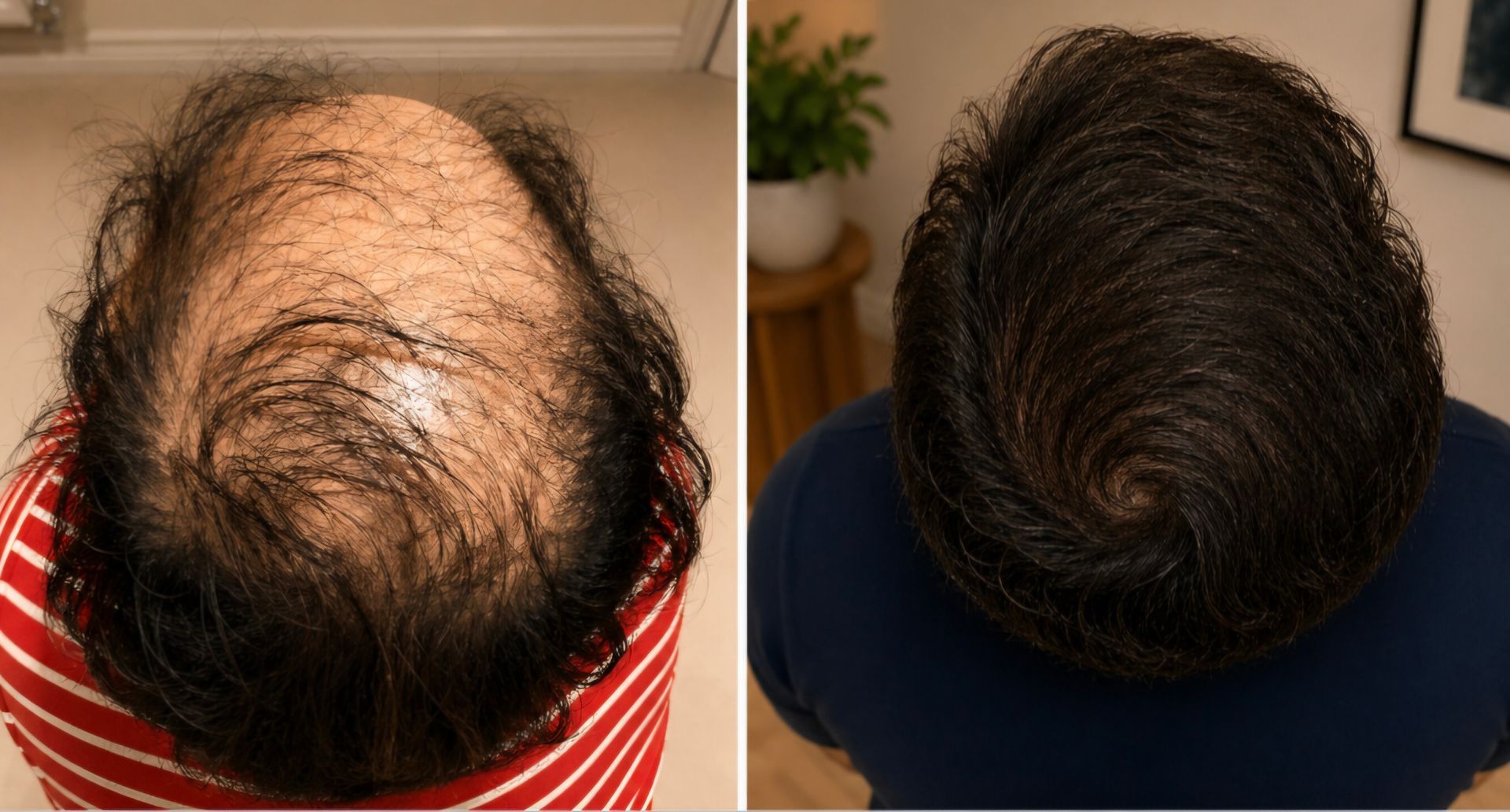
Azelaic acid for hair loss: how strong is the evidence?
Laboratory findings and small clinical studies do not establish a standard scalp-treatment regimen.

On this page
Azelaic acid has been investigated for hair loss, but the evidence is too limited to present it as a proven general solution or a routine substitute for established treatment. Its use in skin care does not automatically establish the effectiveness or suitability of applying it to a thinning scalp.
Why it has attracted interest
An in-vitro study published in 1988 examined inhibition of 5-alpha-reductase activity in human skin samples. That enzyme is involved in converting testosterone to dihydrotestosterone. A laboratory effect creates a research question; it does not show how much hair will regrow in a person using a retail product.
Concentrations, delivery through the skin and the condition being treated all matter. A claim that an ingredient “blocks DHT” should not be treated as a demonstrated clinical outcome for every formulation.
What the small human study examined
A 2023 trial published in Siriraj Medical Journal randomly assigned 26 women with grade I or II female pattern hair loss to 5% azelaic acid solution or 2% minoxidil solution for six months. It assessed hair density and shaft diameter.
This is direct clinical research, but it is a small comparison with a particular minoxidil formulation. It does not establish equivalence to every minoxidil product, long-term effectiveness or suitability for every cause of hair loss. A small study also cannot establish uncommon risks.
The trial should not be converted into a universal instruction to apply a particular concentration twice a day. Research methods are not personalised prescribing advice.
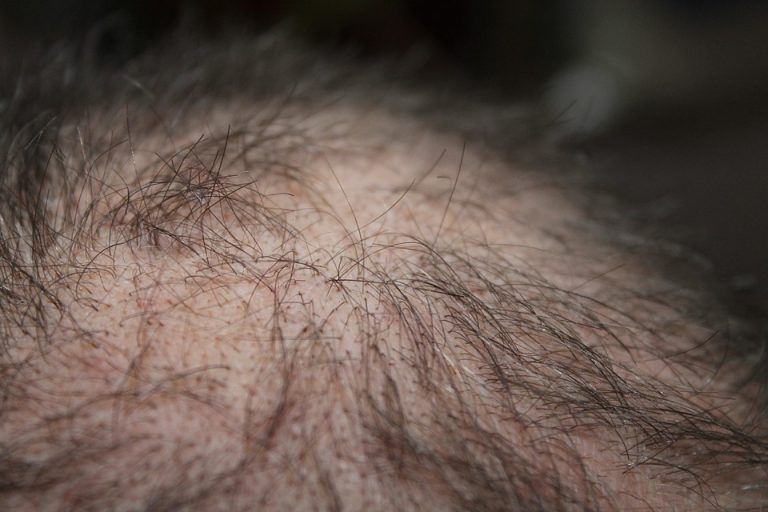
Alopecia areata is a separate condition
Studies in alopecia areata cannot simply be applied to inherited pattern loss. The conditions have different mechanisms and can follow different courses. Improvement in a small uncontrolled group can also be difficult to separate from spontaneous regrowth.
The British Association of Dermatologists' alopecia areata information explains the condition and treatment options. A patch of hair loss needs a diagnosis before choosing a product based on an ingredient claim.
Irritation and combining treatments
Topical products can cause burning, redness, itching or other irritation. Applying several products to the same area can complicate matters, particularly if the scalp is already inflamed. Do not assume that a stronger concentration will produce more growth.
Ask a clinician or pharmacist before combining a scalp regimen with minoxidil or another medicine. Pregnancy, breastfeeding, skin disease and medical history require individual advice. It would be inappropriate to infer safety in pregnancy from a small hair-loss trial that was not designed to establish it.
What to do with this evidence
If you are considering azelaic acid specifically for thinning, first establish the cause and discuss the evidence for the exact formulation proposed. Ask what outcome is expected, when it will be assessed and what to do if irritation occurs.
Our minoxidil guide and treatment comparison explain alternatives and their limitations. A plausible mechanism is a starting point for research, not a promise of regrowth.
Questions and answers
Is azelaic acid a proven DHT blocker for my scalp?
Laboratory enzyme findings do not establish a reliable personal treatment effect. Clinical evidence and the actual formulation matter.
Can I copy the concentration used in a study?
Do not treat a research protocol as a personal prescription. Discuss suitability and product instructions with a qualified clinician or pharmacist.
Does evidence in alopecia areata apply to pattern loss?
Not automatically. They are different conditions, and findings need to be interpreted in the population studied.