Tell Us About Your Hair Loss
Explain the areas that concern you, any previous treatment and what you would like to achieve.
You can attend a Glasgow consultation at Tay House, 300 Bath Street, Glasgow G2 4JR. Check your appointment type and address before travelling. If surgery is recommended, ask for its location and aftercare arrangements to be included in your written plan.
Techniques: FUE, FUT, DHI
Approach: Surgeon-Led Planning
Cost: £3,000 – £6,000
Finance Available


Tay House is on Bath Street in Glasgow city centre, convenient for patients coming from the city and the wider West of Scotland.
The Glasgow location is convenient for patients travelling from areas including Paisley, Renfrew, Clydebank, Bearsden, East Kilbride, Hamilton, Motherwell, Lanarkshire and other parts of the West of Scotland.
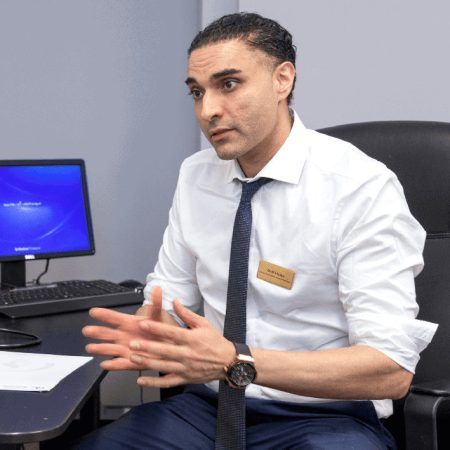
Dr Harpreet Kalra is the principal hair transplant surgeon at Harley Street Hair Transplants. Planning should start with whether surgery is suitable and how to preserve your donor hair, rather than the largest possible procedure.
Your assessment should cover the hair-loss pattern, donor density, hair calibre and texture, age, medical history and scalp condition. Previous treatment, likely future loss and the area you want to restore also need to be considered.
Dr Harpreet Kalra · GMC reference 7126076
Read Dr Kalra's profileExplain the areas that concern you, any previous treatment and what you would like to achieve.
Donor strength, hair-loss pattern, medical history, scalp health and expectations need to be assessed.
Confirm the proposed technique, treatment area, approximate graft requirement and expected limitations.
You should know the total quotation, aftercare arrangements and exact procedure location before committing to surgery.
The method needs to suit your donor quality, hair type, treatment area, graft requirement and medical suitability. Longer-term hair loss also matters; no technique is best for every patient.
Individual follicular units are extracted from the donor area. FUE avoids a linear strip scar, although small extraction scars still occur.
Read about FUEDHI usually combines individual extraction with placement using an implanter. It may suit selected cases, but is not automatically better than standard FUE placement.
Read about DHIFUT removes a strip of donor scalp before individual follicular units are prepared for implantation. It leaves a linear donor scar and is considered selectively.
Read about FUTHairline design needs to account for age, facial proportions, graft direction, donor supply and the possibility of future recession.
Hairline transplant guideCrown transplantation requires careful recreation of the natural whorl while balancing coverage against the amount of donor hair available.
Crown transplant guideA beard transplant may be considered when the donor hair and desired shape allow grafts to be placed at a natural angle and direction.
Beard transplant guideEyebrow restoration requires particularly shallow placement angles and careful use of suitable fine donor hairs.
Eyebrow transplant guideSelected women with suitable donor areas may be assessed for hairline, temple or localised scalp restoration. Diffuse loss requires careful diagnosis before surgery.
Female hair transplant guidePRP is a non-surgical option that may be discussed for selected patients where active follicles remain. It is not a substitute for transplantation in every type of hair loss.
PRP treatment guideBefore choosing a technique, establish whether a transplant is suitable and what your available donor hair can realistically achieve.
A transplant moves existing follicles. Donor density, strand thickness, safe extraction limits and signs of thinning determine how many grafts can responsibly be used.
Read the donor-area guide.
The treatment area's size, existing hair, donor quality, hair type and target density affect graft requirements. A photograph or Norwood stage alone cannot provide a fixed count.
Your quote depends on the treatment area, graft requirement, technique, donor hair and complexity. It should follow an assessment, rather than a headline price alone.
See our hair transplant cost guide.
Hair around a transplant can keep thinning. The plan needs to allow for future recession and preserve donor hair for possible later treatment.
Early recovery can include redness, scabbing, swelling and donor-area tenderness. Transplanted shafts can shed before gradual new growth becomes visible.
Read the hair transplant aftercare guide.
Before booking, confirm in writing whether you are attending a consultation, assessment, follow-up or procedure and confirm the exact address at which any surgery will take place.
Before-and-after photographs of Harley Street Hair Transplants patients at different stages of growth after surgery.

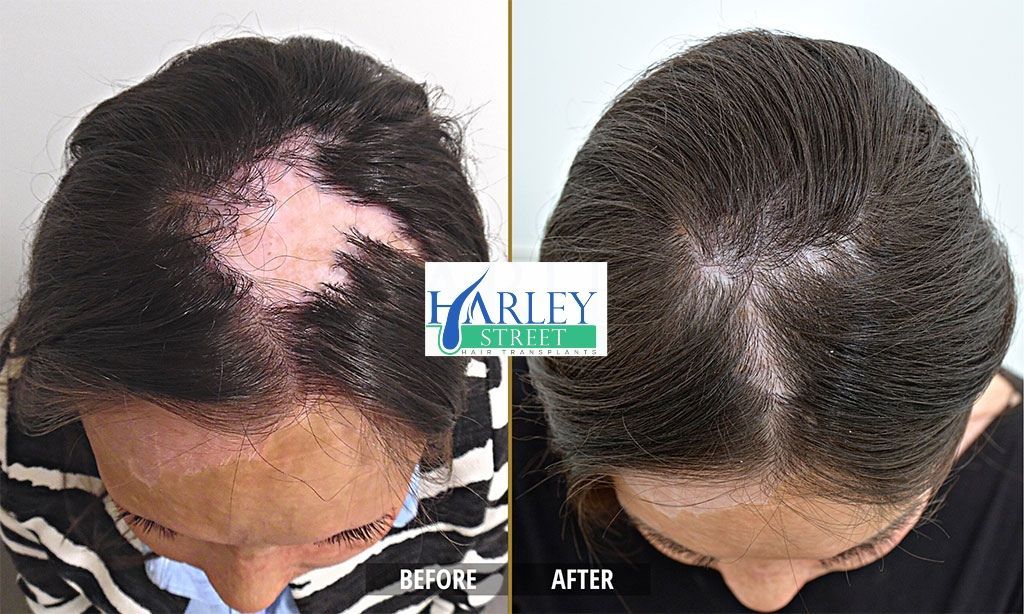
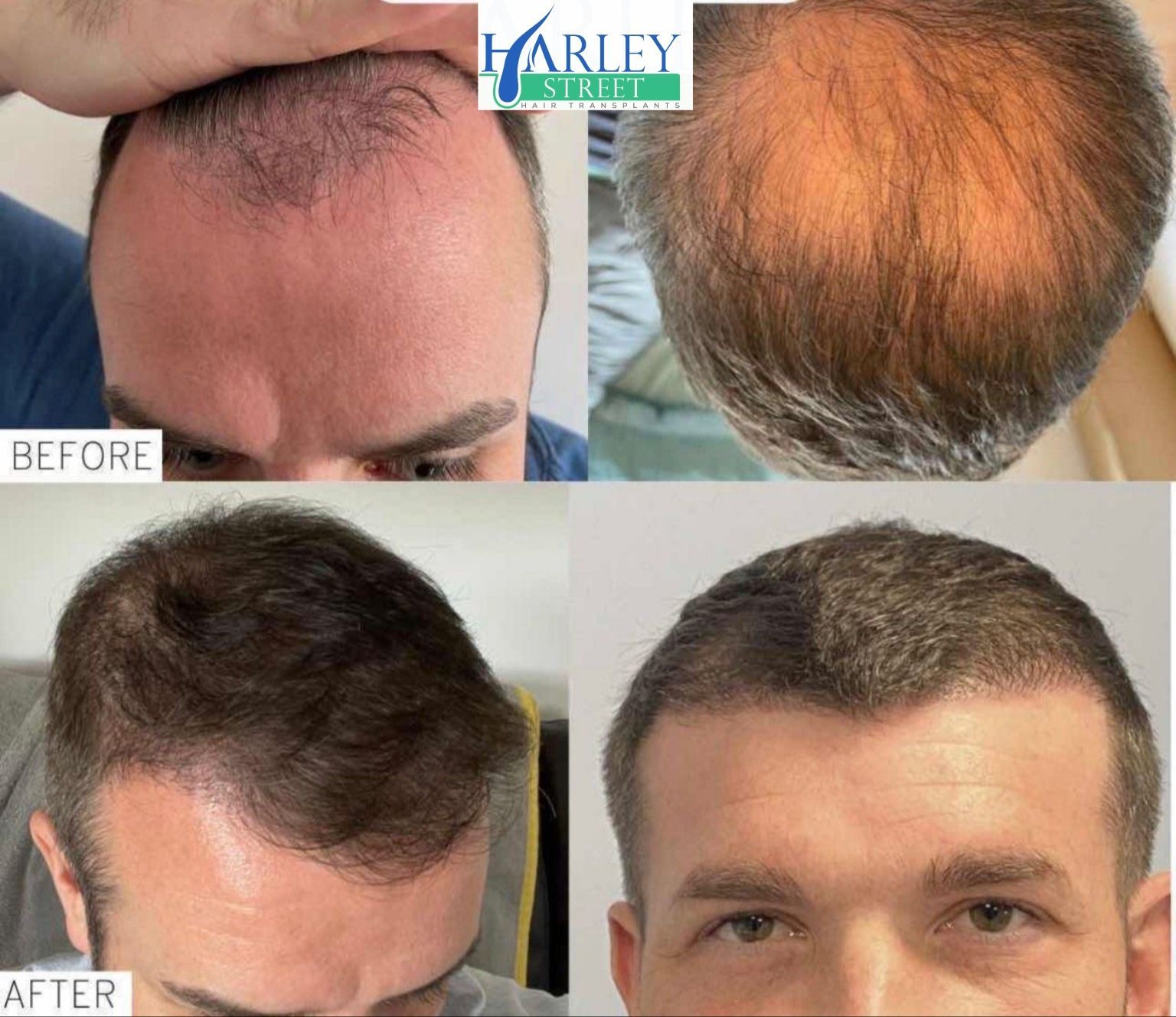
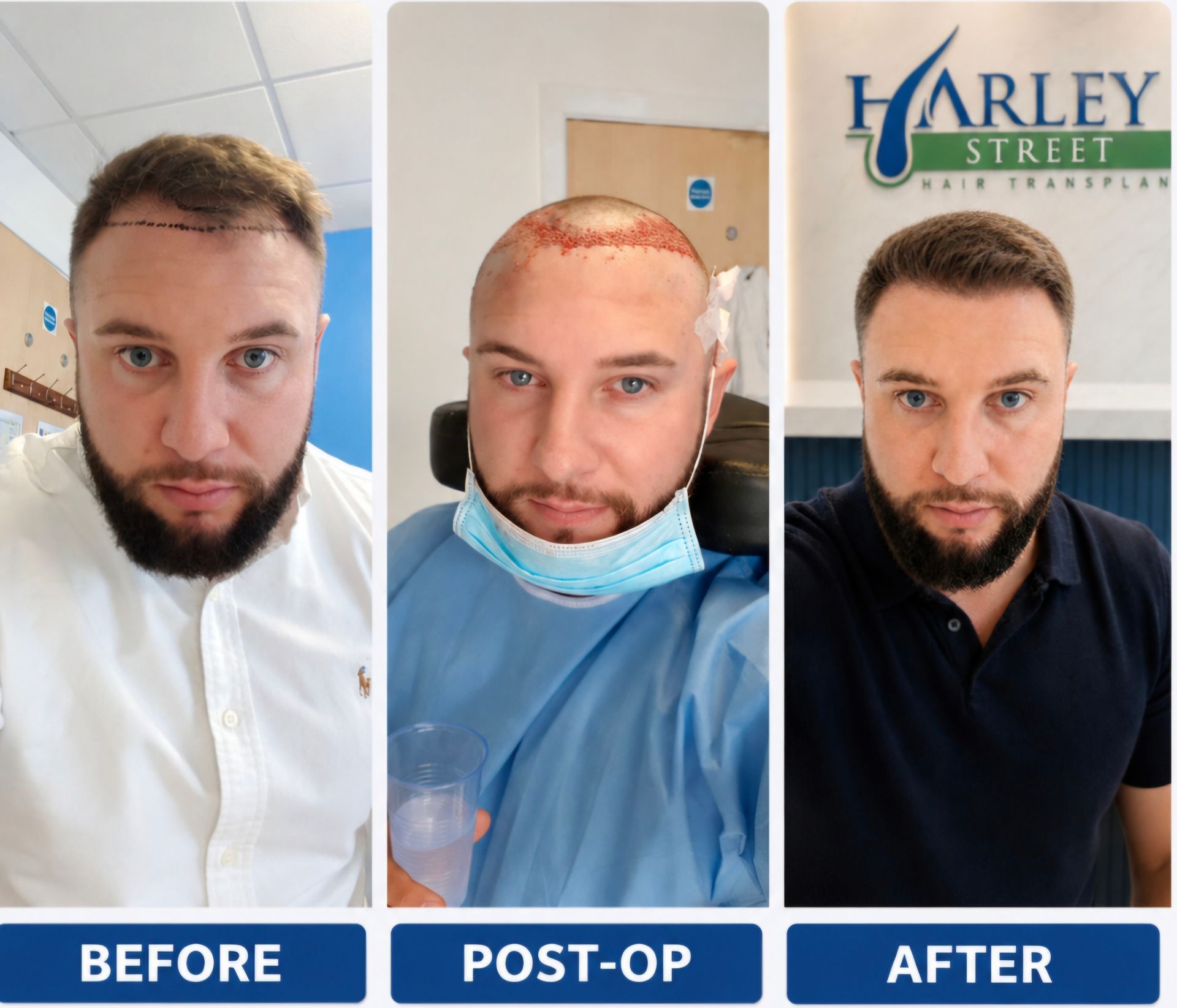
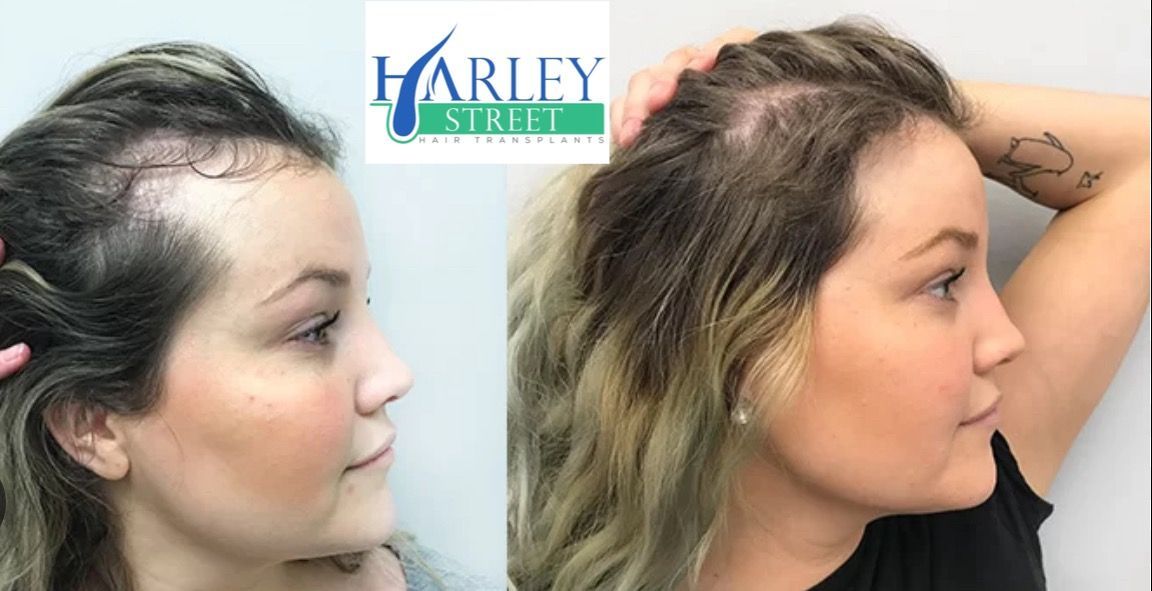
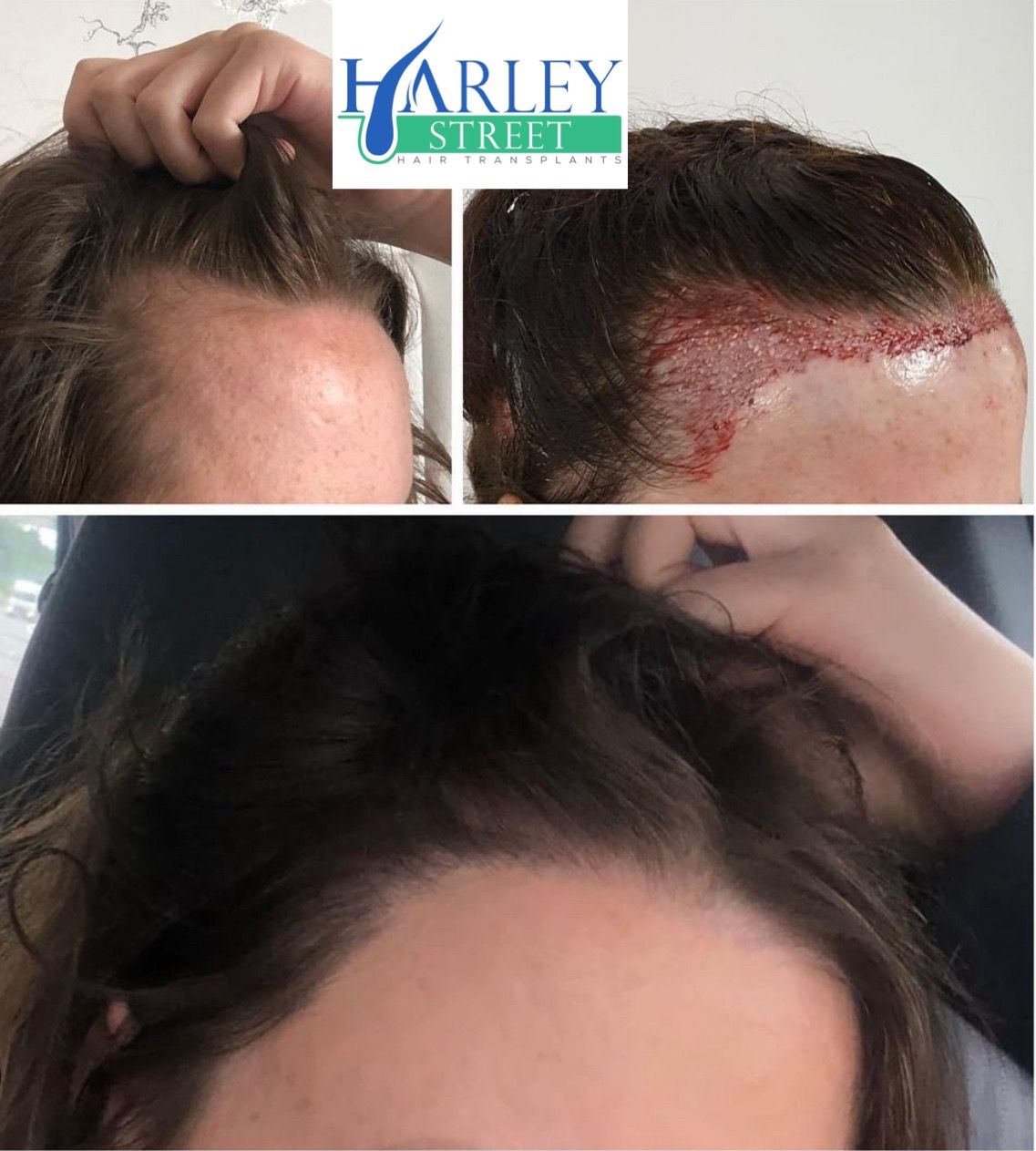
“Excellent overall service.”
“Very satisfied with my results.”
“Great experience.”
“I felt listened to.”
“A very professional service.”
“Staff were friendly.”
The Glasgow consultation location is Tay House, 300 Bath Street, Glasgow G2 4JR.
The Glasgow telephone number is 0141 363 0019.
Appointment and treatment arrangements can vary. Before travelling, confirm whether you are attending a consultation, assessment, follow-up or procedure and confirm the exact procedure address in writing.
Depending on suitability, options may include FUE, DHI, FUT, hairline restoration, crown restoration, beard transplantation, eyebrow transplantation, female hair restoration and PRP.
Dr Harpreet Kalra is the principal hair transplant surgeon at Harley Street Hair Transplants. His GMC reference is 7126076.
Cost depends on the treatment area, graft requirement, technique, donor characteristics and complexity. A personalised quotation should follow assessment rather than being based solely on a generic price band.
Graft numbers depend on the size of the recipient area, existing native hair, donor density, hair calibre, hair type and realistic coverage goals. A photograph or Norwood stage alone cannot provide an exact figure.
Neither is automatically better for every patient. DHI mainly describes an implantation approach, while suitability also depends on donor supply, treatment area, graft numbers and surgical planning.
Growth develops gradually. Early postoperative healing can be followed by shedding before new growth appears over subsequent months. Density and maturation can continue beyond one year in some cases.
No. A transplant relocates selected donor follicles, but surrounding native hair can continue to thin. Long-term planning should consider possible future progression.
Yes. Selected women may be suitable for transplantation, but diffuse thinning requires careful assessment because the donor area itself can sometimes be affected.
Yes. The Bath Street location can be used by patients travelling from across Glasgow, Paisley, Renfrewshire, Lanarkshire and the wider West of Scotland. Confirm your appointment arrangements before travelling.