Hair Transplant Donor Area
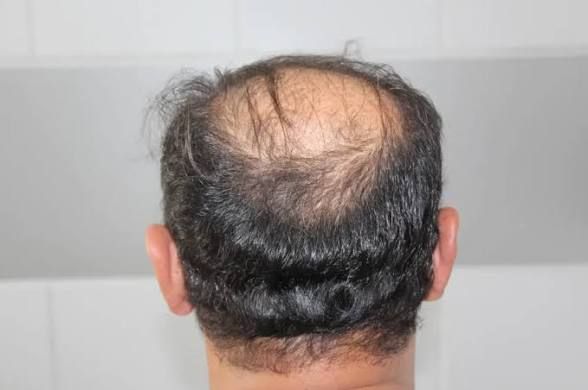
The donor area is the part of the scalp from which suitable hair follicles are harvested for transplantation. For most scalp hair transplants, the principal donor supply comes from selected areas across the back and sides of the head.
Donor hair is a limited resource. Its density, stability, hair calibre, follicular-unit distribution, previous surgery and the patient's likely future pattern of hair loss all influence how many grafts may be available and how they should be used.


Understanding the Hair Transplant Donor Area
Donor planning is not simply a matter of finding hair at the back of the head. The follicles selected for transplantation need to come from an area that is sufficiently dense, healthy and likely to remain stable.
What Is the Donor Area?
During a hair transplant, follicular-unit grafts are removed from a donor site and transferred to an area affected by hair loss. The donor site is therefore the source of the follicles used to create new coverage.
For scalp transplantation, donor follicles are usually selected from parts of the occipital and side scalp. Appropriately selected follicles in these areas are generally more stable than follicles through the frontal hairline, temples, mid-scalp and crown in people with pattern hair loss.
The exact safe harvesting zone differs between patients. Every follicle at the back or sides of the scalp should not automatically be considered suitable for transplantation.
Donor Area vs Recipient Area
The donor area is where grafts are taken from. The recipient area is where those grafts are placed.
Recipient areas may include a receding hairline, temples, mid-scalp, crown, eyebrows, beard or another suitable restoration area.
A large recipient area may require thousands of follicles, while the number that can be safely removed from the donor region is limited.
The surgical plan therefore needs to balance the requested coverage against the amount of donor hair that can be removed without creating visible depletion.
Why Is the Back of the Head Commonly Used?
Follicles through appropriately selected parts of the back and sides are often less affected by the progressive miniaturisation associated with androgenetic hair loss.
Once stable follicles are transplanted, they generally retain many of their original donor characteristics.
Stability still needs to be assessed because follicles near the upper or lower donor boundaries may not have the same long-term resistance as follicles located centrally within the stable donor zone.
Can Hair Be Lost From the Donor Area?
Yes. The donor region is commonly more stable than the frontal scalp and crown, but it is not protected from every form of hair loss.
Some patients develop gradual miniaturisation around the edges of the donor zone. Advanced pattern hair loss can also cause the stable donor area to become narrower.
Follicles harvested from an unstable region may therefore provide less predictable long-term value than follicles taken from a genuinely stable donor zone.
Retrograde Thinning
Retrograde alopecia describes thinning that can extend upwards from the lower hairline around the nape and sides. This can reduce the lower boundary of the area considered suitable for harvesting.
A donor assessment should therefore include the lower and side margins, not only the thickest central part of the donor region.
Where significant miniaturisation is present, more conservative donor boundaries may be required.
Alopecia and Diffuse Donor Thinning
Patchy or diffuse hair loss through the donor area needs particular attention. Alopecia areata, inflammatory scalp conditions, scarring disorders and diffuse miniaturisation can affect transplant suitability.
Active or unexplained donor-area loss should be investigated rather than simply harvested around.
Where the pattern is unclear, establishing the type and cause of hair loss should come before surgical planning.
What Makes a Good Donor Area?
A donor area should not be judged solely by how thick the hair looks. The quantity, quality and likely long-term stability of the follicles all need to be considered.
Donor Density
Density describes how many follicular units and individual hairs are present within a particular area of scalp. Assessment should be made at several points rather than relying on one measurement.
Naturally higher density can provide greater harvesting flexibility, but the amount of density that remains after surgery is just as important as the starting density.
- Density through the central occipital area.
- Density through the side donor regions.
- Variation between upper and lower donor boundaries.
- Areas previously harvested by FUE.
- Existing FUT scars or other donor-area scarring.
Hair Quality and Follicular Units
The same graft number can create different levels of visual coverage between patients because individual hair characteristics vary.
Hair calibre, curl, colour contrast and the proportion of single, double, triple and larger follicular units can all influence apparent density.
- Fine, medium or coarse hair-shaft calibre.
- Straight, wavy, curly or tightly curled hair.
- Contrast between hair colour and scalp colour.
- Distribution of single- and multi-hair follicular units.
- Signs of follicular miniaturisation.
How Is the Safe Donor Zone Assessed?
The safe donor area should be mapped according to the individual patient's pattern rather than applying identical boundaries to everyone.
Examination can include assessment of density, hair calibre and miniaturisation at several points across the back and sides of the scalp.
Areas showing significant thinning, retrograde change or uncertain stability may need to be excluded from harvesting.
Age and family history also matter because early hair loss may eventually develop into a considerably larger pattern.
How Many Donor Grafts Are Available?
There is no single safe lifetime graft number that applies to every patient. Available supply depends on stable donor-zone dimensions, density, hair characteristics, previous procedures and the amount of donor coverage that needs to remain.
Recipient demand also matters. Treating a limited frontal area requires a different donor strategy from attempting to cover the frontal scalp, mid-scalp and crown.
A graft recommendation should therefore follow donor assessment rather than beginning with a predetermined number.
Where donor supply cannot reasonably support the requested coverage, reducing the treatment area can be preferable to excessive harvesting.
Planning for Future Hair Loss
Native hair surrounding a transplant can continue to thin after surgery. Someone treated for frontal recession may later develop additional loss through the mid-scalp or crown.
Donor planning should therefore consider the likely long-term pattern, rather than only the area being treated during the first procedure.
Preserving some donor supply can provide additional options if further restoration becomes appropriate later.
Hair Transplant Surgery and the Donor Area
Donor preparation and healing vary according to how the follicles are harvested. FUE and FUT are the principal harvesting approaches, while DHI primarily describes a method used during implantation.
Can Beard or Body Hair Be Used?
Beard or body follicles can sometimes be considered as an additional donor source in selected patients, particularly when scalp donor supply is limited.
These follicles retain characteristics of their original location. Beard hair can be considerably coarser than scalp hair, while body hair may have a different growth cycle, maximum length, curl and shaft diameter.
Non-scalp donor hair therefore requires careful cosmetic planning and should not simply be treated as identical to scalp hair.
Where a suitable scalp donor supply exists, scalp follicles generally provide the closest match for conventional scalp restoration.
Does the Donor Area Need to Be Shaved?
For many FUE procedures, the donor hair is shortened before surgery. This gives a clearer view of follicular direction and allows individual graft extraction to be planned accurately.
It can also make it easier to distribute extractions evenly rather than repeatedly harvesting one small area.
The degree of shaving varies with graft requirement, hair length and surgical approach. Selected partial-shave techniques may sometimes be considered.
FUE Donor Extraction
During an FUE hair transplant, follicular units are individually separated from surrounding tissue using small circular punches before being removed for transplantation.
Punch size and technique need to suit the patient's follicular anatomy, skin and hair characteristics. The aim is to minimise unnecessary damage to both the harvested graft and neighbouring follicles.
Extraction points should also be distributed appropriately across the planned donor zone. Removing too many neighbouring follicular units can create visible gaps even when the overall graft count initially appears reasonable.
FUE avoids a continuous linear strip scar, but it is not scarless. Every harvested follicular unit creates a small healing site.
DHI and Donor Extraction
DHI hair transplantation generally uses individual donor-graft harvesting in the same broad manner as FUE.
The important distinction associated with DHI is primarily the way the harvested grafts are implanted into the recipient area using an implanter device.
The donor area therefore requires the same consideration of safe boundaries, extraction distribution, density, miniaturisation and long-term preservation.
FUT Donor Harvesting
During FUT hair transplantation, a strip of hair-bearing scalp is removed from the donor region and divided into individual follicular-unit grafts.
The donor wound is closed and heals as a permanent linear scar. Its appearance can be influenced by wound tension, scalp laxity, healing characteristics, strip dimensions and previous surgery.
Because FUT does not require thousands of separate circular extraction sites across the wider donor area, it represents a different approach to managing donor supply in selected patients.
Hairstyle preference matters because a linear FUT scar generally needs sufficient surrounding hair length for concealment.
Donor Area Recovery After Hair Transplant Surgery
The donor area changes during the first days and weeks after surgery. Its final appearance depends on the harvesting method, amount of hair removed, extraction distribution and individual healing.
Immediately After FUE
Small circular extraction sites are visible after FUE. Redness, pinpoint marks, mild tenderness and small scabs can occur during the early healing period.
The First Few Days
Extraction sites begin closing as healing progresses. The specific washing, sleeping and activity instructions provided after surgery should be followed while the donor area remains fresh.
Around 7–14 Days
Much of the obvious donor scabbing usually improves during the first one to two weeks. The area can begin looking less obvious as the surrounding hair regains length.
Redness and Sensitivity
Redness may settle relatively quickly in some patients and persist for longer in others. Skin type, extraction density and individual healing can all influence recovery.
After the Donor Hair Grows
Follicles that remain in the donor area continue growing. As the hair length increases, it provides coverage between individual extraction sites.
FUT Recovery
FUT creates a linear wound rather than a wider field of individual FUE extraction sites. Once healed, the donor area retains a permanent linear scar.
Does Donor Hair Grow Back?
A follicular-unit graft completely removed from its original donor site does not normally regenerate there because it has been physically relocated to the recipient area.
The donor region can still appear full after suitable harvesting because follicles that were not removed continue growing around the extraction points.
Recovery of the donor area's appearance should therefore not be confused with replacement of every follicle that was harvested.
Can Shock Loss Affect the Donor Area?
Temporary shedding can occasionally affect existing hair surrounding a surgically treated donor region.
Temporary postoperative shedding is different from permanent depletion caused by removing too many follicles.
Significant or persistent thinning following surgery should be assessed rather than automatically assumed to be temporary.
What Is Donor Overharvesting?
Overharvesting occurs when the donor region is depleted beyond what its original density and hair characteristics can cosmetically tolerate, or when extractions are concentrated in a way that creates visible irregularity.
It is not defined by one universal graft number. A graft count that may be reasonable for one patient could be excessive for another.
Proper donor management considers both the total number of follicles removed and the distribution of those extraction points.
- Visible reduction in density at the back or sides.
- Patchy or see-through areas between remaining hair.
- Greater visibility of individual FUE scars.
- Uneven extraction patterns with shorter hairstyles.
- Reduced graft availability for future procedures.
- Greater difficulty correcting a previous transplant.
Haircut Length and Donor Scars
Hairstyle can influence how noticeable donor-area changes are. Very short hair provides less coverage over extraction marks and can expose variations in donor density.
FUE creates multiple small distributed scars rather than one linear scar. FUT creates a linear scar that is usually concealed with surrounding hair.
Patients intending to wear very short hairstyles should discuss this during treatment planning because it can affect harvesting decisions.
Can I Have a Second Hair Transplant?
Previous transplantation does not automatically rule out another procedure. The donor area needs to be reassessed to determine how much stable supply remains.
Assessment can include previous FUE extraction patterns, FUT scars, remaining density, hair calibre, miniaturisation and the graft requirement of the new recipient area.
Conservative harvesting during an earlier procedure can therefore preserve considerably more flexibility for future treatment.
Protecting the Donor Area
Hair transplantation redistributes existing follicles; it does not create an unlimited new supply of hair. Every graft used during one procedure therefore forms part of the patient's lifetime donor planning.
A naturally dense donor area can provide useful options, but the aim should not be to extract the maximum number of grafts simply because they appear available.
The objective is to obtain enough suitable follicles to improve the recipient area while maintaining an acceptable donor appearance and preserving appropriate options if further hair loss develops.
Donor assessment should therefore take place before the final graft number, treatment area and harvesting technique are agreed.
Hair Transplant Donor Area FAQs
Common questions about donor suitability, harvesting, healing and long-term donor management.
Where is the donor area for a hair transplant?
The principal scalp donor area is usually found across selected regions at the back and sides of the head. Exact boundaries vary according to density, miniaturisation and the patient's likely long-term hair-loss pattern.
Why is hair from the back and sides normally used?
Properly selected follicles in these regions are generally more stable in people with androgenetic pattern hair loss than follicles through the frontal scalp and crown.
Can you lose hair from the donor area?
Yes. Some patients develop retrograde thinning, diffuse miniaturisation, alopecia or other conditions affecting potential donor regions.
What makes a donor area suitable for a transplant?
Assessment can include follicular-unit density, hair calibre, texture, multi-hair graft distribution, miniaturisation, scalp health, previous surgery, safe-donor dimensions and future hair-loss risk.
How many grafts can safely be taken from my donor area?
There is no universal safe graft number. Available supply depends on the dimensions and density of the stable donor zone, hair characteristics, previous harvesting and how much density needs to remain after surgery.
Can beard hair be used for scalp transplantation?
Beard follicles can sometimes be considered as an additional donor source in selected cases. Beard hair is often coarser than scalp hair, so its location and blending require careful planning.
Can body hair be used?
Selected body follicles may occasionally be considered where scalp donor supply is limited. Body hair can differ from scalp hair in length, calibre, curl and growth cycle.
Do I need to shave the donor area for FUE?
Many FUE procedures involve shortening the donor hair to improve visibility and access during follicular-unit extraction. The amount of shaving varies according to the planned procedure.
Is FUE scarless?
No. FUE avoids a continuous linear strip scar, but each extraction creates a small healing site and can leave a small round scar or pigmentation change.
Does DHI use a different donor-harvesting technique?
Usually not. DHI generally uses individual donor graft extraction similar to FUE. Its main distinction relates to how grafts are implanted into the recipient area.
Does FUT leave a donor scar?
Yes. FUT involves removing a strip of donor scalp and therefore leaves a permanent linear scar. Its visibility varies with healing and hairstyle.
How long does the donor area take to heal after FUE?
The extraction sites begin healing immediately and much of the obvious scabbing commonly improves during the first one to two weeks. Redness and complete visual recovery vary between patients.
Does extracted donor hair grow back?
A follicular unit that has been completely removed does not normally regenerate at its original extraction site. Remaining surrounding follicles continue producing hair.
Can shock loss happen in the donor area?
Temporary shedding of surrounding donor hairs can occasionally occur after surgery. This differs from permanent depletion caused by excessive extraction.
What does an overharvested donor area look like?
Excessive or poorly distributed extraction can result in visible thinning, patchiness, see-through areas or greater visibility of extraction scars, particularly with shorter hairstyles.
Can an overharvested donor area be repaired?
Correction can be difficult because the original donor supply has already been reduced. Options depend on the degree of depletion, scarring, remaining follicles and wider hair characteristics.
Can I have a second hair transplant?
A further procedure may be possible when sufficient stable donor supply remains. Previous extraction patterns, FUT scars, density, miniaturisation and the new graft requirement should all be reassessed.
Why does future hair loss affect donor planning?
Native hair can continue to recede or thin after a transplant. Using most of the available donor supply during an early procedure can leave fewer options if additional areas later require restoration.
Why is donor preservation important?
Donor follicles are finite. Long-term planning aims to improve the recipient area while preserving enough density at the back and sides and maintaining sensible options for future treatment.