
UK Hair Loss Facts & Statistics
Hair loss is extremely common, but the figures quoted online often describe different conditions, age groups and research periods. Genetic pattern loss, temporary shedding, alopecia areata and medically related hair loss should not be treated as one statistic.
This 2026 guide examines the evidence behind male and female pattern hair loss, age, alopecia areata, stress, nutrition, medication, traction, psychological impact and the treatments currently used to manage or restore thinning hair.

Hair Loss Statistics: Key Facts
Hair loss statistics need context. A genetically receding hairline develops through a different biological process from increased shedding after illness, restrictive dieting or major physical stress. Alopecia areata is different again because it is an autoimmune condition rather than hereditary pattern baldness.
Separating these conditions matters because figures for permanent pattern loss, temporary shedding and autoimmune alopecia are often grouped together even though their causes, prognosis and treatment can be very different.
- The NHS states that losing around 50 to 100 hairs each day can be normal and often happens without being noticed.
- Male and female pattern baldness are permanent forms of hair loss that commonly run in families.
- Temporary hair loss can follow illness, stress, cancer treatment, significant weight loss and iron deficiency.
- NICE estimates that approximately 0.58% of UK adults have alopecia areata, with around 7% to 10% of affected adults potentially having severe disease.
- In the international 2025 ISHRS Practice Census, 84.7% of surgical hair-restoration patients were male and 15.3% were female.
- FUE harvesting accounted for 85.4% of male surgical procedures and 68.2% of female procedures reported by participating physicians.

Hair Loss Statistics Key Facts. Current NHS, NICE and ISHRS evidence is used in the written analysis where newer figures are available.
Hair Loss Statistics in the UK
There is no single current NHS figure that counts every person in the UK experiencing hair loss at one moment in time. The term covers permanent inherited loss, temporary shedding, autoimmune disease and several other scalp conditions.
Pattern baldness, medically known as androgenetic alopecia, is one of the most common causes of progressive permanent loss. It affects both men and women and is influenced by inherited susceptibility, hormones and age.
Temporary shedding behaves differently. Hair can shed diffusely after illness, surgery, significant stress, rapid weight change, nutritional problems or another disruption to the normal growth cycle.
Patchy loss, scalp inflammation, pain, sudden heavy shedding or hair loss involving the eyebrows or other body areas can point towards a condition requiring medical assessment rather than immediate cosmetic treatment.
This distinction is particularly important before considering surgery. A hair transplant moves existing donor follicles; it does not diagnose why somebody is losing hair or correct an untreated medical cause.
What Are the Numbers on Pattern Hair Loss?
Androgenetic alopecia is hereditary pattern hair loss. It affects men and women, although its distribution and appearance often differ. Genetically susceptible follicles gradually become smaller and produce finer hairs through repeated growth cycles.
How quickly this develops varies considerably. Two people of the same age can have very different hairlines, crown density, donor strength and future progression even when both have androgenetic alopecia.
Male Pattern Hair Loss
Male pattern hair loss commonly develops around the temples, frontal hairline, mid-scalp and crown. One patient may first notice temple recession while another notices reduced density around the vertex.
Dihydrotestosterone, usually shortened to DHT, plays an important role. In genetically susceptible follicles it contributes to progressive miniaturisation, producing finer and shorter hairs over successive cycles.
Clinicians commonly describe this pattern using the Norwood stages of hair loss. The scale helps describe frontal, temporal and crown recession but does not by itself determine treatment.
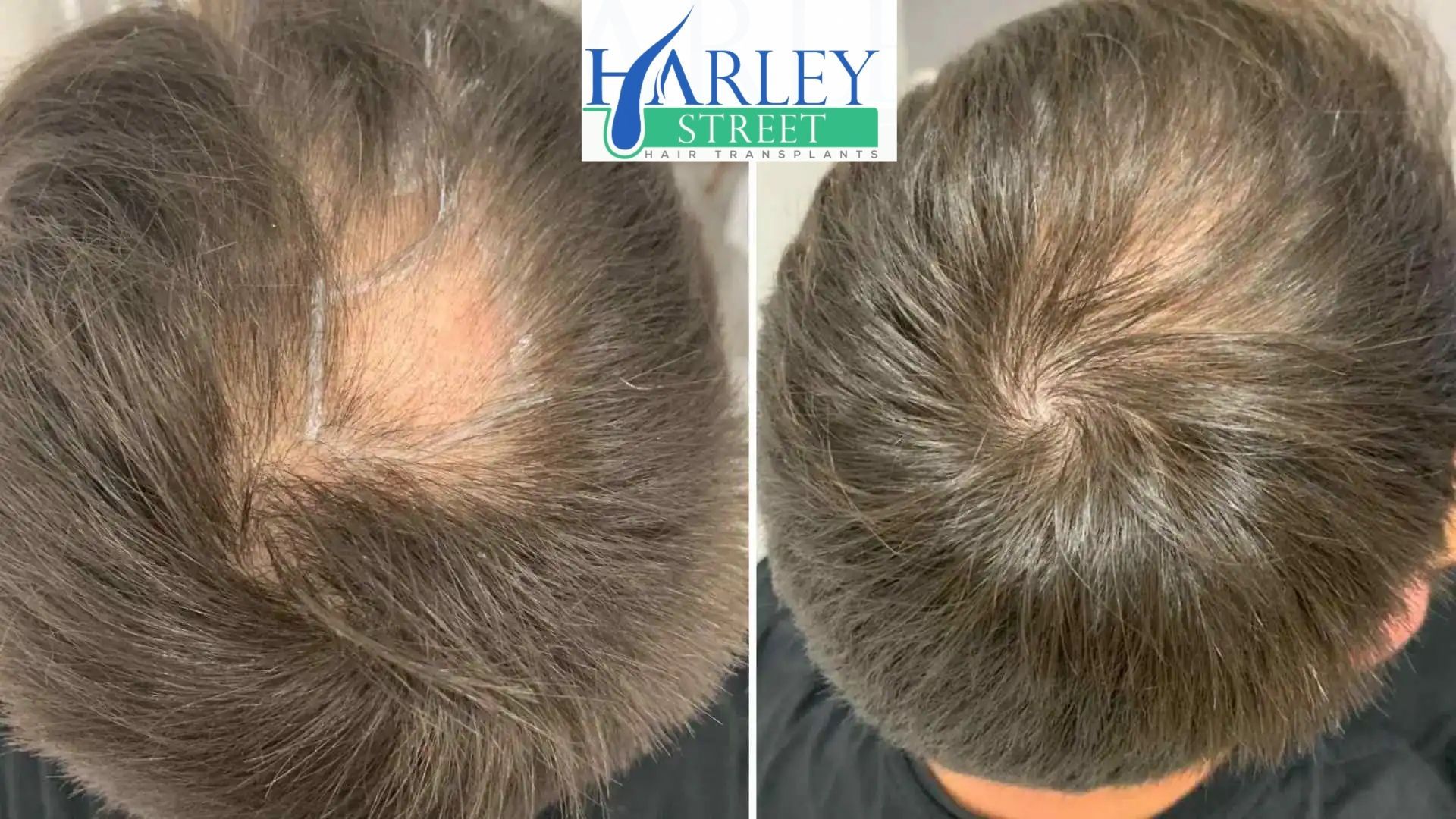
Two men at the same Norwood stage can have very different donor density, hair calibre and levels of ongoing miniaturisation. Donor assessment and future-loss planning therefore remain important even when the current pattern looks relatively limited.
Female Pattern Hair Loss
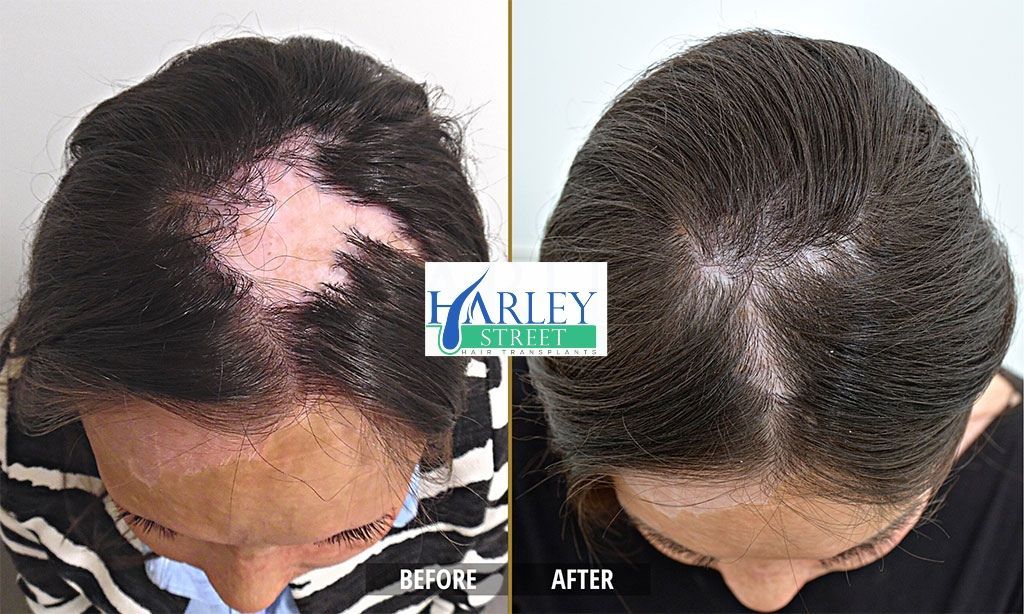
Female pattern hair loss often looks different from the classic male pattern. Many women notice reduced density through the central parting and upper scalp while retaining more of the frontal hairline.
A widening parting can be an early sign. As density decreases, the scalp can become increasingly visible under overhead lighting even when the frontal border has changed very little.
Pattern loss becomes more common with age and may become particularly noticeable around and after menopause, but not every case of female thinning is hereditary.
Iron deficiency, thyroid problems, nutritional restriction, illness, stress, medication, post-pregnancy shedding, traction and inflammatory scalp conditions can also cause reduced density.
Our female hair-loss and hair-transplant guide explains why the cause and stability of the loss and the donor area should be assessed before surgery is considered.
At What Age Does Pattern Baldness Begin?
There is no single age at which androgenetic alopecia begins. Some genetically susceptible men notice changes during their late teens or twenties, while others maintain relatively strong coverage for decades.
Early onset does not automatically mean rapid progression, but it makes long-term planning more important. A very low hairline created in a young patient can become difficult to maintain if surrounding native hair continues to recede.
Women often notice pattern thinning later than men, particularly around menopause, although female hair loss can occur considerably earlier depending on its cause.
Alopecia Areata: Prevalence, Causes and Treatment
Alopecia areata is fundamentally different from hereditary pattern baldness. It is a chronic inflammatory autoimmune condition affecting hair follicles and usually causes sudden non-scarring hair loss.
The most recognisable presentation is one or more smooth round or oval patches on the scalp. It can also affect eyebrows, eyelashes, beard hair and other hair-bearing areas.
Alopecia areata is associated with higher rates of some atopic and autoimmune conditions. Its course is unpredictable: some people experience substantial regrowth while others develop recurrent or more extensive loss.
Alopecia Totalis and Alopecia Universalis
Alopecia totalis describes loss affecting the whole scalp. Alopecia universalis describes more extensive disease involving the scalp and body hair.
These are severe autoimmune forms of alopecia rather than advanced stages of male pattern baldness. Hair transplantation does not remove the underlying immune process and is not a substitute for appropriate medical treatment of active disease.
Can Lifestyle Affect Hair Loss?
Genetics account for much progressive pattern loss, but changes in density can also occur after illness, major stress, nutritional problems, medication or repeated traction.
Stress and Hair Loss
Significant physical or psychological stress can contribute to diffuse shedding. One recognised pattern is telogen effluvium, where a larger proportion of follicles move towards the resting phase and later shed.
The increase in shedding may appear weeks or months after illness, surgery, fever, major psychological stress or significant weight loss.
Can Medication Cause Hair Loss?
Hair shedding has been reported with a range of medicines. The likelihood and timing depend on the medication, dose, medical condition and individual susceptibility.
Prescription medication should not be stopped because of suspected shedding without speaking to the clinician responsible for treatment.
Vitamin, Mineral and Nutritional Hair Loss
Normal hair production depends on adequate nutrition, but taking more supplements does not automatically create thicker hair.
Iron status, vitamin D, zinc, protein intake and overall nutrition may be relevant depending on the patient's health and diet. Supplementation is most useful when a genuine deficiency or nutritional problem has been identified.
Excess intake can also cause problems. High vitamin A intake is a recognised cause of shedding, while excessive selenium has also been associated with hair loss.
Our protein deficiency and hair loss guide explains how inadequate protein intake and restrictive diets can contribute to diffuse shedding and reduced hair quality.
Smoking and Hair Loss
Observational studies have reported associations between smoking and androgenetic alopecia. Proposed mechanisms include oxidative stress, inflammation and changes within the follicular environment.
Association does not mean smoking alone causes hereditary baldness; inherited susceptibility remains central to androgenetic alopecia.
Traction Alopecia
Traction alopecia develops when repeated mechanical tension is placed on the hair follicles. Tight braids, ponytails, heavy extensions and other high-tension styles can contribute.
Early traction-related thinning may improve when tension is removed. Long-standing traction can eventually cause scarring and permanent follicular loss.
How Does Hair Loss Affect People’s Lives?
Hair loss is medically harmless in many people, but its psychological effect can still be significant. Hair contributes to appearance, perceived age and personal identity, so the emotional effect is not necessarily proportional to how much hair has physically been lost.
A European study involving 1,536 men aged 18 to 45 examined the relationship between hair loss, self-image and concerns about appearance. Of those surveyed, 729 — 47% — reported hair loss.
Hair Loss and Self-Perception
These figures do not mean everybody with thinning hair will experience anxiety or reduced confidence. They show that the effect of hair loss cannot always be understood simply by measuring how far the hairline has receded.
Mild recession can be very important to one person while another person with more advanced hair loss may feel comparatively unconcerned.
This is relevant when treatment is discussed because the objective should not simply be to move as many grafts as possible. The patient's goals and expectations need to be considered alongside medical and surgical suitability.
Hair Loss and Public Perception
Hair can influence how people believe they are perceived by others. Concerns about ageing, appearance, photographs, relationships or professional confidence are commonly reported by people seeking advice.
These effects are difficult to quantify because perception varies according to culture, age and individual psychology. It would therefore be misleading to claim that baldness automatically leads to poorer career or relationship outcomes.
Hair Loss Treatment Statistics
Hair-loss treatments work in different ways and are not interchangeable. A treatment that may help preserve follicles in androgenetic alopecia will not automatically treat autoimmune alopecia, active scarring disease or shedding caused by an untreated medical problem.
The NHS states that no hair-loss treatment is 100% effective, which is why the likely cause should be established before choosing medication, PRP or transplantation.
Minoxidil
Minoxidil is one of the main treatments listed by the NHS for male pattern baldness and can also be used for female pattern hair loss.
It may help some patients maintain or improve density, but it does not work for everybody and generally needs continued use to maintain benefit.
Finasteride
Finasteride is also listed by the NHS as a main treatment for male pattern baldness. It reduces conversion of testosterone into DHT by inhibiting 5-alpha-reductase.
It can help slow miniaturisation in responsive follicles but cannot create an unlimited donor supply or guarantee restoration of a completely bald area. NHS guidance states that women should not use finasteride.
Hair Transplant Statistics
A hair transplant redistributes existing follicular units from a suitable donor region into an area requiring restoration.
The hair-transplant donor area is therefore a finite resource. Treatment planning should consider both current graft requirements and possible future native-hair loss.
The figures below come from the international 2025 ISHRS Practice Census and reflect activity reported by participating physicians during 2024. They are not UK population statistics.
FUE Hair Transplant
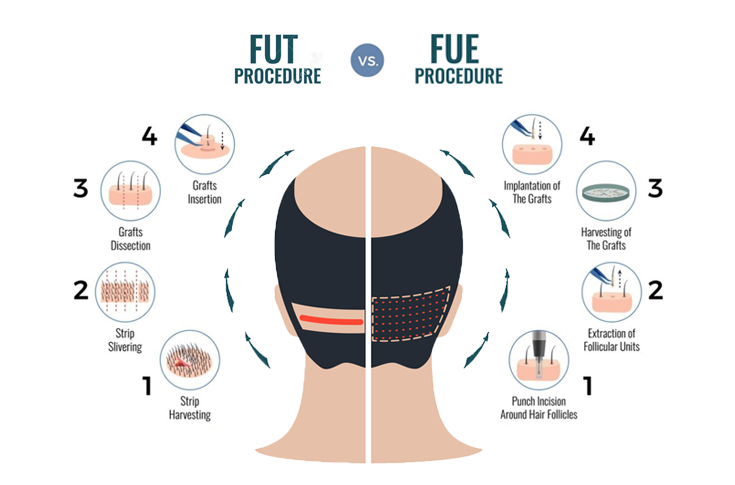
Follicular Unit Extraction removes follicular-unit grafts individually from a suitable donor region. It avoids the permanent linear strip scar associated with FUT, although FUE still leaves small round extraction marks.
FUE Versus FUT
FUE removes individual follicular units from across the donor area.
A FUT hair transplant removes a narrow strip of hair-bearing scalp which is then dissected into individual grafts. FUT leaves a permanent linear donor scar.
DHI Hair Transplant
DHI hair transplantation generally describes the placement stage rather than a separate donor-harvesting technique. Follicles are usually collected using an FUE-style process before placement with an implanter device.
How Many Grafts Are Used?
| Procedure measure | 2025 ISHRS figure |
|---|---|
| Average grafts in a first procedure | 2,347 |
| Average grafts in a subsequent procedure | 1,637 |
| Average grafts in a typical FUE case | 2,262 |
| Average grafts in a typical FUT case | 2,100 |
These figures are survey averages rather than recommended graft numbers for individual patients. Hair calibre, curl, existing density, treatment area and donor capacity all affect the final plan.
Our Hair Transplant Statistics 2026 guide contains the more detailed surgical analysis.
Platelet-Rich Plasma Therapy
Platelet-rich plasma treatment is non-surgical. A blood sample is processed before the prepared plasma is introduced into selected areas of thinning hair.
PRP does not move donor follicles and therefore cannot physically rebuild a completely absent hairline in the way transplantation can.
What Hair Loss Treatment Is Right for Me?
There is no single treatment that is statistically best for everybody with hair loss. The appropriate route depends on what is causing the loss and whether the condition is stable, progressive, temporary or medically active.
NHS guidance recommends getting an idea of the cause before approaching a commercial hair clinic, particularly where loss is sudden, patchy, painful, inflamed or unusually diffuse.
Early Pattern Thinning
Where miniaturised follicles are still present, medical treatment may be considered depending on diagnosis and suitability. PRP may also be discussed for selected thinning concerns.
Established Hairline or Crown Loss
Surgery may become relevant where the pattern is sufficiently understood, donor supply is strong enough and restoration can be planned responsibly.
Crown restoration requires particular care because the vertex can cover a large area and continue expanding as native hair loss progresses.
This is why planning should begin with a donor-area assessment rather than a predetermined graft package.
Female and Diffuse Hair Loss
Diffuse female thinning requires careful assessment because the donor region itself can sometimes be affected by miniaturisation.
Selected stable cases may be suitable for surgical restoration, but active diffuse shedding or a weak donor area may make surgery inappropriate. See our female hair-transplant guide.
What Do Hair Transplant Results Look Like?
Photographs are most useful when the type of hair loss, approximate graft requirement and stage of postoperative growth can be understood in context.
Our hair transplant before and after gallery contains patients with different hair types and treatment areas.
Clinical Assessment at Harley Street
Dr Harpreet Kalra, GMC reference 7126076, is the Principal Hair-Transplant Surgeon at Harley Street Hair Transplants.
Assessment should consider the pattern and duration of hair loss, donor density, hair calibre and texture, scalp condition, medical history, current medication, treatment goals and possible future native-hair thinning.
Where surgery is suitable, the graft estimate should follow assessment of the donor and recipient areas rather than being chosen from a standard package.
Current London treatment pricing is explained on our hair transplant cost page.
Sources and Further Reading
Hair-loss statistics are frequently repeated long after the original research was published. This guide therefore prioritises current NHS, NICE and ISHRS evidence where available and identifies older research in context.
- NHS — Hair Loss — normal daily shedding, common causes, treatment options and when to seek medical advice.
- NICE — Alopecia Areata Clinical Background — UK prevalence, severity and clinical characteristics.
- ISHRS — 2025 Practice Census Results — international patient demographics, procedure types and graft figures.
- Alfonso et al. — The Psychosocial Impact of Hair Loss Among Men — European research examining self-image and psychological impact.
- Almohanna et al. — The Role of Vitamins and Minerals in Hair Loss — review of nutritional deficiency, supplementation and hair loss.
UK Hair Loss Statistics FAQs
Is losing 50 to 100 hairs a day normal?
Yes. NHS guidance states that people can normally shed around 50 to 100 hairs each day, often without noticing.
What is the most common type of hereditary hair loss?
Androgenetic alopecia, commonly called male pattern baldness or female pattern hair loss, is one of the most common causes of progressive hereditary hair loss.
How common is alopecia areata in the UK?
NICE estimates that approximately 0.58% of UK adults have alopecia areata, with around 7% to 10% of affected adults potentially having severe disease.
Can stress cause hair loss?
Significant physical or psychological stress can contribute to diffuse shedding, including telogen effluvium.
Can vitamin deficiency cause hair loss?
Nutritional problems can contribute to shedding in some people. Iron status, vitamin D, overall nutrition and protein intake may all be relevant depending on the individual.
Can taking too many vitamins cause hair loss?
Excess vitamin A is a recognised cause of hair shedding, and excessive selenium has also been associated with hair loss.
What percentage of hair-transplant patients are male?
In the international 2025 ISHRS Practice Census, 84.7% of surgical hair-restoration patients were male and 15.3% were female.
Is FUE the most common hair-transplant harvesting method?
FUE was the dominant harvesting method in the latest ISHRS data, accounting for 85.4% of male procedures and 68.2% of female procedures.
How many grafts are normally used in a hair transplant?
The 2025 ISHRS census reported averages of 2,347 grafts for a first procedure, 1,637 for a subsequent procedure, 2,262 for a typical FUE case and 2,100 for a typical FUT case.
Does a hair transplant stop future hair loss?
No. A transplant moves suitable donor follicles, but surrounding native hair can continue thinning as the underlying pattern progresses.
Latest Hair Loss Articles
Further reading covering nutritional shedding, developing hair-loss treatments and long-term restoration planning.
Protein Deficiency Hair Loss: Can Low Protein Affect Hair Growth?
How inadequate protein intake may contribute to diffuse shedding and why nutritional loss should be distinguished from genetic pattern baldness.
25 June 2026 · Hair-Loss ResearchNew Baldness Pill: What the Reported 86% Figure Really Means
What the investigational treatment trial measured and why the headline should not be interpreted as 86% hair regrowth.
18 June 2026 · Hair RestorationJack P. Shepherd’s Latest Hair Transplant
What repeat surgery can demonstrate about progressive hair loss, donor protection and long-term restoration planning.
Concerned About Hair Loss or Thinning?
A consultation can review the history and pattern of your hair loss, scalp condition, donor-area strength, medical history and treatment options before you decide whether to proceed.
Where transplantation is being considered, the assessment can also cover likely graft requirements, treatment method, recovery, costs and how future native-hair loss affects the long-term plan.