
PB
Paul Bassoo
Google review★★★★★
Excellent overall service.
A temple hair transplant can restore recession around the frontal corners and temple points, helping to create a more balanced hairline and improve the way the hair frames the face.
At your consultation at 22a Harley Street, London W1G 9PF, we distinguish recession at the frontal corners from loss of the temple points. The plan explains which areas can be restored, the graft estimate and how the design works with your existing hairline and donor supply.


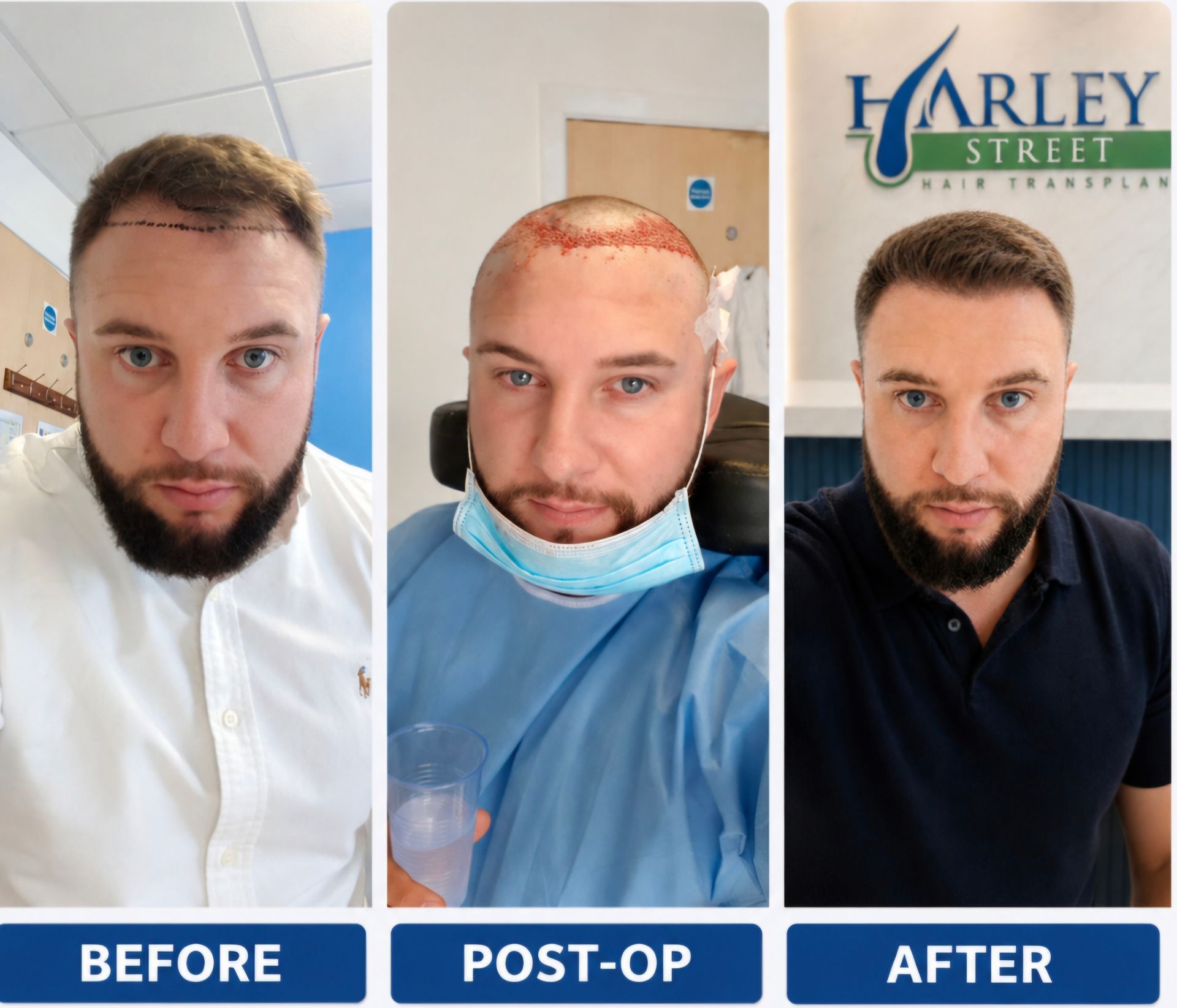
The temples are the areas at each side of the frontal hairline. They can recede gradually as part of patterned hair loss, creating deeper frontal corners or a more noticeable M-shaped hairline.
A temple transplant moves suitable follicular-unit grafts from the donor area into the recessed temple corners or temple points. The aim is to improve shape and facial framing while keeping the design natural and appropriate for the patient’s age and hair-loss pattern.
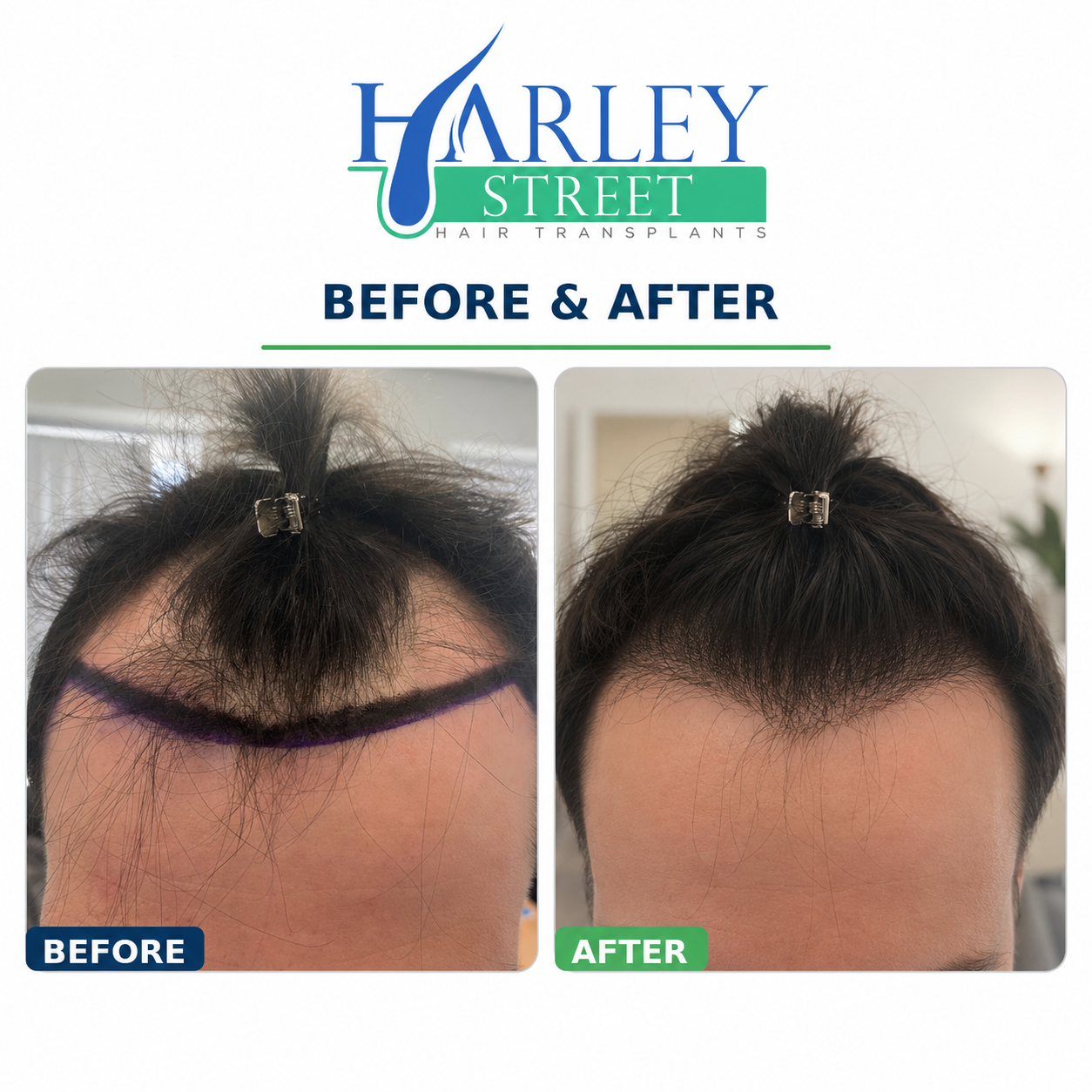
Temple treatment is planned around the patient’s existing hairline, natural hair direction, donor supply and the amount of recession affecting each side.
The frontal corners, temple points, facial proportions, donor-area strength and likely future hair loss are assessed before the proposed design is marked.
Suitable follicular-unit grafts are removed from the planned donor area using the agreed extraction method.
Recipient sites are planned to follow the required angle, direction, spacing and transition into the existing hair.
The prepared grafts are positioned according to the agreed temple design, with finer grafts used where a softer visible edge is required.
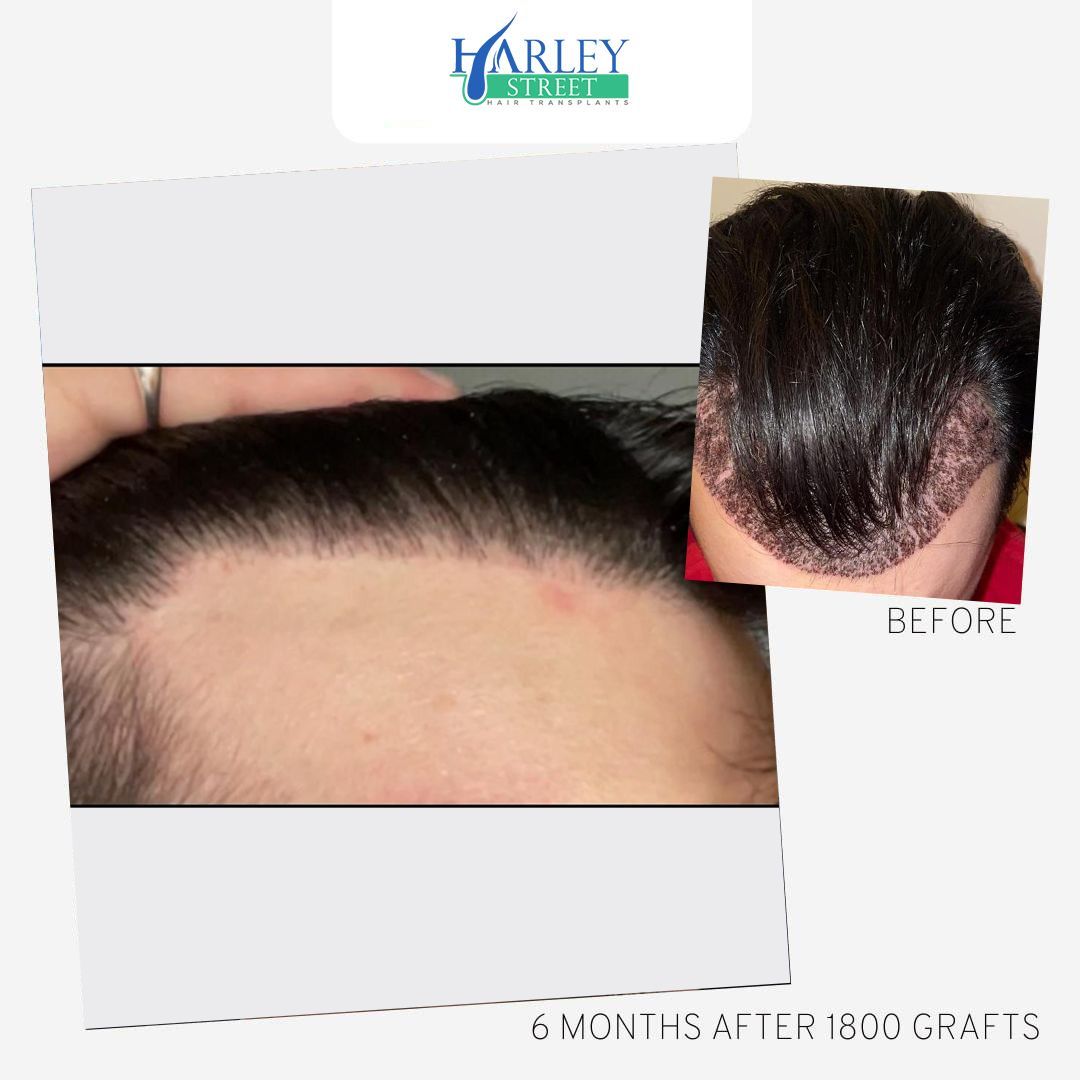
Suitability depends on the pattern and stability of the temple recession, donor-area quality, hair characteristics, medical history and whether the proposed design can remain natural over time.
Temple points normally require a softer density and a flatter direction than the central frontal hairline. A design that is too dense, low or sharply defined may appear unnatural even when the grafts grow.
FUE and DHI may both be discussed for selected temple cases. The right approach depends on donor-area suitability, graft requirements, hair type, existing hair and the planned placement strategy.
| Planning Point | FUE | DHI |
|---|---|---|
| Donor extraction | Individual follicular-unit grafts are removed from the donor area. | Normally uses the same type of individual FUE-style donor extraction. |
| Recipient placement | Grafts are placed into carefully planned recipient sites around the temple corners. | An implanter device may be used during the placement stage. |
| Temple use | May suit temple-corner and frontal hairline restoration where appropriate. | May suit selected cases requiring controlled placement around existing hair. |
| Scarring | Leaves small circular extraction marks rather than a linear strip scar. | Uses the same type of individual donor extraction marks. |
| Which is better? | Neither technique is automatically better for every patient. Donor management, temple design, graft selection and correct placement are more important than the procedure name alone. | |
The final cost depends on the size of the temple areas, the planned hairline shape, estimated graft requirements, donor-area suitability, procedure method and overall case complexity.
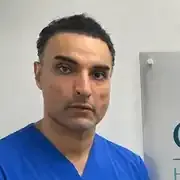
Principal hair-transplant surgeon
GMC reference 7126076
Temple planning considers facial balance, natural direction, donor-area strength, graft distribution and the possibility of further hair loss.
A temple hair transplant moves suitable donor grafts into the recessed frontal corners, temple points or surrounding hairline areas to improve shape and facial framing.
Both sides may be treated where appropriate. The design and graft distribution should reflect the degree of recession, natural asymmetry and available donor supply.
Graft requirements depend on the width and depth of the temple recession, whether temple points are included, desired density, hair characteristics and safe donor availability.
Both may be discussed for selected patients. The appropriate plan depends on the donor area, treatment size, existing hair, graft requirements and placement strategy.
Some transplanted hairs may shed during the first several weeks. Early new growth may begin around months three to four, with continued development over the following months.
Current FUE guide pricing starts from £3,499. The final quotation depends on the treatment area, graft estimate, donor assessment, method and case complexity.
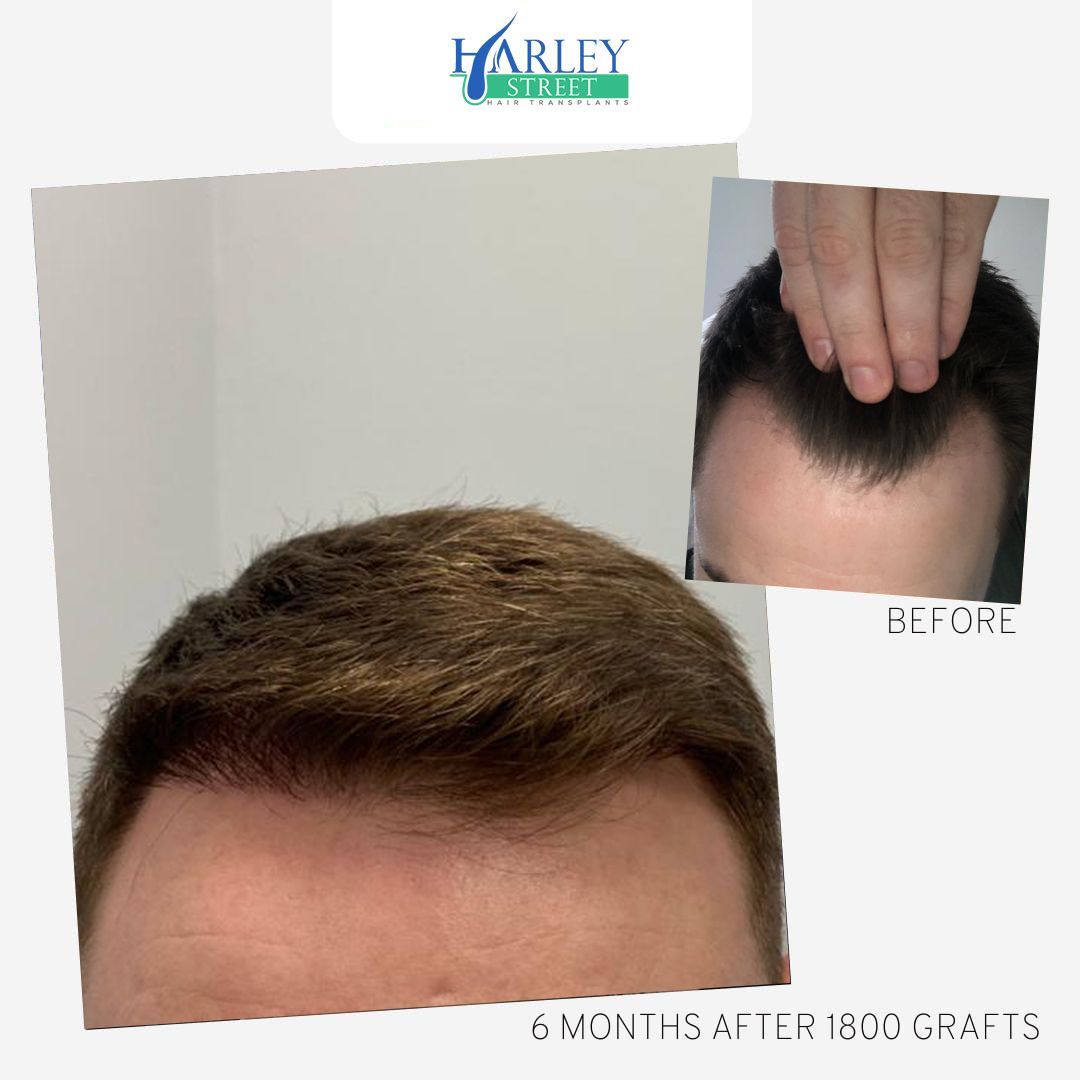
Selected feedback from patients across our clinic group. Treatment locations and procedures differ between reviews.
Paul Bassoo
Google reviewExcellent overall service.
Enzo
Google reviewVery satisfied with my results.
Subhan Buzdar
Google reviewGreat experience.
Muhammad Mohsin Saddique
Google reviewI felt listened to.
Ummad Rehman
Google reviewA very professional service.
Muhammad Saleem Popalzai
Google reviewStaff were friendly.
Discuss your temple recession, frontal hairline, donor-area suitability, FUE or DHI options, expected recovery, finance and personalised treatment cost.