★★★★★
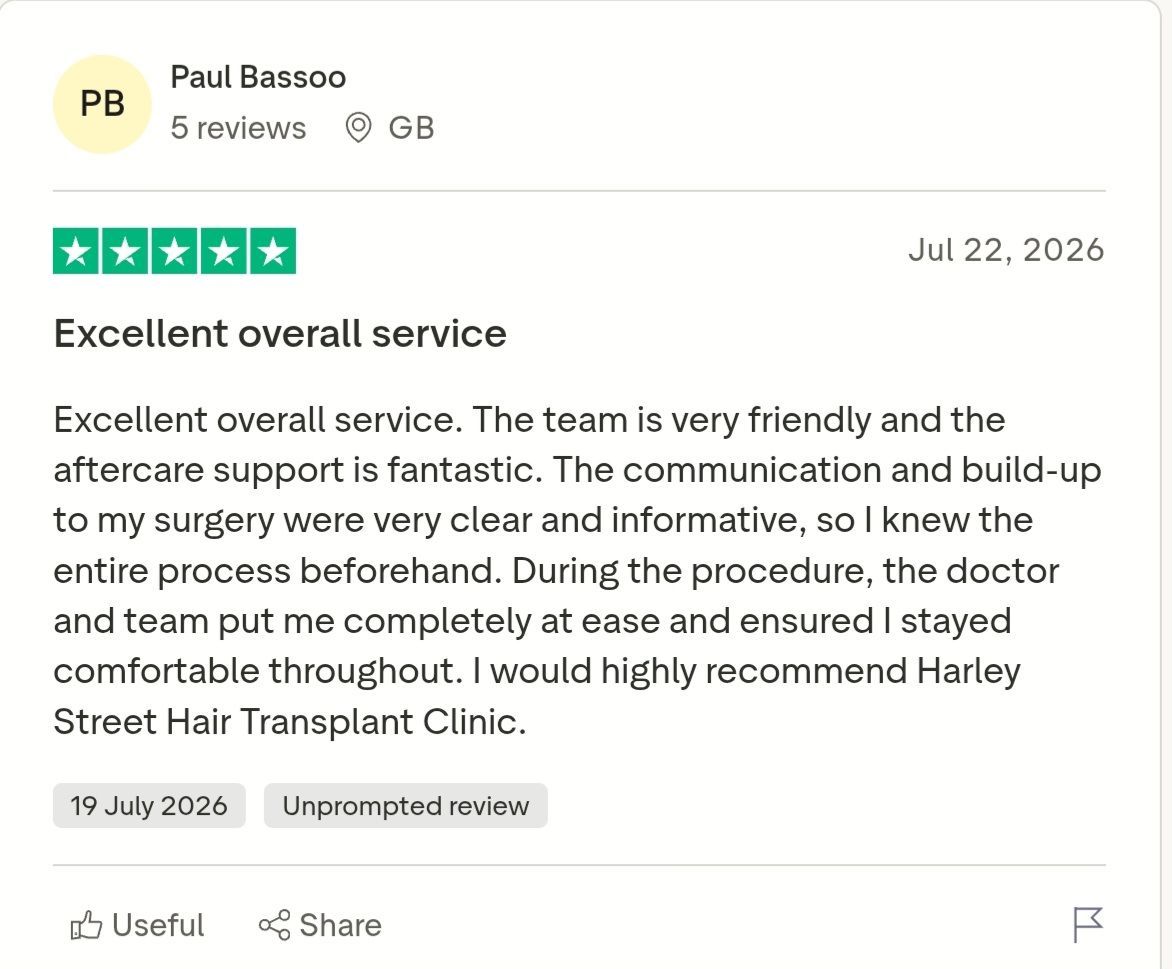
Paul Bassoo
“The team is very friendly and the aftercare support is fantastic.”
22 July 2026. Read the original screenshot
Choosing a hair transplant clinic is about more than looking at a finished result. The consultation, surgical experience, communication and aftercare all form part of the patient's journey.
Here you can read recent patient reviews, watch real crown, beard and hairline transplant videos, and see examples of results across different hair types and treatment areas.
Every patient starts with a different pattern of hair loss, donor supply and set of expectations, so individual results will vary.
Read the London clinic’s Google reviews. The separate review screenshots below cover experiences across our clinic group.
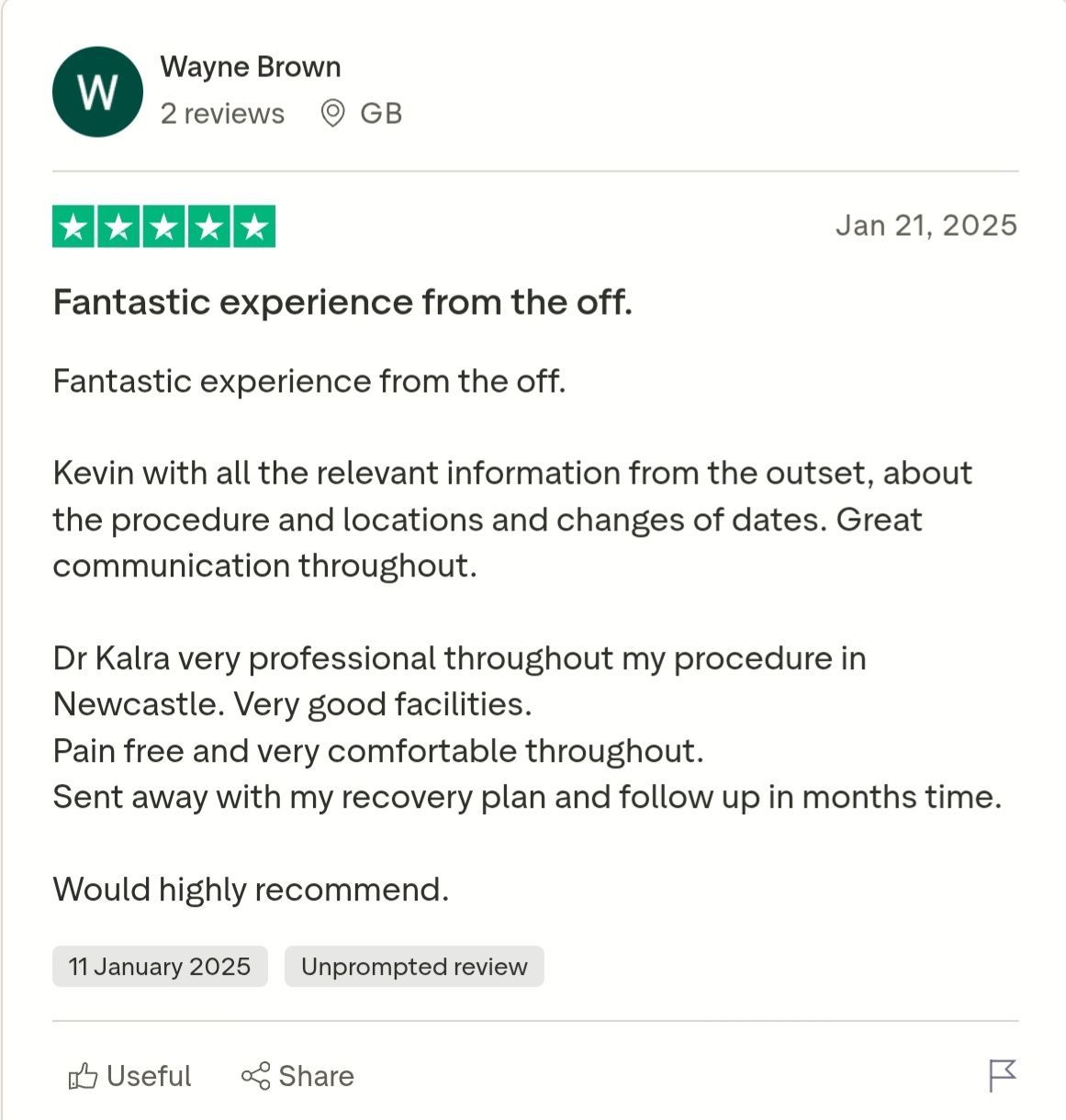
Patient feedback from across the clinic group. The excerpts below link to the original screenshots; Wayne’s review describes treatment in Newcastle.
“The team is very friendly and the aftercare support is fantastic.”
22 July 2026. Read the original screenshot
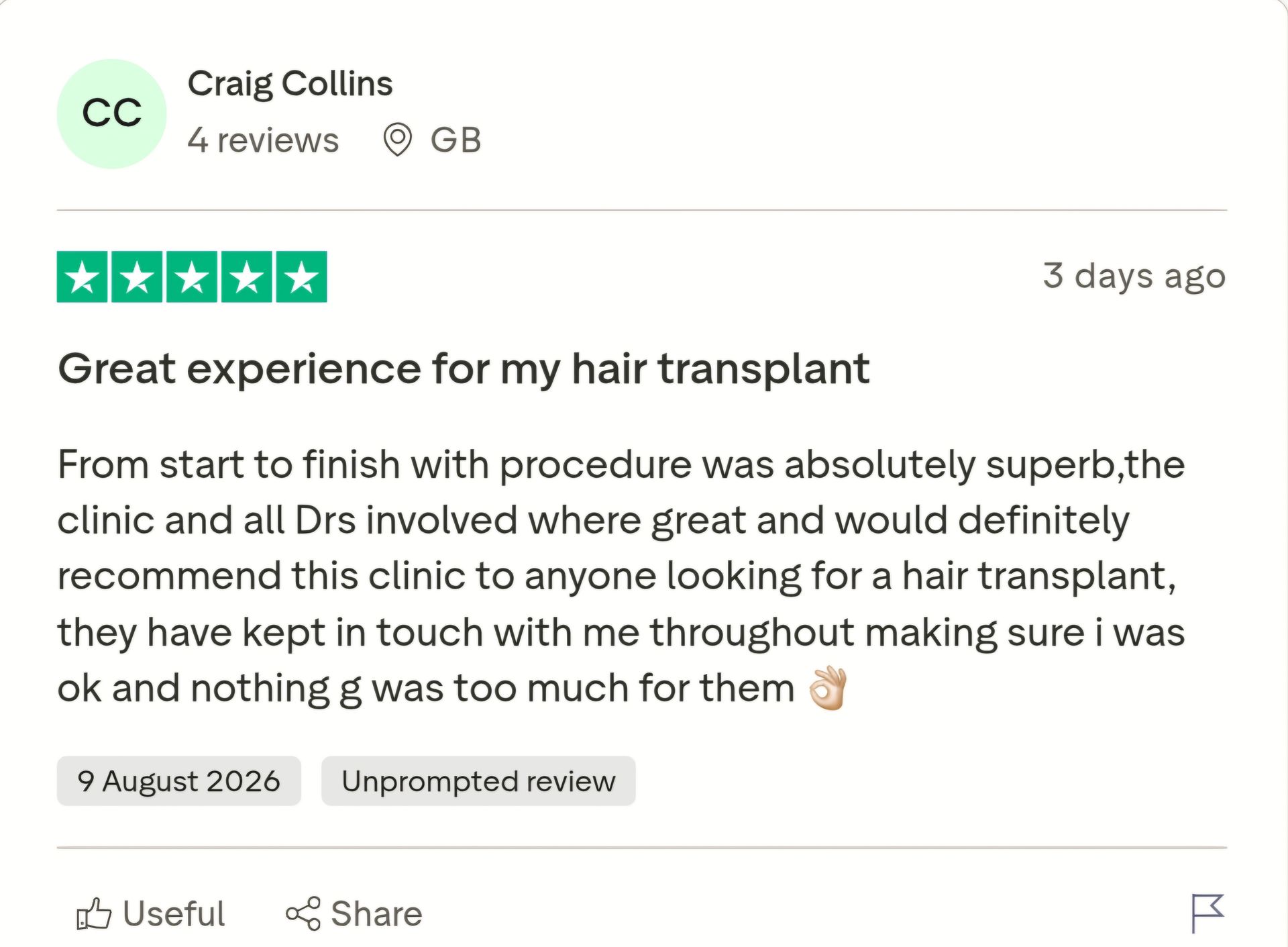
“they have kept in touch with me throughout making sure I was ok and nothing was too much for them”
Experience dated 9 August 2026. Read the original screenshot
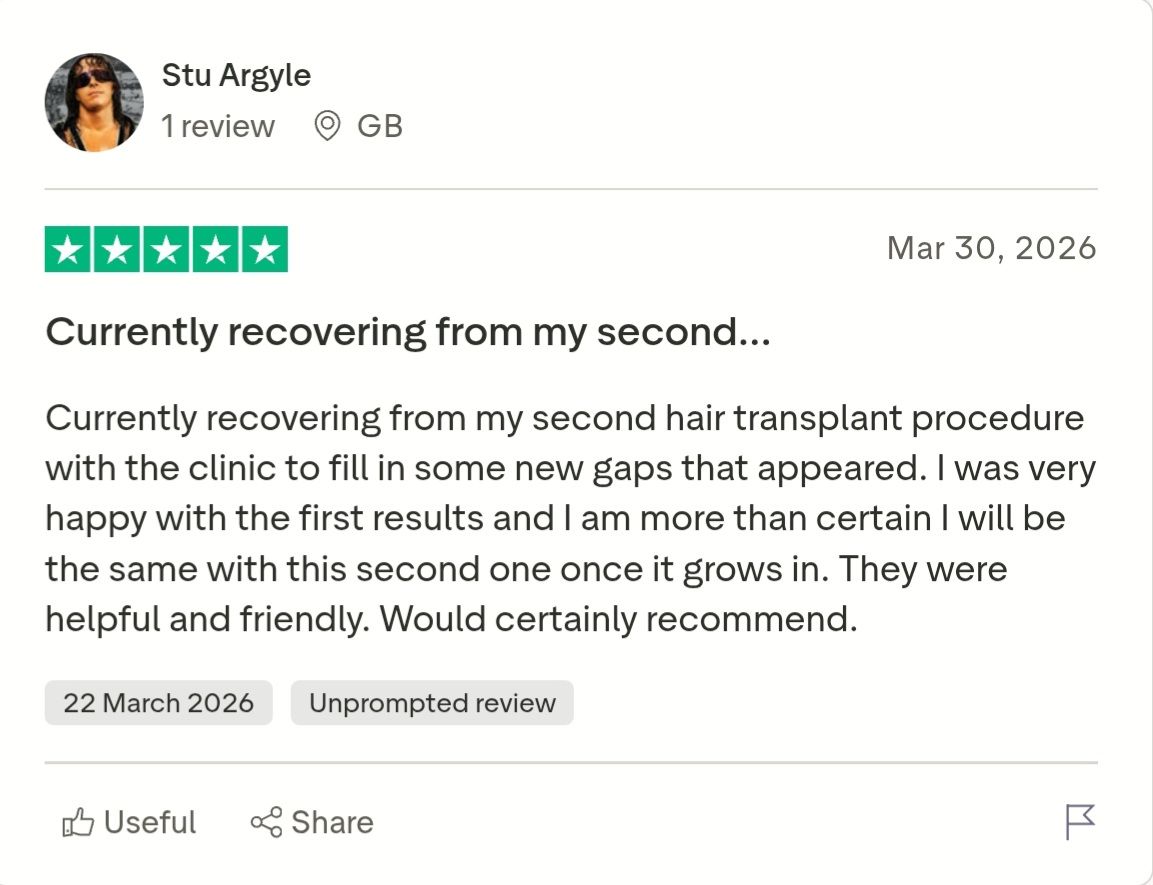
“They were helpful and friendly. Would certainly recommend.”
30 March 2026. Read the original screenshot
“Dr Kalra very professional throughout my procedure in Newcastle. Very good facilities.”
Newcastle treatment. Read the original screenshot
“Thanks my hair looks very full now.”
Experience dated 12 August 2026. Read the original screenshot
Read the full review screenshots and watch patient videos on our reviews page. You can also visit our Google reviews.

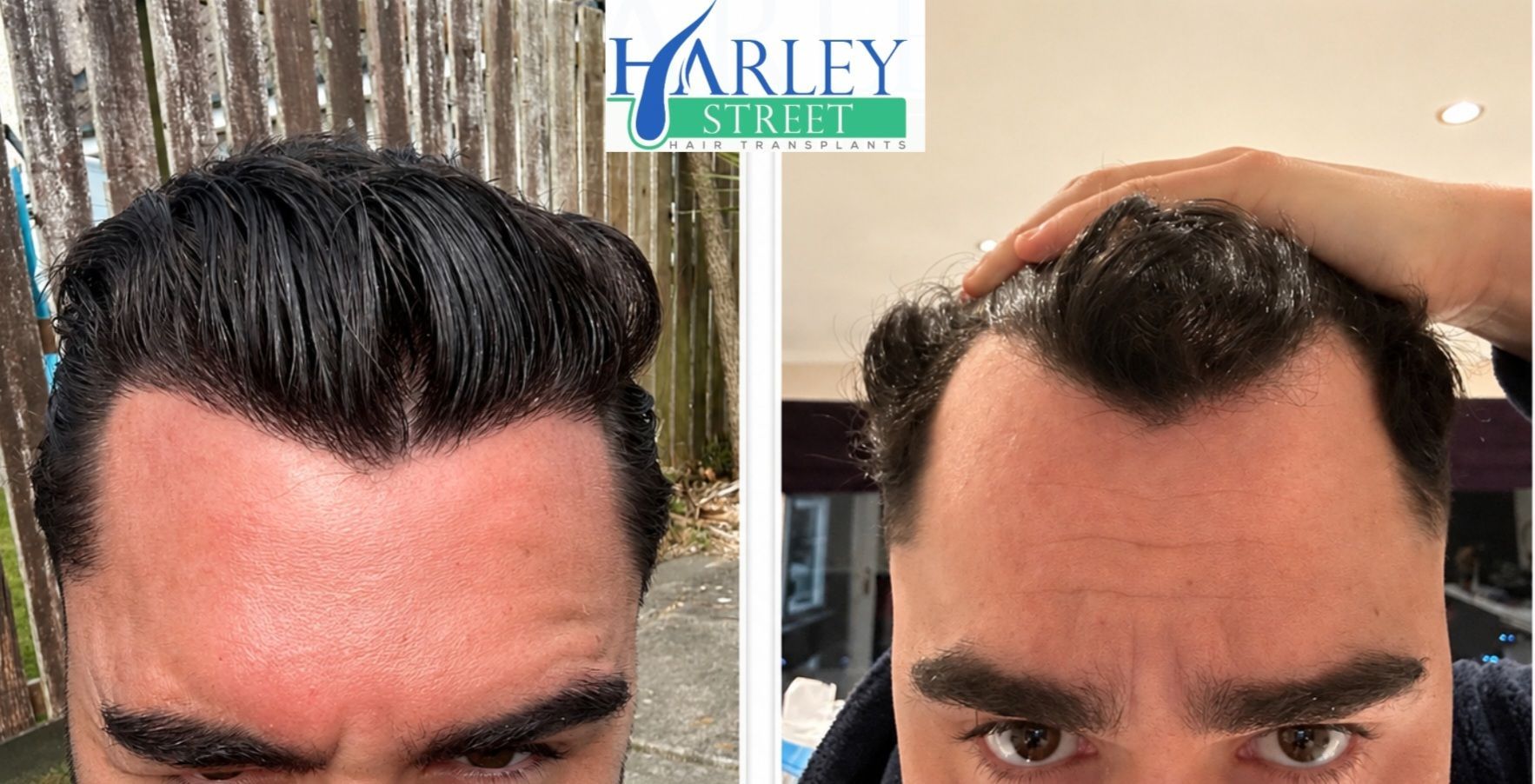
Different hair types and patterns of loss require different treatment plans. These examples show several types of restoration rather than one standard result.
Frontal transplantation can restore recession through the hairline and temples while maintaining a design that works with the patient's existing hair and facial proportions.
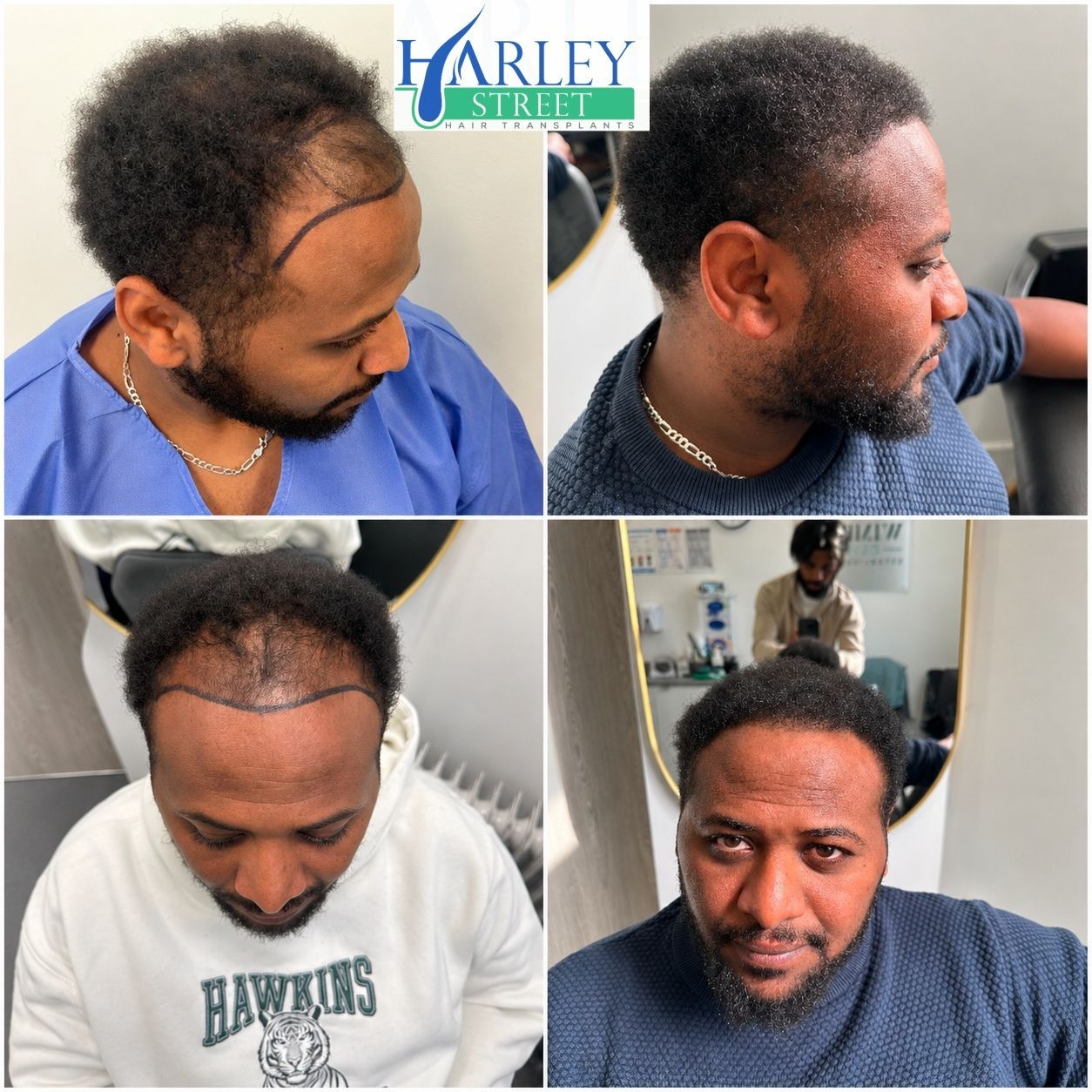
Curl pattern, hair calibre and follicular characteristics all affect surgical planning and the amount of visual coverage produced by transplanted grafts.
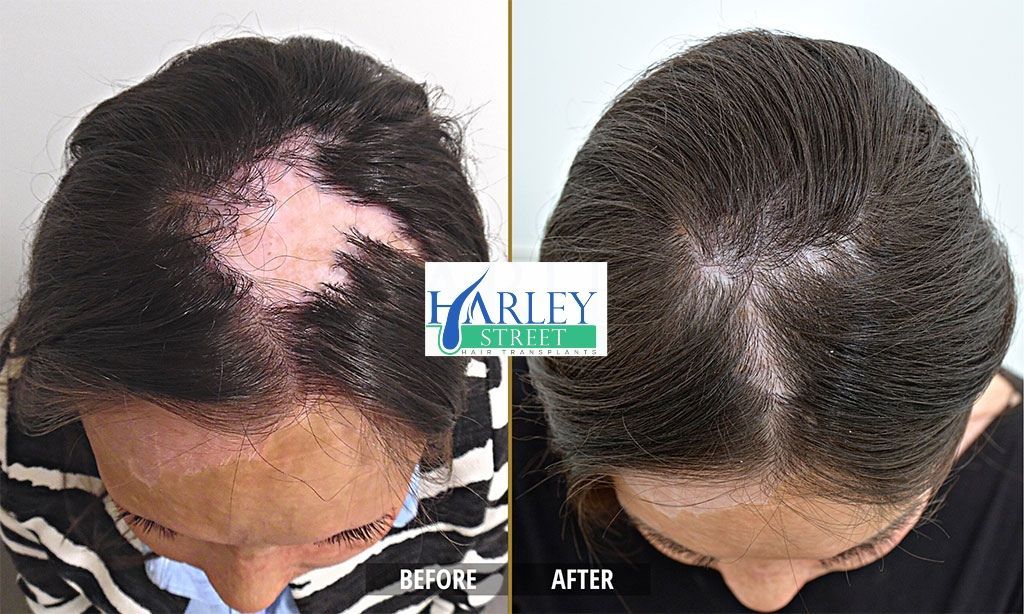
Female transplantation requires careful assessment of the pattern of thinning and donor area, particularly where hair loss is more diffuse.
Video results show transplanted hair from different angles and provide another perspective alongside still before-and-after photographs.
Crown restoration needs to work with the natural whorl pattern while making efficient use of the available donor hair.
This patient video shows the visible improvement in crown coverage once transplanted hair has grown and matured.
Beard transplantation can increase facial-hair coverage where natural beard growth is sparse or uneven.
The angle and direction of implantation are particularly important because facial hair often grows much flatter against the skin than scalp hair.
Frontal hairline restoration can change facial framing even when the treatment area itself is comparatively small.
The design should work with facial proportions, existing recession and the likely long-term pattern of hair loss.
Patients often mention whether the procedure was clearly explained, their questions were answered and the proposed treatment plan matched what they wanted to achieve.
Hair-transplant surgery can take several hours, so comfort, communication with the surgical team and understanding each stage of the procedure all contribute to the overall experience.
Reviews written after surgery frequently mention access to the clinic during recovery and how transplanted growth develops over the following months.
See our hair transplant aftercare guide and hair transplant timeline for more detail about recovery and growth.