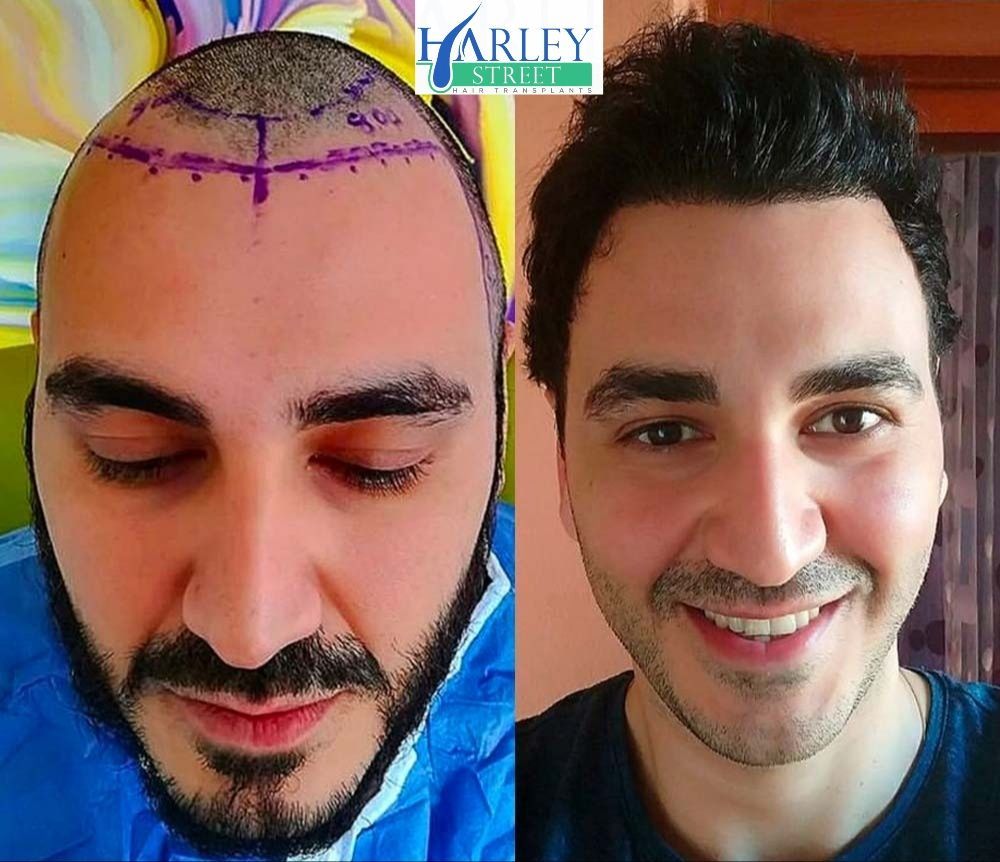
DHI stands for Direct Hair Implantation. After the follicles have
been extracted, they are placed straight into the recipient area
with a Choi Implanter Pen. The recipient incisions do not need to
be made beforehand.
As each graft is inserted, the pen gives the surgeon control over
its angle, depth and direction. This makes DHI particularly well
suited to hairline work and density procedures, where precise
placement matters most.
At our Harley Street clinic in London, DHI is performed by
GMC-registered surgeon Dr Harpreet Kalra, working with a trained
technician team. The procedure is carried out under local
anaesthetic, and most patients return to normal desk-based work
within a few days.
DHI can be performed without fully shaving the recipient area,
making it a popular choice for patients who want to keep their
existing coverage intact.
For patients also considering a scalp FUE hair transplant,
the choice between the two techniques depends on the area being
treated, the number of grafts required and whether keeping the
existing hair during recovery is a priority.
Hair grows in small natural groups called follicular units. Each unit
can contain one hair or several hairs growing together. During DHI,
these units are normally removed individually from the back and sides
of the scalp.
Once the grafts have been checked and sorted, they are loaded into a
Choi Implanter Pen. As the surgeon presses the pen into the scalp, it
creates the opening and places the graft in one movement.
The pen does not decide where the new hairline should sit or how the
grafts should be arranged. Those decisions are made during the surgical
planning. The implanter is the instrument used to carry out that plan.
How DHI relates to FUE
DHI usually uses the same individual extraction method as an
FUE hair transplant
.
The main difference comes during placement. FUE describes how the
grafts are removed, while DHI describes the use of an implanter during
insertion.
DHI is therefore not a separate supply of donor hair. The number of
grafts available still depends on the density and condition of the
permanent donor area.
How a DHI hair transplant is performed
Consultation and design
The doctor examines the hair loss, scalp and donor area before
discussing the shape and coverage the patient wants. Medical
history, medication and previous treatment are reviewed at the
same appointment.
A hairline is drawn while the patient is upright. Crown work is
planned around the existing whorl rather than using a fixed pattern.
Donor preparation
The donor area is trimmed where required and numbed with local
anaesthetic. Follicular units are then removed individually with
a small punch.
The extractions are distributed across the usable donor area
so that too much hair is not taken from one concentrated section.
Preparing the grafts
The technician team checks, counts and sorts the grafts. Fine
single-hair grafts can be kept for the visible edge of a hairline,
while units containing more hairs are used behind them for coverage.
The prepared grafts are loaded carefully into the Choi pens before
being passed back to the surgeon.
Implantation and aftercare
The surgeon inserts each graft at the planned depth, angle and
direction. The placement follows the surrounding hair rather than
applying the same angle across the whole treatment area.
Patients normally leave on the day of treatment with written
instructions covering washing, sleeping, exercise and protecting
the grafts.
Who is suitable for DHI?
DHI works best when the treatment plan matches the available donor
hair. The doctor needs to know how much hair can be removed safely,
how large the recipient area is and whether the requested density
can be achieved with the available grafts.
have a clear and established pattern of hair loss;
have enough stable donor hair for the proposed work;
want precise placement around an existing hairline;
want to retain more existing hair in the recipient area;
understand the recovery and growth timeline.
When a different plan may be better
A large area of advanced hair loss may require a different graft
plan or more than one procedure. DHI cannot compensate for a weak
donor area or supply grafts that are not available.
Active scalp disease, rapidly changing hair loss or medical factors
affecting healing also need to be assessed before surgery. In those
cases, treatment may be delayed or a different approach recommended.
How DHI compares with FUE and FUT
DHI
DHI grafts are normally removed one at a time, just as they are
with FUE.
After preparation, each graft is loaded into a Choi Implanter Pen.
The pen makes the opening and places the graft in the same movement,
so the recipient incisions are not created in advance.
FUE
During an
FUE hair transplant
,
follicular units are removed individually from the donor area.
The recipient sites are made separately before the grafts are
placed. FUE does not leave one continuous donor scar, although
every extraction leaves a small round mark.
FUT
With an FUT hair transplant,
a narrow strip of hair-bearing scalp is removed from the donor area.
The strip is separated into individual grafts under magnification.
Closing the donor wound leaves a permanent linear scar.
How much does a DHI hair transplant cost?
DHI pricing depends on the number of grafts, the size of the treatment
area and the complexity of the placement. Hairline work, crown
restoration and treatment between existing hairs can require different
amounts of surgical time even when the graft numbers are similar.
DHI price range£3,499–£7,000+
1,500 grafts (guide price)Around £5,000
The consultation is used to calculate the graft estimate and decide
whether the work should be completed in one procedure or planned in
stages. The clinic should confirm the full price and what it includes
before treatment is booked.
Wider information about surgical pricing is available on our hair transplant cost page.
Patients who want to spread the cost can also ask about the available
finance arrangements during their consultation.
DHI recovery and hair growth
The recipient and donor areas need time to settle after treatment.
Patients receive individual instructions, but the following stages
give a general idea of what happens during recovery.
First 48 hours
The grafts are newly placed and must not be rubbed or disturbed.
Mild swelling, tenderness and redness can occur.
Days 3–10
Small scabs form around the grafts and gradually loosen during the
washing routine explained by the clinic.
First few weeks
The transplanted hairs can shed while the follicles remain beneath
the skin. This is a normal part of the growth cycle.
Months 3–4
Early new growth usually begins. The first hairs can look fine and
uneven before they mature.
Months 6–9
Coverage becomes clearer as more hairs grow and the earlier growth
begins to thicken.
Around 12 months
Most patients can assess the established result, although some
areas may continue to mature beyond this point.
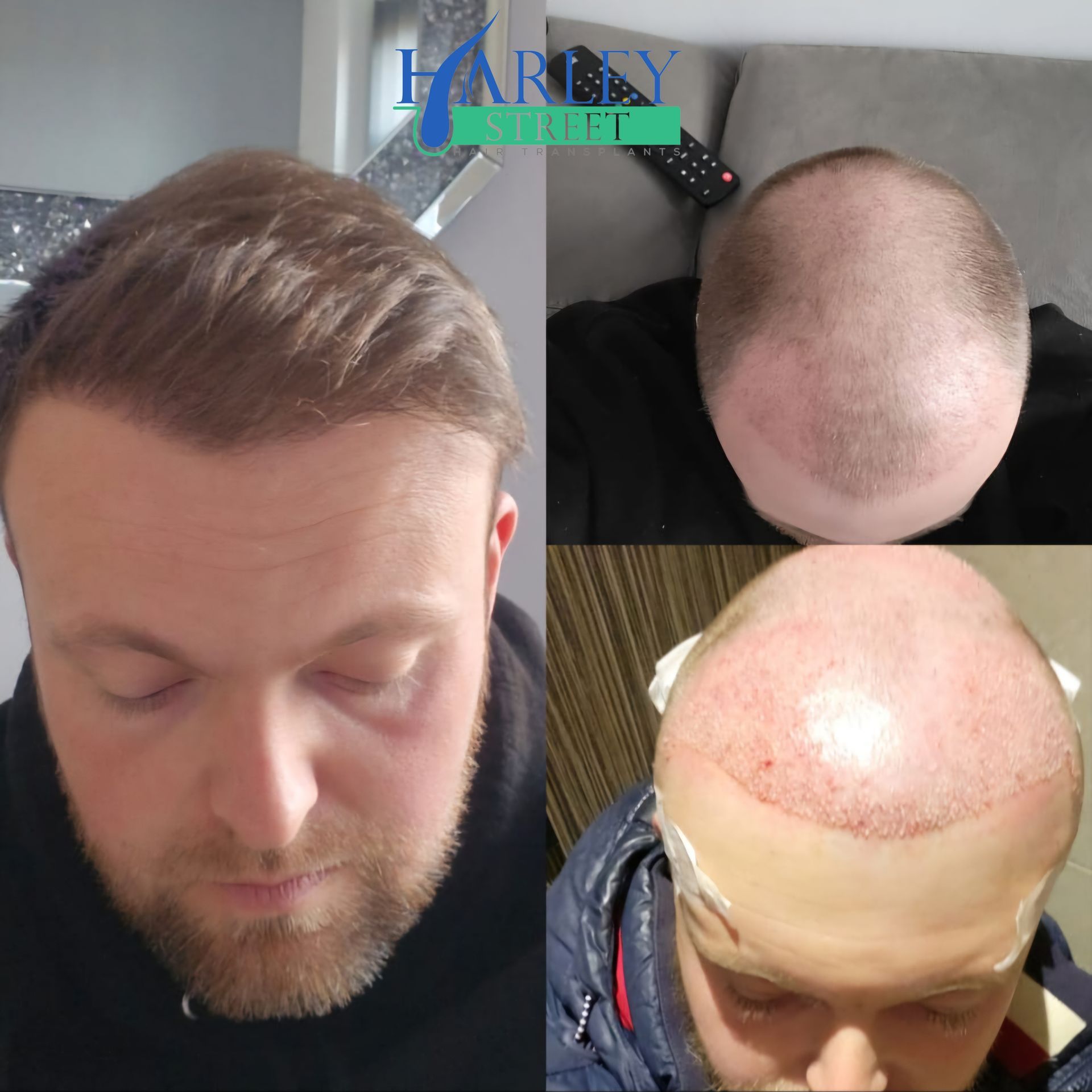
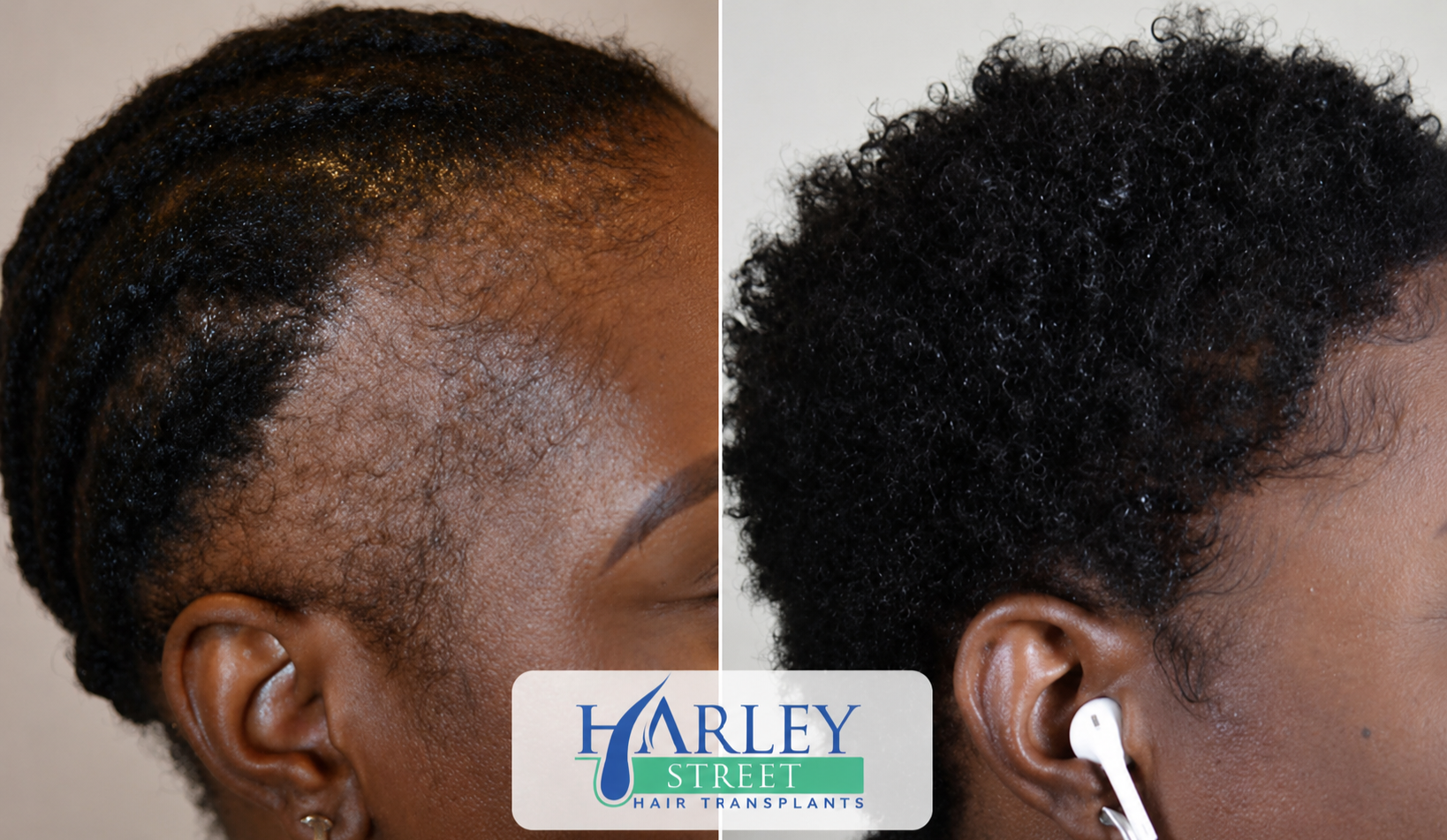
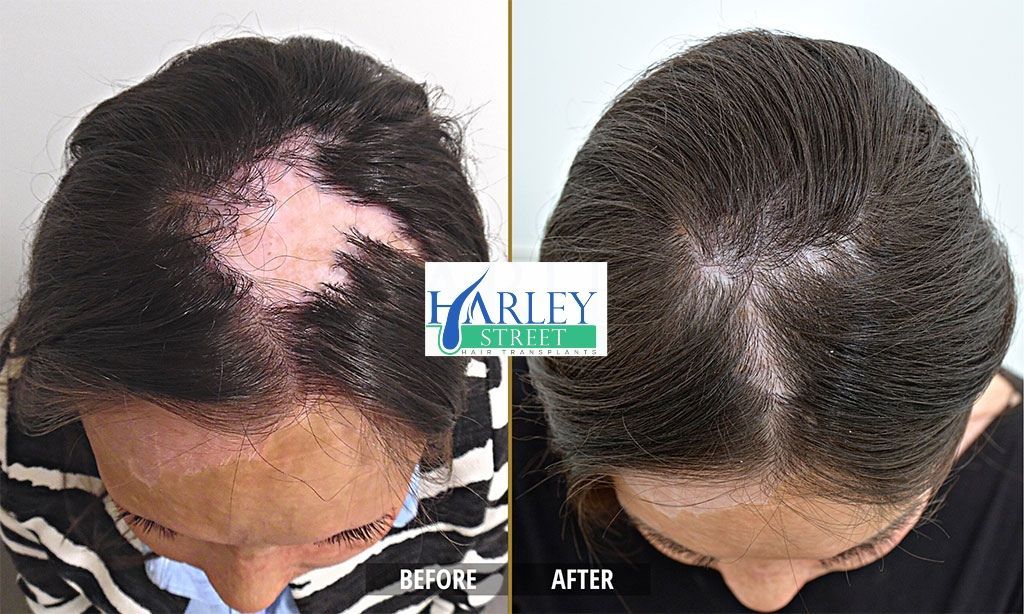
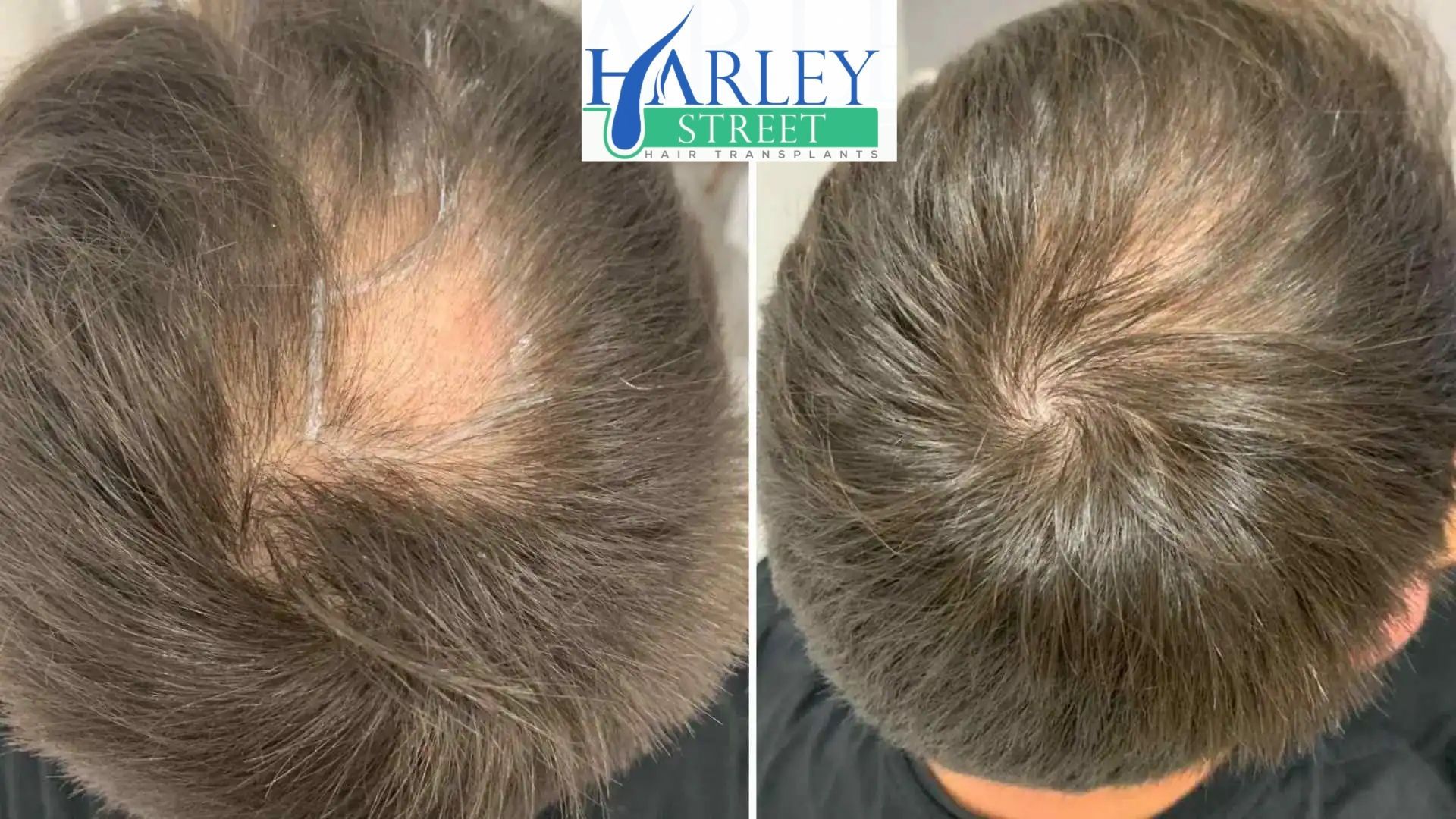
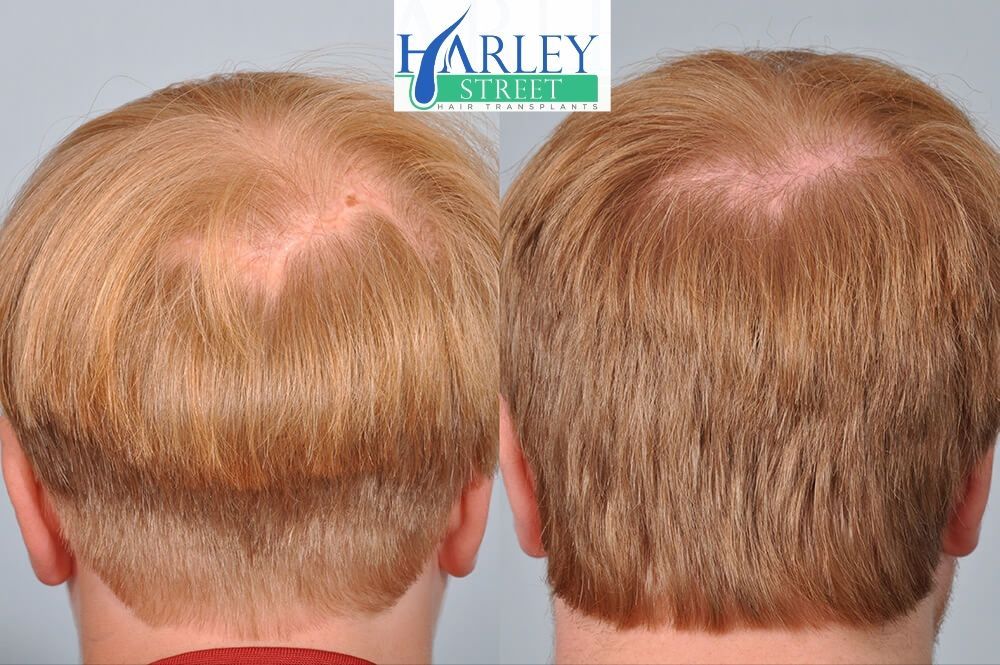
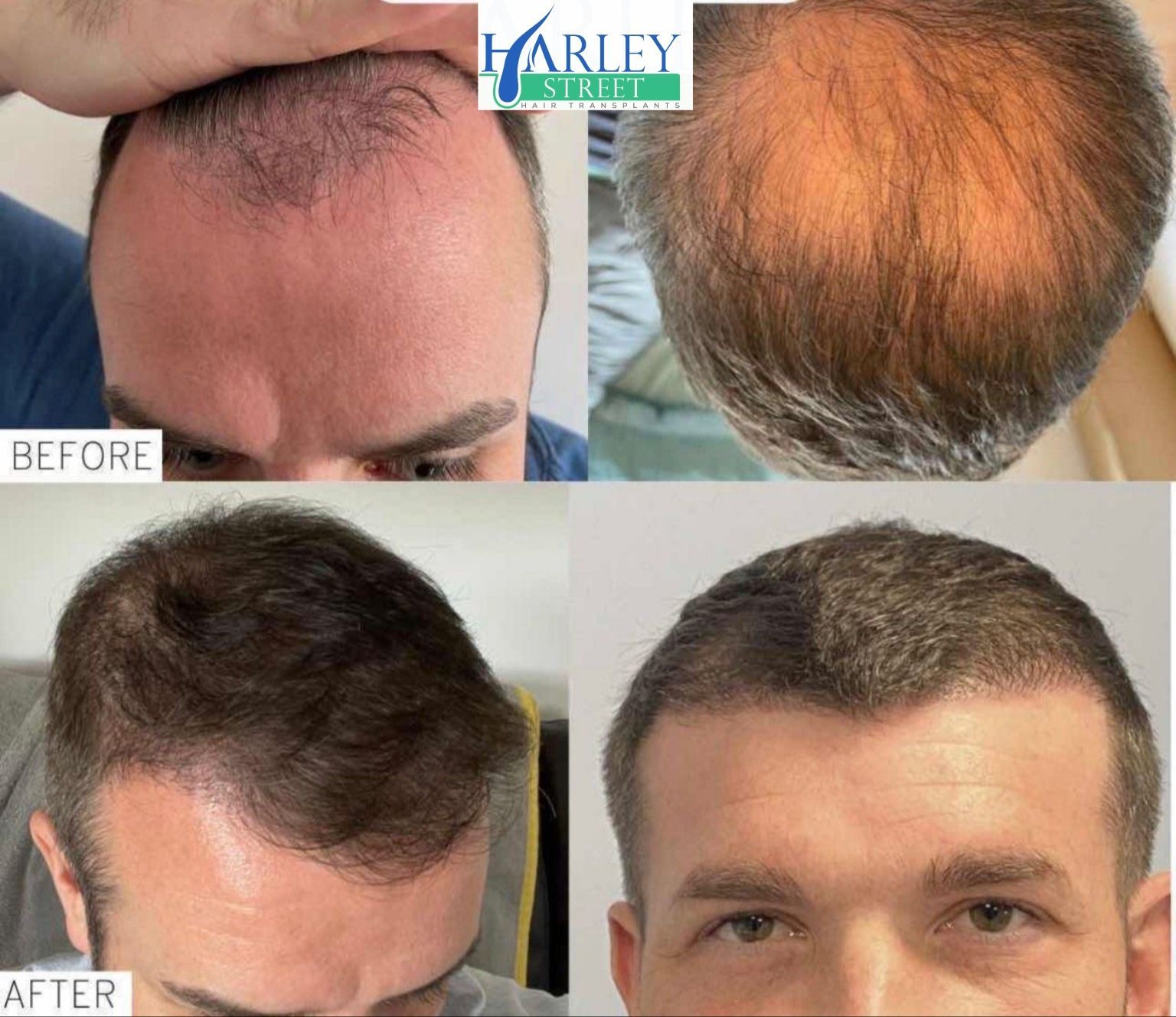
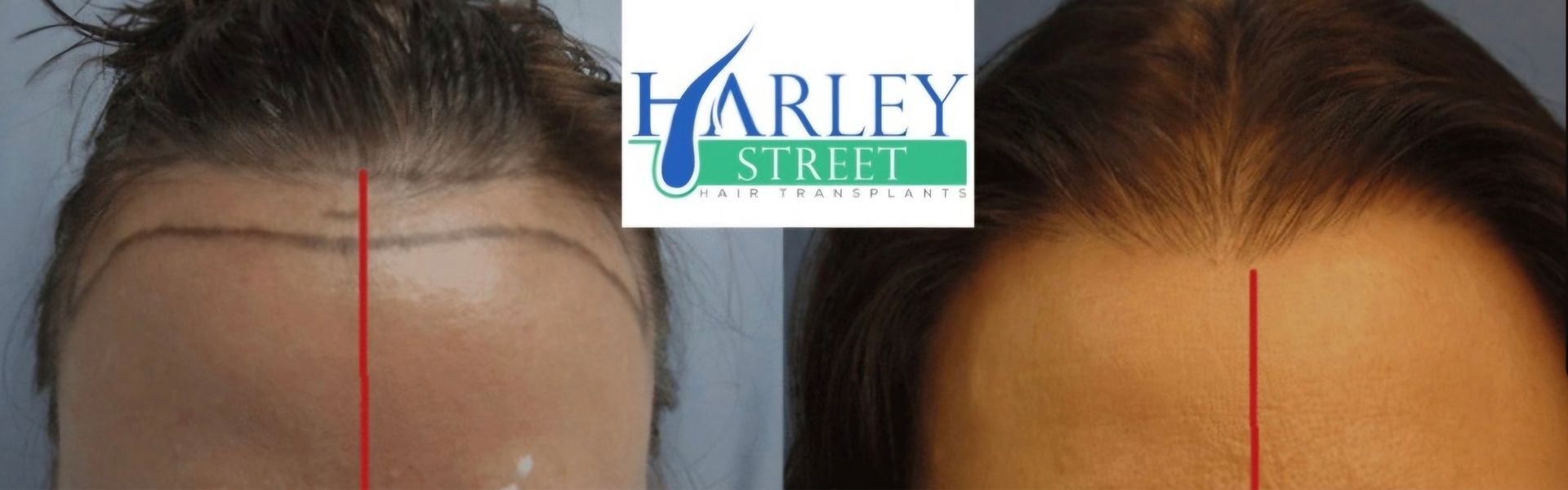
View our patient results gallery
for the graft counts and recovery times recorded with each case. Your consultation will assess what is realistic for your donor hair and treatment area.
Dr Harpreet Kalra
Dr Harpreet Kalra
is registered with the General
Medical Council under reference 7126076. At Harley Street Hair
Transplants, he performs DHI procedures with the support of a
trained technician team.
His assessment covers the pattern of hair loss, the condition of
the scalp and the amount of permanent donor hair available. This
determines how many grafts can be taken without leaving the back
and sides looking visibly depleted.
Dr Kalra also plans the treatment area, hairline position and graft
distribution. During implantation, he controls the angle, depth and
direction of the grafts placed with the Choi pen.
Before treatment is booked, patients are given a graft estimate,
expected cost and a clear explanation of recovery and likely growth.
DHI hair transplant FAQs
Is DHI different from FUE?
DHI normally uses the same individual graft-extraction method as
FUE. The difference is the placement stage, where the prepared
grafts are inserted with a Choi Implanter Pen.
Does DHI require the whole head to be shaved?
Not always. The donor area usually needs trimming so the follicles
can be identified and removed safely. The recipient area can
sometimes be treated without being fully shaved.
Does DHI leave scars?
DHI is not scar-free. Individual donor extraction leaves small round
marks rather than the single linear scar associated with FUT.
Is a DHI hair transplant painful?
The donor and recipient areas are numbed with local anaesthetic.
Patients can feel the anaesthetic injections and some pressure or
tenderness, but the scalp is numbed during the main procedure.
When does transplanted hair begin to grow?
Early growth commonly begins around the third or fourth month.
Coverage becomes clearer between six and nine months, with the
result continuing to mature around the twelve-month point.
Can DHI be used for crown restoration?
Yes, provided the donor supply and graft plan are suitable. Crown
placement must follow the existing whorl and often requires careful
planning because the area can need a substantial number of grafts.
How long should I take off work?
Most patients with desk-based jobs return within a few days.
Patients who prefer the early redness and scabbing to settle first
may choose to take longer away from work.
Harley Street Hair Transplants reviews
Reviews give patients an idea of what to expect beyond the procedure
itself. They often mention the consultation, how clearly everything
was explained and the support provided after treatment.
The comments below were left for Harley Street Hair Transplants on
Google. They cover the wider experience of using the clinic rather
than DHI treatment alone.