
Female Pattern Baldness
Female pattern hair loss commonly causes progressive thinning through the top of the scalp and widening of the parting rather than a completely bald area.
Most common type:
Androgenetic alopecia
Androgenetic alopecia
You may notice a receding hairline, a wider parting or more scalp showing at the crown. Hair loss can be gradual or sudden; finding the cause is the first step in deciding what to do.
Pattern hair loss is common, but shedding can also be associated with illness, stress, nutritional deficiencies, hormonal changes, medication and certain scalp or autoimmune conditions.




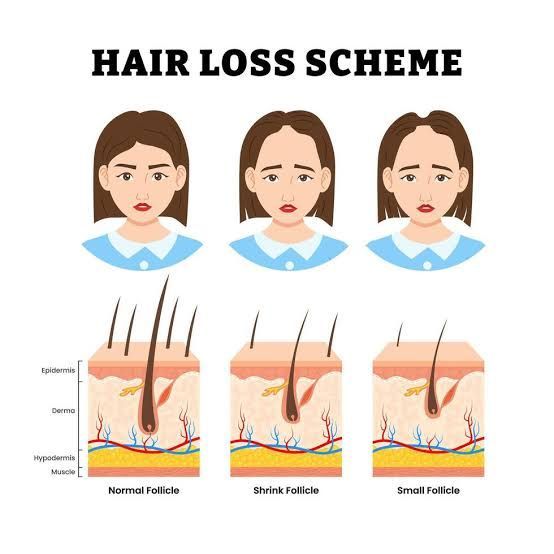
Hair loss has many possible causes. Looking at where the hair is thinning, how quickly it has changed and whether there are other scalp or health symptoms can help determine the appropriate next step.
Some types of hair loss are inherited and progress gradually. Others may develop following changes in health, hormones, nutrition, medication or periods of physical or emotional stress.
The way hair loss develops can provide useful clues about its cause and whether medical treatment, monitoring or hair restoration may be appropriate.
Some daily shedding is normal. The NHS states that people can lose around 50 to 100 hairs per day without necessarily noticing visible thinning.
Male and female pattern hair loss, or androgenetic alopecia, is a common inherited form of progressive hair loss.
Significant physical or emotional stress can contribute to temporary increased shedding in some people, including a condition known as telogen effluvium.
Medical assessment is sensible when hair loss is worrying you, develops suddenly, appears in patches or is accompanied by scalp symptoms or other changes in health.
No. Hair transplantation is appropriate only for selected patients. The cause and stability of the hair loss and the condition of the donor area need to be assessed first.
No. A transplant relocates suitable donor follicles but does not stop surrounding native hair from continuing to thin where progressive hair loss remains active.
Selected patient feedback about communication, service and treatment experience.
Paul Bassoo
Google reviewExcellent overall service.
Enzo
Google reviewVery satisfied with my results.
Subhan Buzdar
Google reviewGreat experience.
Muhammad Mohsin Saddique
Google reviewI felt listened to.
Ummad Rehman
Google reviewA very professional service.
Muhammad Saleem Popalzai
Google reviewStaff were friendly.