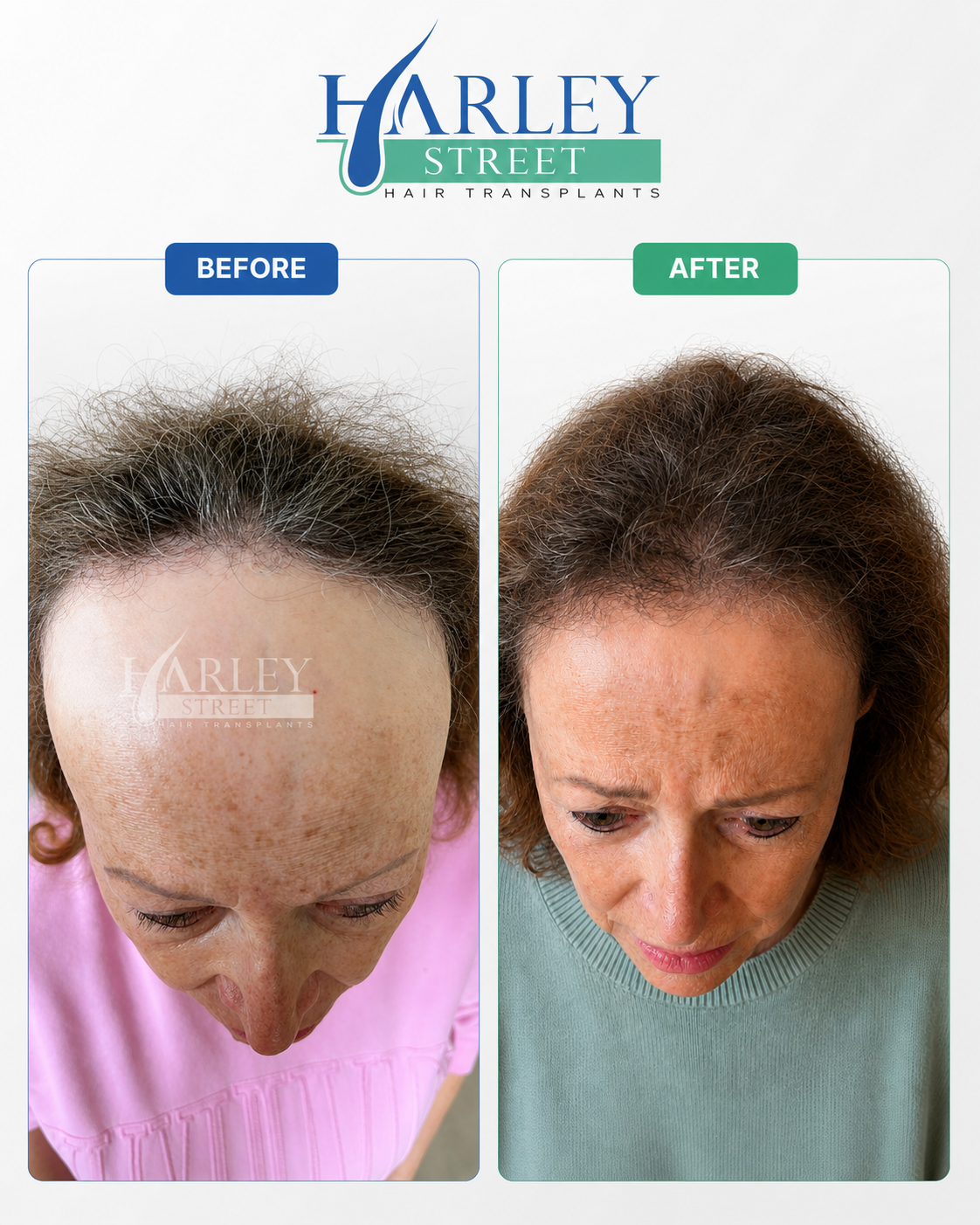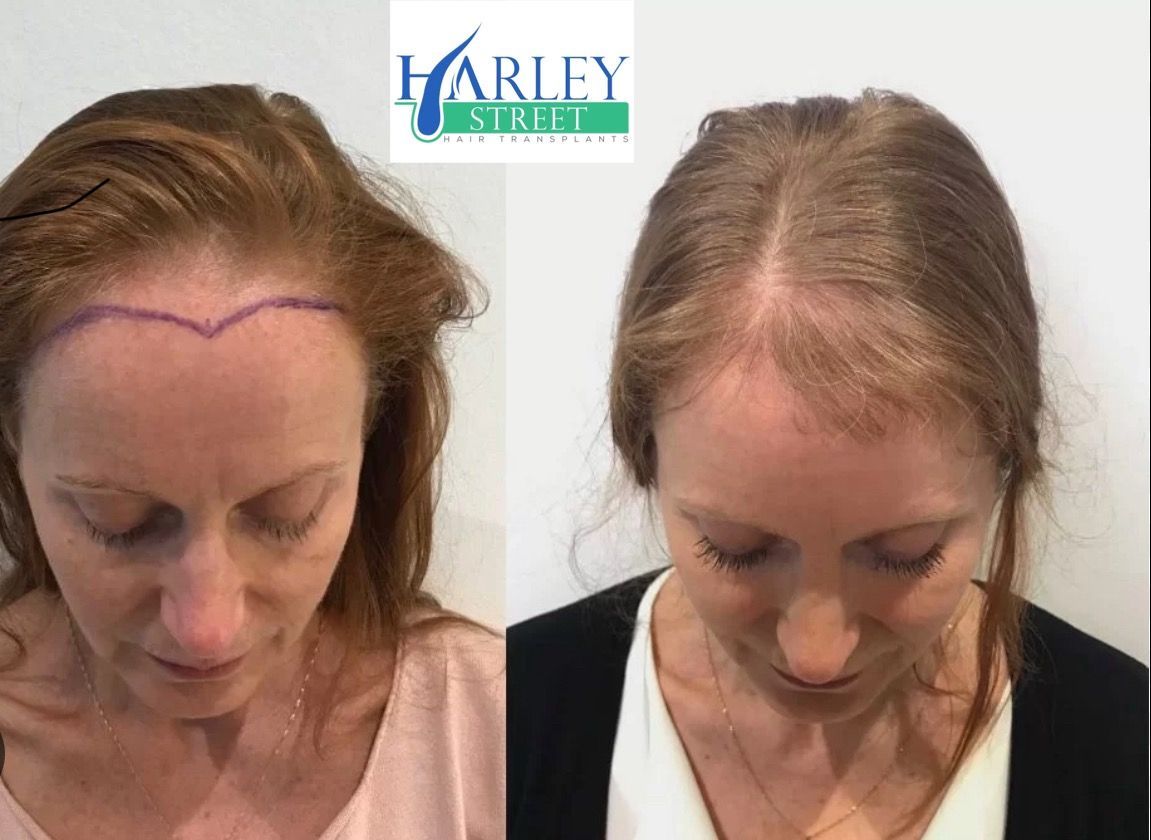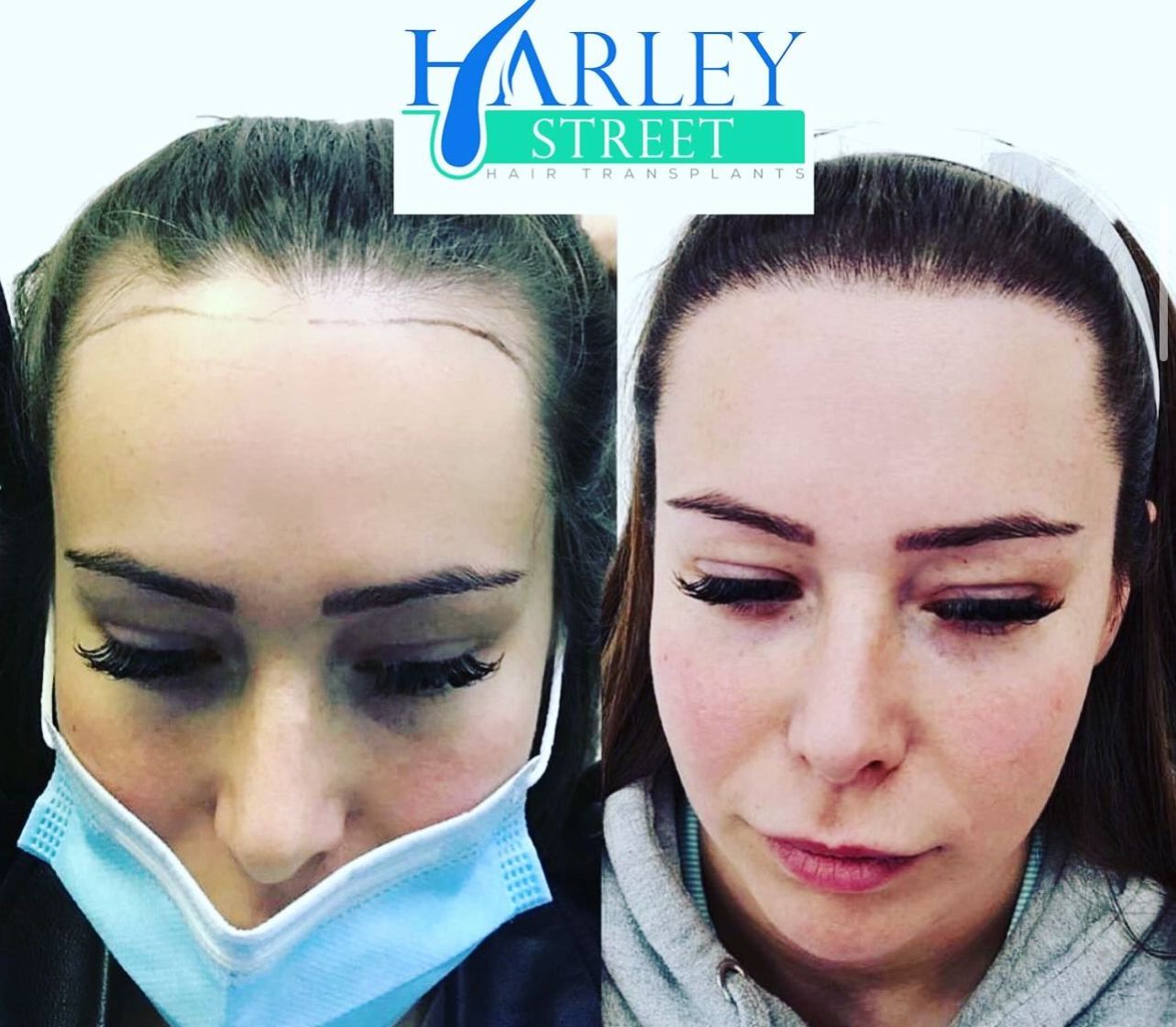
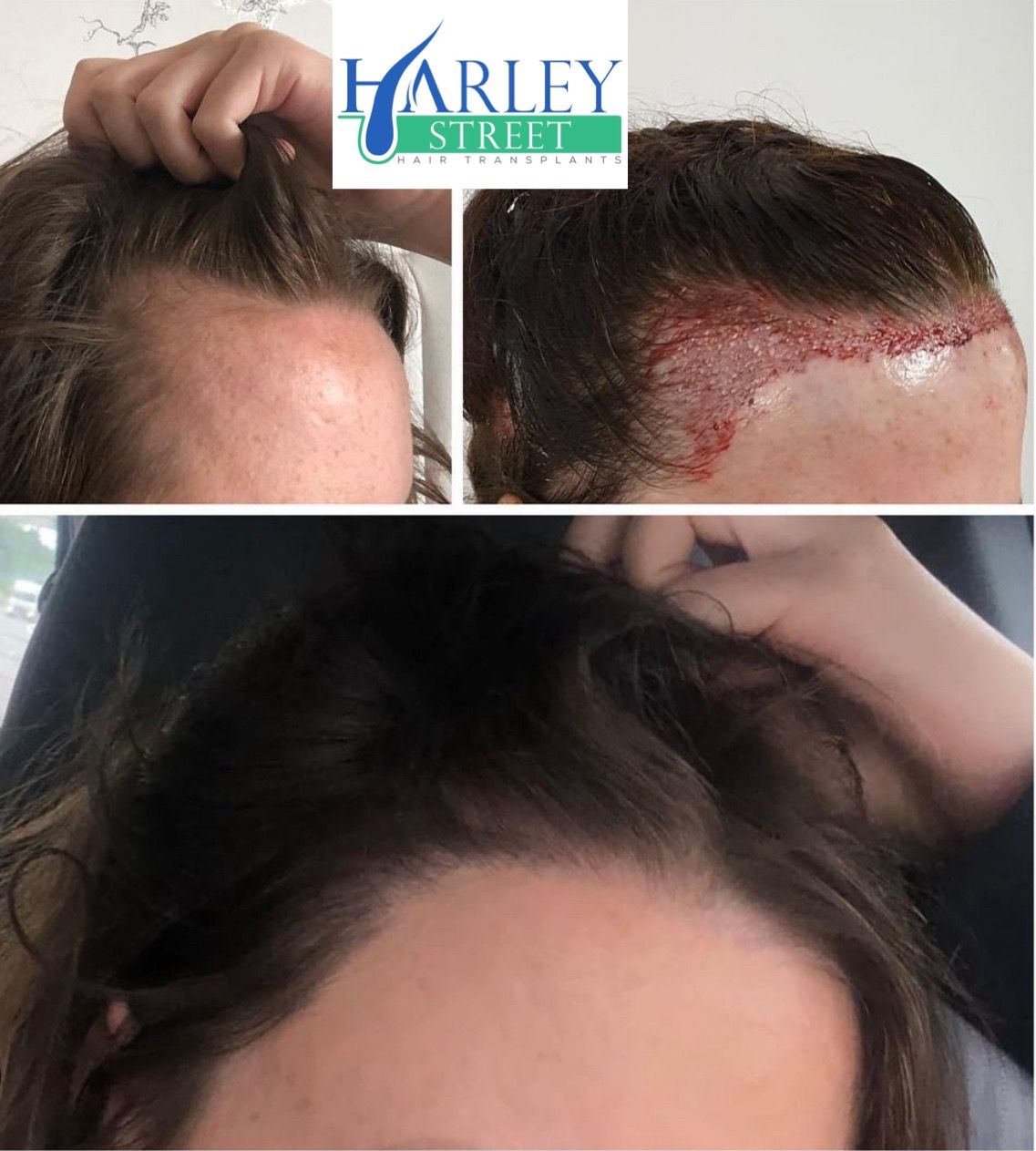
Sonya’s Case study
- Timeframe
- Around 9 months
1,200 grafts
Follicular unit extraction (FUE)
Area Temple
Hair transplantation may be considered for women with stable hairline thinning, temple recession, a widening parting or selected areas of reduced scalp density.
Your consultation at 22a Harley Street, London W1G 9PF starts with the cause of your thinning. We assess your scalp, donor hair and medical history before discussing whether surgery is suitable, how much trimming may be needed and what coverage is realistic.


1,200 grafts
Follicular unit extraction (FUE)
Area Temple
1,535 grafts
Follicular unit extraction (FUE)
Area Receding hairline
2,136 grafts
Follicular unit extraction (FUE)
Area Hairline & temples
Hair loss in women can appear differently from the more defined patterns commonly seen in men. It may affect the frontal hairline, temples, central parting, mid-scalp or crown, or appear as more generalised thinning.
The cause must be considered before transplant surgery is discussed. Some forms of hair loss in women may be temporary, medically related or still actively progressing.
The exact plan depends on whether treatment concerns the frontal hairline, temples, parting, crown or another suitable area of stable thinning.
The pattern, duration and possible cause of hair loss are reviewed alongside scalp health and medical history.
Density, hair calibre, texture and the number of grafts that may be collected safely are assessed.
The recipient area is planned around existing hair, facial balance, natural direction and long-term donor preservation.
Follicular-unit grafts are collected using the agreed FUE, DHI donor process or selected FUT method.
Prepared grafts are positioned among or in front of existing hair at the planned angle, direction, spacing and density.
Personal instructions cover washing, graft protection, shedding, styling and gradual growth over the following months.
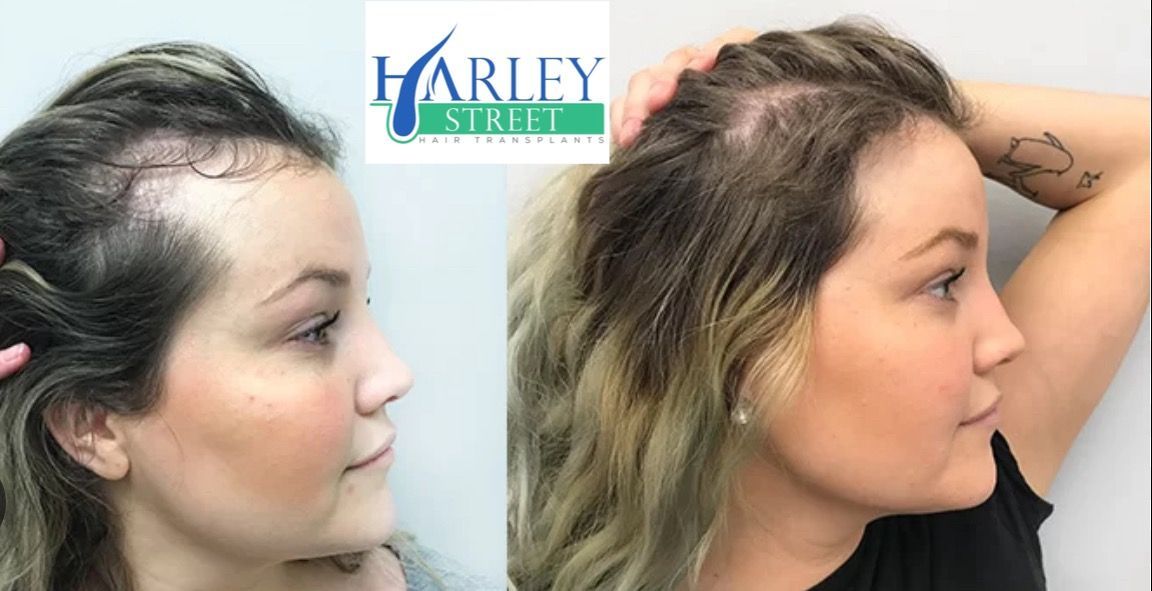
Female hair transplantation may be considered where the hair loss is sufficiently stable, the donor area remains strong and the proposed area can be treated realistically.
A naturally high, uneven or thinned hairline may be reshaped conservatively around facial proportions and donor supply.
Temple restoration requires shallow graft angles and careful blending with the existing frontal hairline.
Selected widening-parting cases may be assessed where surrounding hair and donor density are suitable.
Crown restoration depends on the size of the thinning area, existing hair, donor supply and whether loss is stable.
Selected surgical, injury or traction-related areas may be considered following individual examination.
The appropriate route depends on the cause and stability of hair loss, donor-area quality, treatment area and whether surgical restoration is suitable.
| Option | How it works | Important consideration |
|---|---|---|
| FUE | Individual follicular-unit grafts are collected from a suitable donor area and placed into the planned recipient area. | Avoids a linear strip scar but leaves small round extraction marks and requires careful donor management. |
| DHI | FUE-style graft extraction is combined with placement using an implanter device. | May suit selected cases but is not automatically better for every pattern of thinning in women. |
| Selected FUT | A strip of donor scalp is removed and divided into follicular-unit grafts. | Leaves a permanent linear donor scar and requires individual discussion. |
| PRP | Platelet-rich plasma is prepared from the patient’s blood and injected into selected thinning areas. | Non-surgical support may be discussed, but it does not replace missing follicles in completely bare areas. |
| Medical Assessment | Investigation may be needed where loss is sudden, diffuse, unstable or potentially linked to a medical cause. | Diagnosis and treatment of the underlying cause may be more appropriate than surgery. |
Early recovery may include redness, tenderness, swelling, scabbing and temporary visibility of the treated and donor areas.
Existing longer hair may help conceal some areas, although this depends on the procedure, recipient location and whether donor trimming is required.
The final cost depends on the treatment area, graft requirement, chosen method, donor-area suitability and the complexity of placing grafts among existing hair.
A smaller hairline or temple refinement will require different planning from wider parting, mid-scalp or crown density treatment.
A personalised quotation should be provided after the hair-loss pattern, donor area and treatment goals have been assessed.
GMC reference 7126076. Dr Harpreet Kalra assesses the hair-loss pattern, scalp health, donor-area strength, medical history and the treatment outcome realistically achievable.
The consultation should explain whether surgery is appropriate, which treatment route may be considered, likely graft requirements, recovery and long-term donor planning.
Selected feedback from patients across our clinic group. Treatment locations and procedures differ between reviews.
Paul Bassoo
Google reviewExcellent overall service.
Enzo
Google reviewVery satisfied with my results.
Subhan Buzdar
Google reviewGreat experience.
Muhammad Mohsin Saddique
Google reviewI felt listened to.
Ummad Rehman
Google reviewA very professional service.
Muhammad Saleem Popalzai
Google reviewStaff were friendly.
Discuss hairline, temple, parting or crown thinning, donor-area suitability, treatment options, finance and personalised cost.