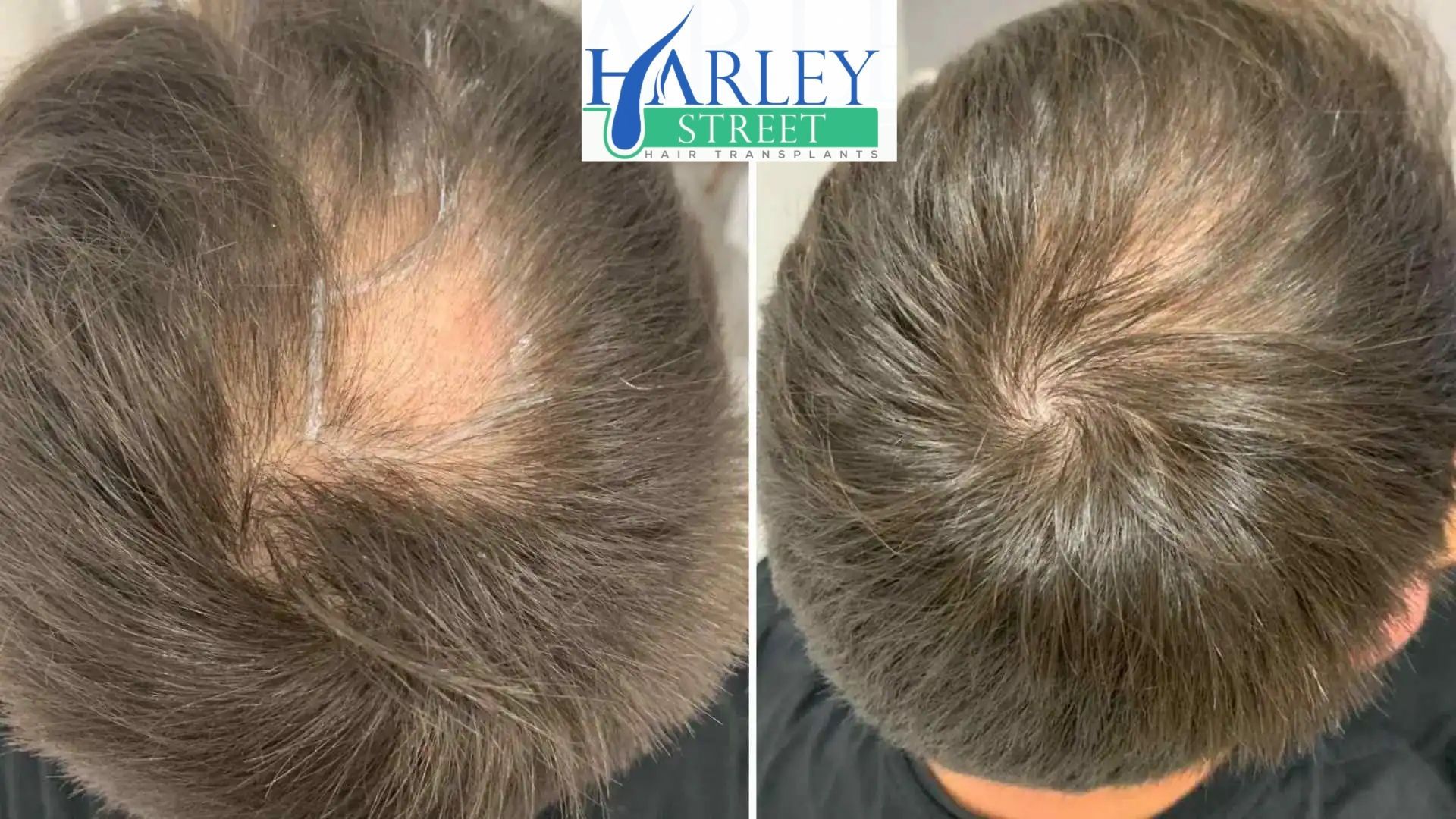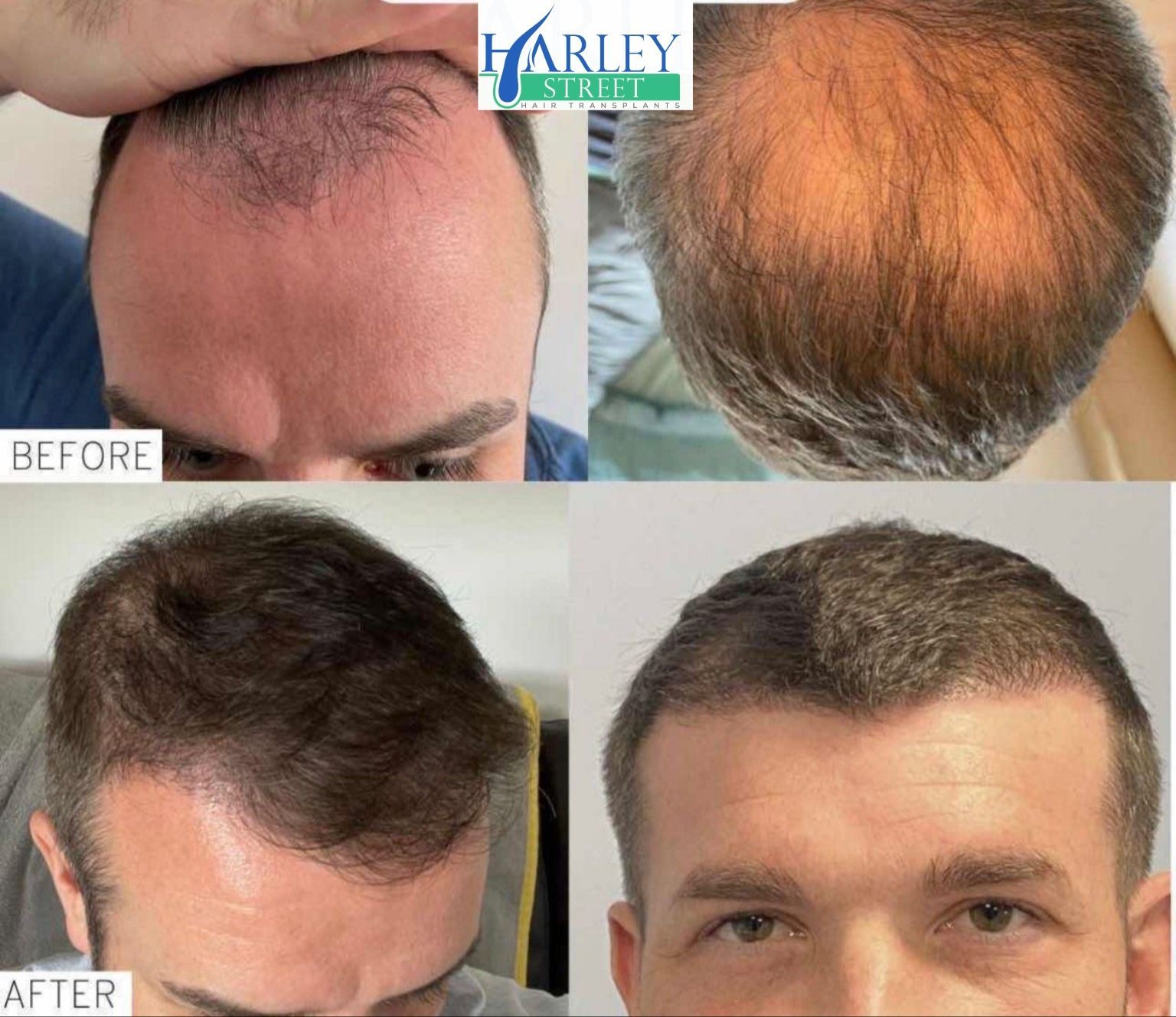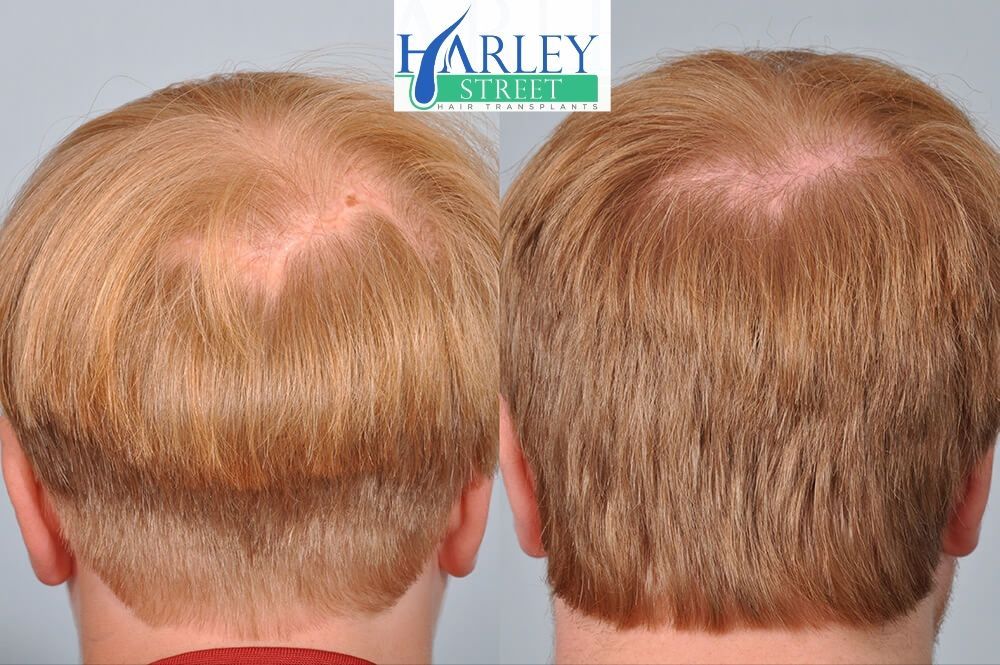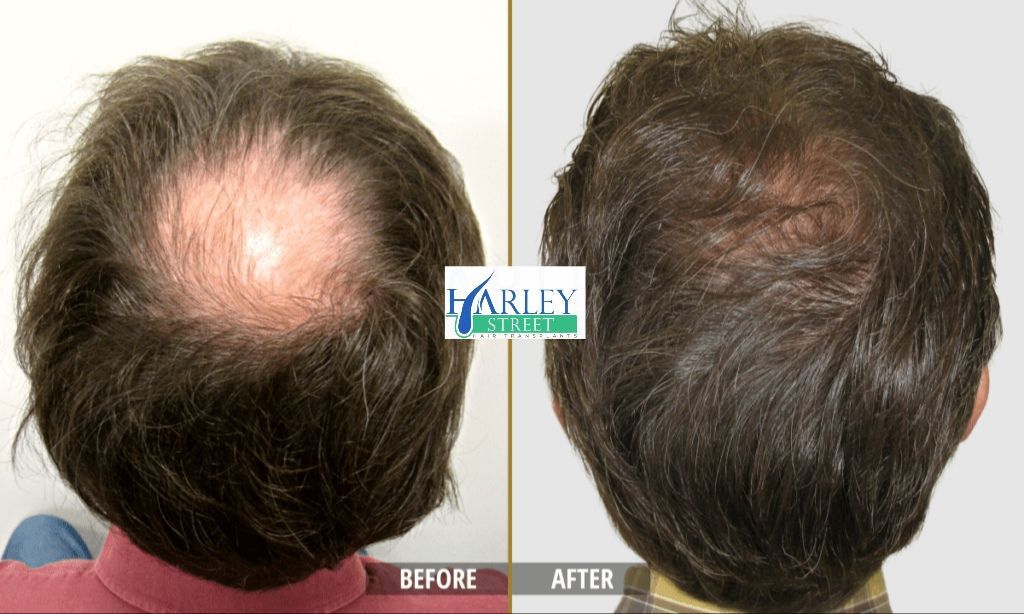
Patient Case Study
Area
Crown
Method
FUE
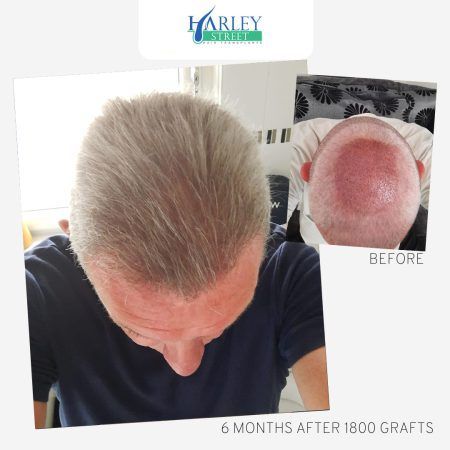
Hair loss at the crown often begins as a small area of visible scalp before gradually spreading across the top and back of the head. Because the hair naturally grows in a spiral, restoring this area takes more than simply filling a circular bald patch.
During a crown hair transplant, healthy follicular-unit grafts are taken from the donor area at the back and sides of the scalp and placed into the thinning crown.
Dr Harpreet Kalra assesses your natural whorl, existing density, donor strength and the likely progression of your hair loss before deciding how many grafts can be used safely and what level of coverage can be achieved.
Compare crown hair transplant costs in London, before and after results and the donor assessment needed for your proposed graft number. If the crown is still thinning, the consultation should also cover the cause of the hair loss and the longer-term plan for existing hair.




A crown hair transplant restores thinning or bald areas around the vertex, which sits towards the top and back of the scalp. Healthy follicular-unit grafts are taken from a suitable donor area, usually at the back and sides of the head, and moved into the crown.
The crown is not filled in with one uniform direction. Hair rotates around a central point, creating a whorl. The grafts must follow that changing pattern so the transplanted hair sits naturally alongside the hair already present.
A transplant does not create new follicles. It redistributes the hair you already have. The plan must therefore improve crown coverage without taking more grafts than the donor area can safely provide.
Crown restoration is usually performed using FUE, although the final recommendation depends on the hair-loss pattern, donor strength, previous surgery and long-term requirements.
The crown is one of the most technically demanding areas of the scalp to restore. Its circular growth pattern covers a broad surface area and can consume a significant number of grafts if the procedure is planned without considering future hair loss.
Crown hair changes direction as it moves around the whorl. Some whorls rotate clockwise, others anticlockwise, and some patients have more than one change of direction. The graft angles must be adjusted throughout the area rather than placed in straight or identical rows.
A crown can look like a relatively small bald spot when viewed in a mirror, but the actual surface area may be substantial. Attempting to recreate extremely high density across a wide crown can use grafts that may later be needed for the mid-scalp or hairline.
Donor hair is limited. Once follicles have been removed, they do not grow back in the donor area. Crown planning must balance the improvement the patient wants now against the possibility that untreated hair will continue to thin.
Crown growth often matures more slowly than frontal hairline work. An early result should not be treated as the final outcome. Further growth, thickening and improvement in coverage can continue for 12 to 18 months.
Crown restoration is planned around your existing whorl, the amount of hair still growing in the area and the strength of the donor supply.
The first appointment establishes the likely cause of the hair loss. Your crown, mid-scalp, donor area, medical history, medication and previous treatment are reviewed before surgery is recommended.
The surgeon examines donor density, hair calibre, follicular grouping and any signs of thinning at the back and sides. This determines how many grafts can be removed without leaving the area visibly depleted.
The centre and rotation of the natural whorl are identified. The treatment area, spacing and changing graft directions are marked before the procedure begins.
After local anaesthetic has been administered, suitable follicular-unit grafts are removed individually using FUE. The extractions are distributed across the usable donor area.
The prepared grafts are positioned at angles that follow the natural spiral. Distribution is planned to create coverage while protecting existing crown hair.
You leave the clinic with instructions covering washing, sleeping, medication, exercise and protecting the transplanted grafts during early healing.
Suitability is not decided by the size of the bald spot alone. The surgeon needs to understand why the crown is thinning, how quickly the pattern is changing and whether the donor area can support the proposed treatment.
A crown transplant is generally considered when:
Very early crown thinning, rapidly progressing loss or an unclear diagnosis may need monitoring or medical treatment before donor grafts are committed.
The condition of the donor area is particularly important because a crown can require a substantial number of grafts. Read the donor-area guide for a fuller explanation.
The crown is one of the areas most commonly affected by hereditary pattern hair loss. Thinning often begins around the centre of the whorl and gradually spreads outwards, making more scalp visible from above.
The most common cause in men is androgenetic alopecia. Genetically susceptible follicles react to dihydrotestosterone, or DHT, by becoming progressively finer. Each growth cycle produces a shorter and thinner hair until the follicle may stop producing visible growth.
Male-pattern hair loss is inherited and often becomes more noticeable with age, but it can begin much earlier. Some men first notice crown thinning in their twenties or thirties.
Not every patient develops one clearly defined bald spot. Some experience reduced density across the crown and wider scalp. Diffuse loss requires careful assessment because it can also affect the apparent donor area.
Hormonal changes, nutritional deficiencies, inflammatory scalp disease, medication and other medical conditions can also contribute to crown thinning. Surgery should not be used to cover an unexplained or active condition without a proper diagnosis.
Where active follicles remain, medication or PRP treatment may be discussed before transplantation. These options cannot replace follicles in an area that is already completely bald.
The right treatment depends on whether active follicles remain, how far the thinning has progressed and whether the donor area can support surgery.
| Treatment | How it is used | Important planning point |
|---|---|---|
| FUE | Follicular units are removed individually and placed into the crown. | Extraction and coverage must be balanced against the remaining donor supply. |
| DHI | Grafts are normally extracted individually and placed with an implanter device. | DHI changes the placement method but does not create additional donor hair. |
| FUT | A narrow strip of donor scalp is divided into individual follicular-unit grafts. | FUT can provide a substantial graft supply but leaves a permanent linear donor scar. |
| PRP | A non-surgical treatment for thinning areas where active follicles remain. | PRP cannot replace follicles in a completely bald crown. |
Crown hair-transplant prices generally range from £3,499 to £7,000. The final cost depends on the size of the area, existing density, donor strength, graft requirement and complexity of the natural whorl.
A small area of early thinning does not require the same work as a wide or completely bald crown. Current prices are available on our hair-transplant cost page.
Redness, tenderness, swelling and small scabs are expected during early healing. The crown must be protected from rubbing, scratching and pressure while the grafts settle.
Many transplanted hair shafts shed during the first several weeks. This is an expected part of the process and does not mean the follicles have been lost.
Read the complete hair-transplant aftercare guide before your procedure.
Crown growth develops gradually and often matures later than a frontal hairline transplant.
The grafts settle while the donor and recipient areas begin healing.
Many transplanted hair shafts shed while the follicles remain beneath the scalp.
Early growth begins. New hairs may initially appear fine or uneven.
Coverage becomes easier to see as more hairs emerge and thicken.
Density, texture and styling improve, with further development still possible.
Crown growth reaches its later stages of maturation.
Dr Harpreet Kalra , GMC reference 7126076, assesses the size of the crown, natural whorl, existing density and donor strength before recommending treatment.
If the hairline, mid-scalp and crown are all thinning, attempting to treat every area at maximum density may not be realistic. The donor supply must be divided according to the patient’s priorities and likely future hair loss.

The graft requirement depends on the size of the crown, the amount of existing hair, hair calibre, donor density, the natural whorl and the level of coverage being planned. The number should be confirmed after both the crown and donor area have been examined.
Yes. FUE is commonly used for crown restoration. Individual follicular units are removed from the donor area and placed into the crown at angles that follow the natural direction of the whorl.
Crown results often mature more slowly than frontal hairline work. Early growth develops gradually, with further thickening and improvement in coverage continuing between 12 and 18 months.
No. The transplant moves suitable donor follicles into the crown, but untreated native hair around the grafts can continue to thin. This is why long-term planning and donor preservation are important.
A natural result depends on following the patient’s existing whorl, changing the graft angles around the crown and setting a density target that suits the available donor hair.
PRP may support thinning areas where functioning follicles remain, but it cannot replace follicles in a completely bald crown. A transplant moves suitable donor follicles into areas where they are absent.
Crown hair-transplant treatment generally costs between £3,499 and £7,000. The final quotation depends on the area being treated, graft requirement, donor strength and complexity of the procedure.
Further treatment may be discussed if untreated hair continues to thin. The possibility of another procedure depends on how the hair loss progresses and how much usable donor hair remains.
Excellent overall service.
Paul BassooVery satisfied with my results.
EnzoGreat experience.
Subhan BuzdarI felt listened to throughout the process.
Muhammad Mohsin SaddiqueA very professional service.
Ummad RehmanStaff were friendly and helpful.
Muhammad Saleem Popalzai