Finasteride for hair loss: results, side effects and UK advice
What finasteride can do for male pattern hair loss, when to assess results, possible side effects and the current UK safety advice.

Contents
- What finasteride is used for
- How it affects DHT and hair follicles
- What the results evidence shows
- When to judge progress
- Tablets, missed doses and other medicines
- Side effects and the current UK warning
- Who needs particular care
- Topical finasteride, minoxidil and alternatives
- Cost, stopping treatment and transplant planning
- Questions and answers
- Sources
What finasteride is used for
Finasteride is a prescription medicine that can slow male pattern hair loss and help some men retain or regrow scalp hair. It is not a cure, and continued treatment is usually needed to keep the benefit. In the UK, the usual hair-loss strength is 1 mg; the 5 mg strength is used for an enlarged prostate. [1]
A diagnosis comes first. Gradual recession and thinning may be male pattern baldness, but sudden shedding, bald patches or an inflamed scalp can have another cause. Choosing a medicine before establishing that cause can delay the right treatment.
How it affects DHT and hair follicles
Finasteride inhibits the type 2 form of an enzyme called 5-alpha reductase. This reduces the conversion of testosterone into dihydrotestosterone, usually shortened to DHT. In susceptible scalp follicles, DHT contributes to the gradual production of finer, shorter hairs. Reducing its effect can help preserve those follicles. [2]
That does not mean every thinning area will fill in. Keeping the hair you have can be a useful result even when a photograph does not show dramatic regrowth. A medicine cannot promise to rebuild a long-established bald hairline.
What the results evidence shows
Two large trials involving 1,553 men aged 18–41 compared finasteride 1 mg daily with placebo. The researchers assessed hair counts, photographs and the patients’ own views. Finasteride improved scalp hair measures and slowed progression compared with placebo; 1,215 men continued into a second year. These are group results, not a personal forecast. [3]
The area being assessed matters. Research has also examined thinning in the anterior and middle scalp. That is not the same as proving that completely bare temples will regrow. Ask what improvement is realistic for your particular pattern, and use photographs taken with similar hair length, lighting and camera angles. [4]
When to judge progress
The Propecia product information says that stabilisation can take three to six months of daily treatment. A few weeks is too early to decide whether it has worked. Your prescriber should agree when to review both the response and any adverse effects. [2]
At each review, consider whether loss has slowed, whether density has changed and whether the treatment is tolerable. If nothing appears to be happening, do not increase the dose yourself. Review the diagnosis, consistency of use and photographs with the clinician.
Tablets, missed doses and other medicines
The NHS gives 1 mg once daily as the usual dose for hair loss. Follow the prescription and the leaflet supplied with your own product. Taking more is not a reliable route to better growth. If you miss a dose, follow the leaflet’s instructions and do not take extra tablets to make up for it. [5]
Tell the prescriber about every medicine, supplement and hair-loss product you use. Mention liver problems and any previous reaction to finasteride. Do not combine it with dutasteride, split another person’s prostate medicine or start an online combination without a prescribing assessment.
Side effects and the current UK warning
Possible sexual side effects include reduced sex drive, difficulty getting an erection and ejaculation problems. Speak to the prescriber if these occur. Breast lumps, nipple discharge or other breast changes also need medical attention. Swelling of the lips, tongue or throat, or difficulty breathing, requires urgent emergency help. [6]
The MHRA’s May 2026 update highlights depression, suicidal thoughts and sexual dysfunction; sexual problems may persist after treatment stops. Tell the prescriber about any history of depression or suicidal thoughts. If you develop depression or suicidal thoughts while taking finasteride 1 mg, stop it and contact a doctor as soon as possible. Call 999 if you are at immediate risk of serious harm. [7]
Knowing what to watch for is part of an informed decision. It should not be replaced by claims that side effects are impossible, always temporary or certain to happen.
Who needs particular care
Finasteride is not a routine hair-loss treatment for women or children. A clinician should check whether it is suitable before prescribing, including your medical history and other treatment. Women who are or may be pregnant must not handle crushed or broken tablets because of the risk to a male baby. [2, 8]
If you are trying for a baby, discuss fertility concerns before starting. Tell the clinician arranging any prostate-specific antigen (PSA) blood test that you take finasteride, because it can affect interpretation. Keep that information on your medication list. [6, 9]
Topical finasteride, minoxidil and alternatives
A scalp spray is not automatically free of systemic risks. Topical finasteride formulations vary, so the concentration, licensed status, application instructions and precautions need to be checked for the exact preparation. Do not copy a tablet dose into a homemade scalp solution.
Minoxidil works differently and may be considered on its own or within a clinician’s plan. Dutasteride also reduces DHT, but its UK licence and risk discussion differ. Read the separate guides linked below before treating these medicines as interchangeable. Hair fibres, changes in styling and choosing no medication are also reasonable topics to discuss.
Cost, stopping treatment and transplant planning
Hair-loss finasteride is supplied on a private prescription, rather than routinely funded by the NHS. There is no single UK price: ask for the medicine cost, consultation or prescription fees, review arrangements and any subscription terms before paying. [1]
After stopping, the benefit gradually wears off. Product information describes reversal beginning by about six months and a return towards baseline by nine to twelve months. Do not interpret that as an instruction to carry on through adverse effects. [2]
A transplant redistributes donor follicles. Decisions about protecting the surrounding native hair remain separate. If you are considering surgery, bring your medication history and any progress photographs to the consultation.
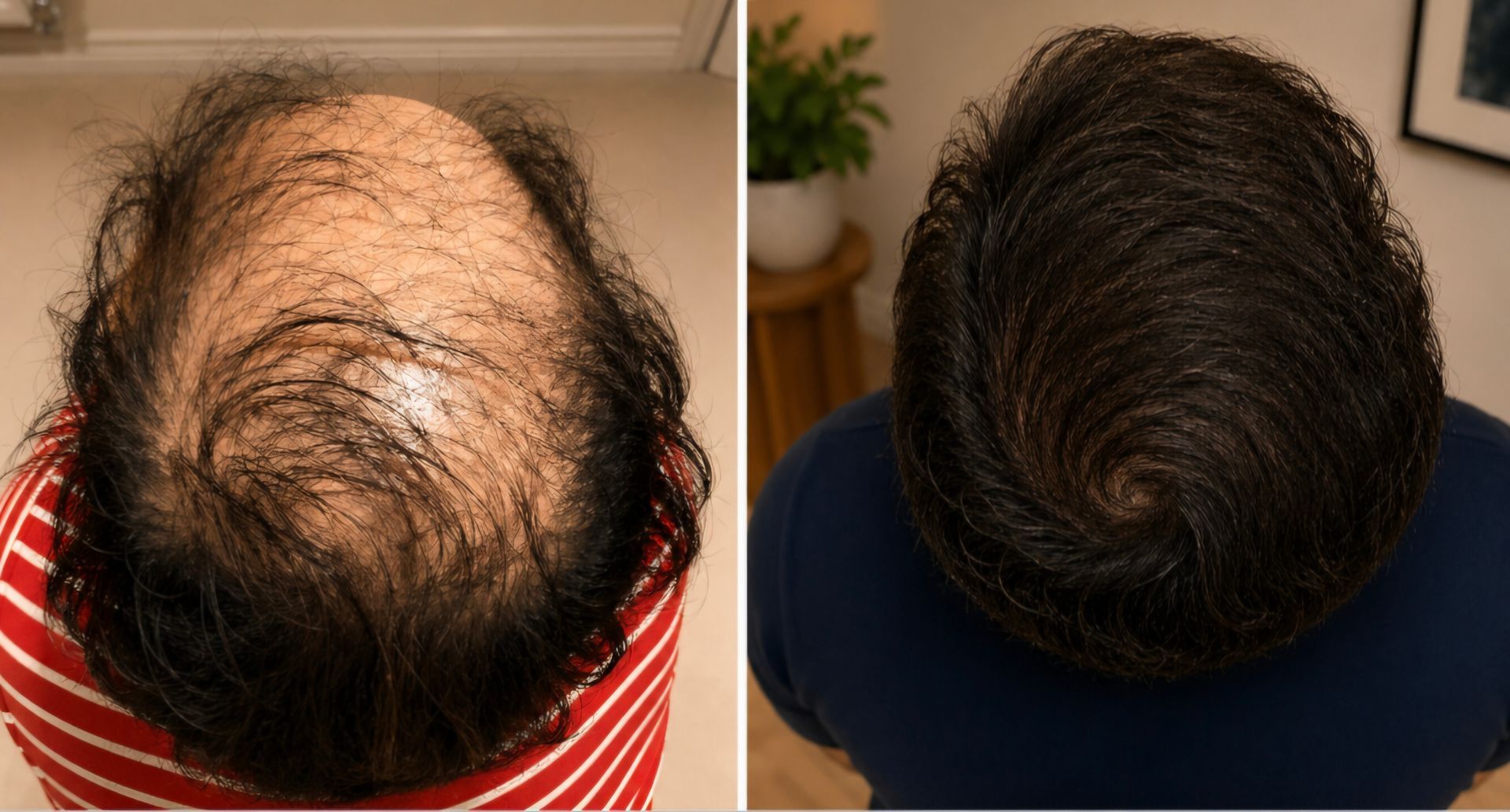
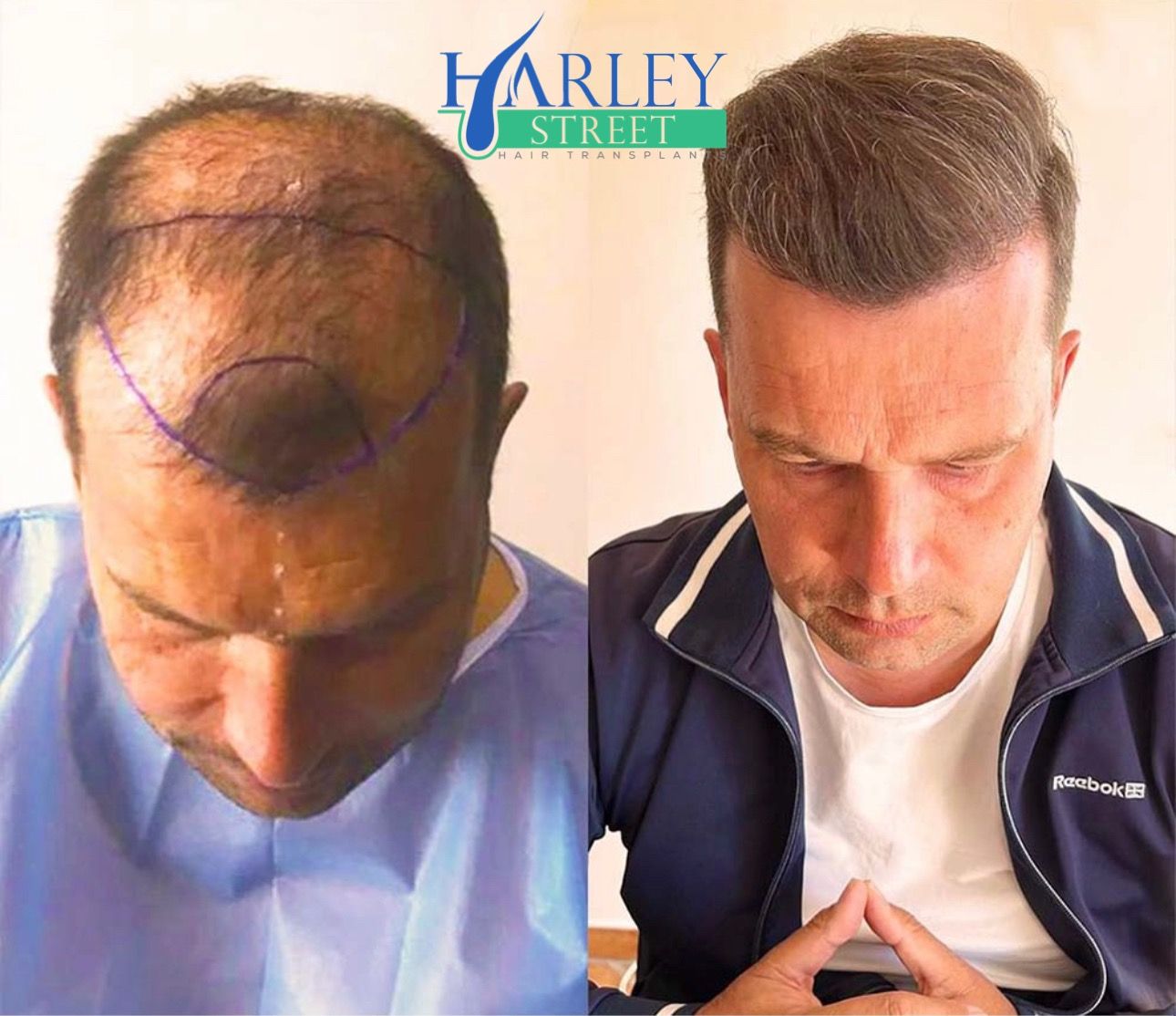
Crown hair transplant results
Before-and-after photographs from Harley Street Hair Transplants. These show crown transplant results, not the effects of medication alone. Individual results vary.
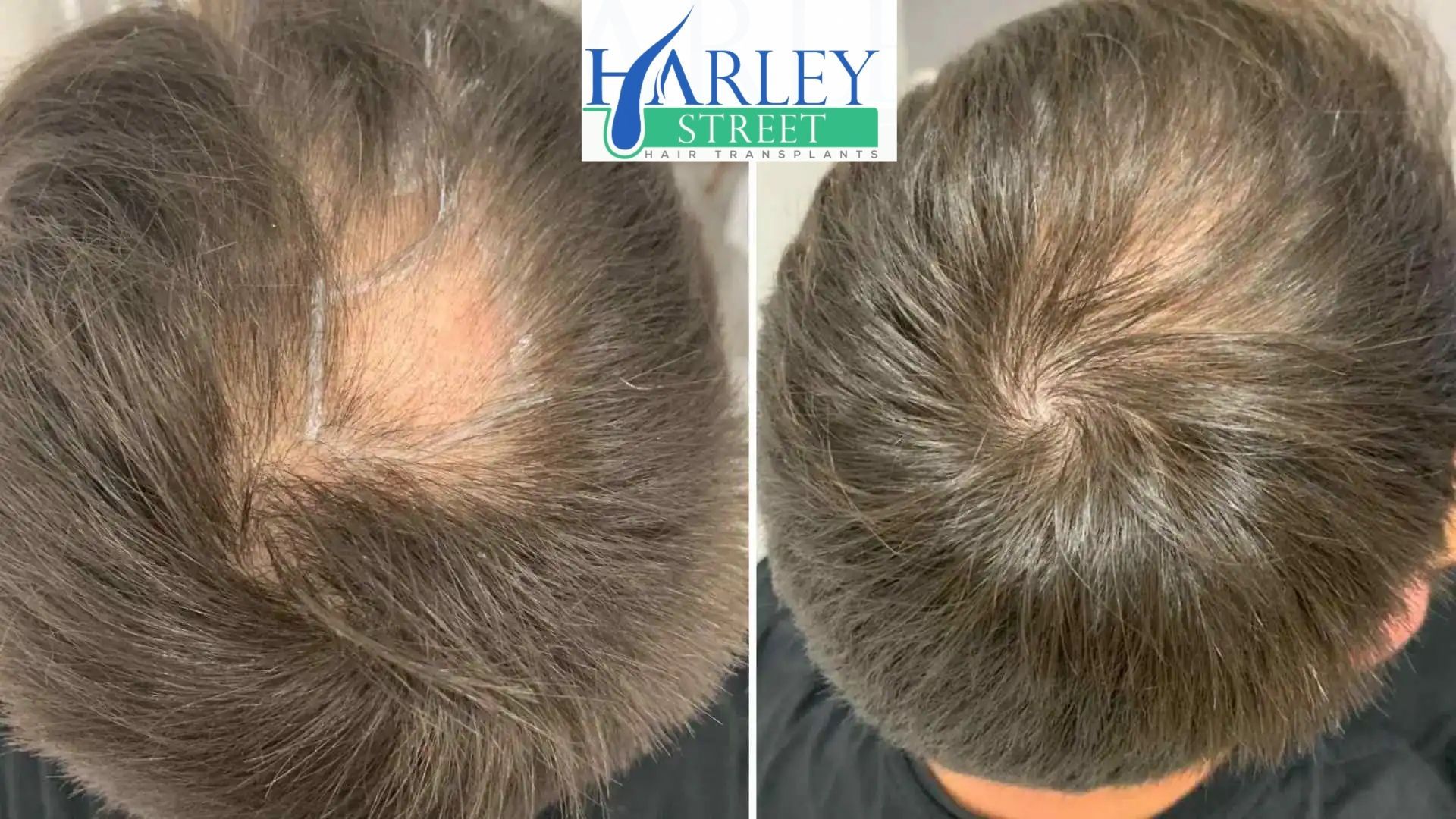
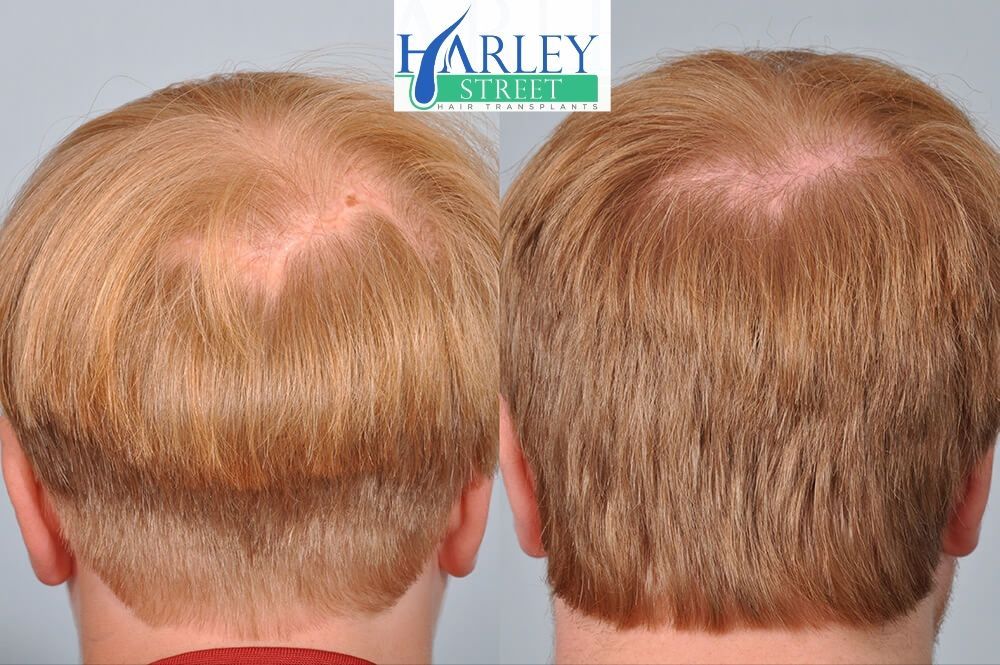
Read about crown hair transplants.
Questions and answers
Does finasteride work for everyone?
No. Some men see regrowth, some mainly retain existing hair and others do not gain enough benefit to continue. Review the response with the prescriber.
Can I stop once my hair looks better?
The benefit usually depends on continued treatment. Discuss stopping with the prescriber; seek prompt advice about side effects rather than continuing solely to protect the result.
Will finasteride grow my beard?
It is prescribed for scalp pattern hair loss, not as a beard-growth medicine. Sparse facial hair needs a separate assessment.
Is a higher dose better for hair loss?
Do not increase the dose yourself. The usual hair-loss dose is 1 mg daily; a higher-strength tablet has a different usual indication.
Should I take it before a hair transplant?
It may be discussed where ongoing native-hair loss is relevant, but it is not compulsory for every patient. Suitability and timing belong in the individual treatment plan.
Discuss your hair loss in London
Bring a list of current medicines and any dated photographs to your assessment. You can ask about the cause of thinning, what treatment could realistically achieve and whether a transplant is appropriate. Request a consultation with Harley Street Hair Transplants.
Sources
- NHS: about finasteride
- Propecia 1 mg: UK product information
- Kaufman and colleagues: finasteride clinical trials, 1998
- Leyden and colleagues: frontal male pattern hair loss, 1999
- NHS: how and when to take finasteride
- NHS: finasteride side effects
- MHRA: updated finasteride and dutasteride safety advice, May 2026
- NHS: who can and cannot take finasteride
- Randomised trial: finasteride 1 mg and PSA levels