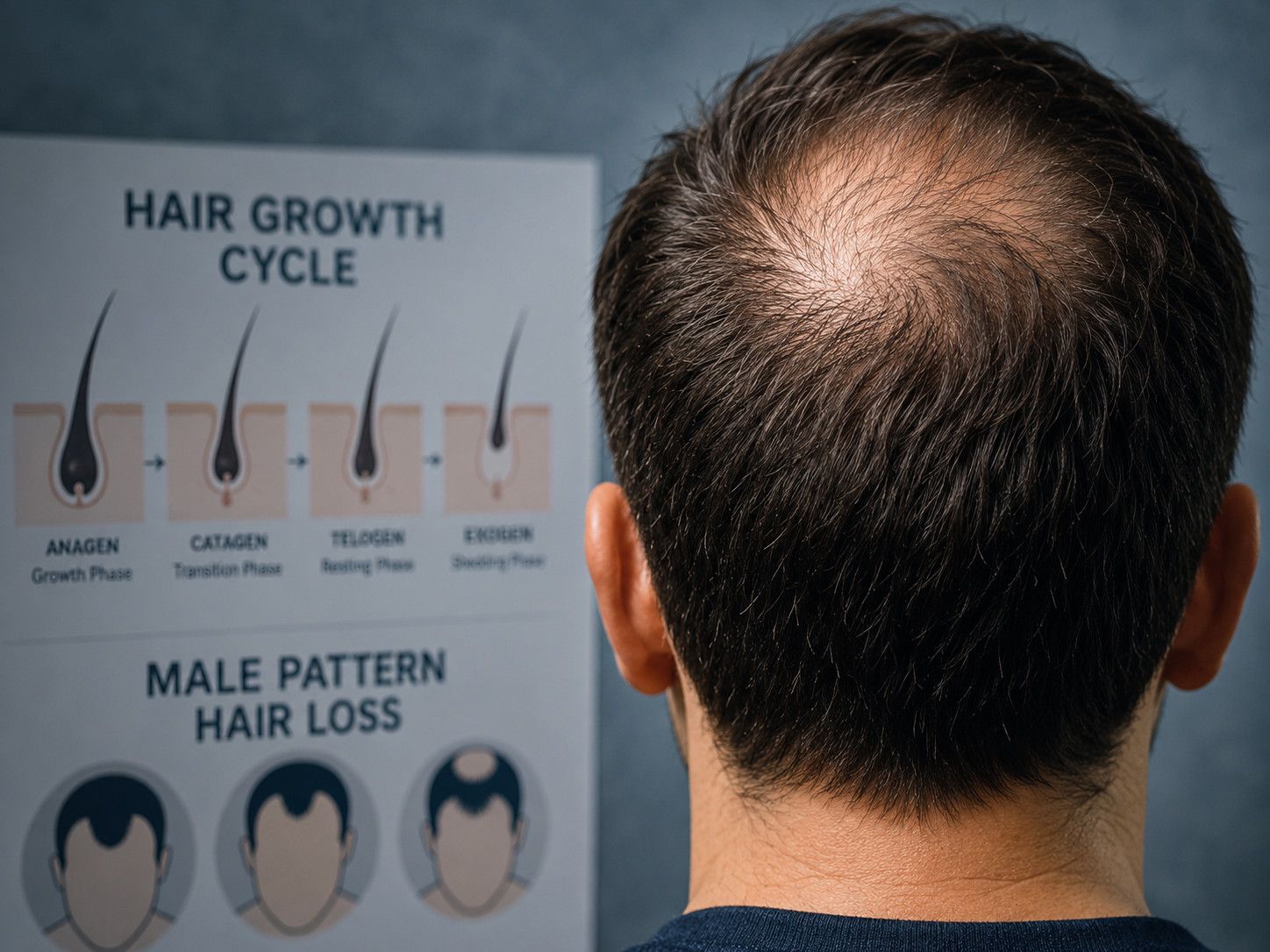
Dutasteride for hair loss: results, side effects and UK advice
Understand dutasteride’s off-label use for hair loss in the UK, research results, possible side effects and what to discuss with a prescriber.


Contents
- Dutasteride and its UK licence
- How it differs from finasteride
- What clinical studies found
- Who may discuss it with a clinician
- Capsules, interactions and practical use
- Side effects and when to seek help
- Pregnancy, fertility and blood tests
- Assessing results and the ongoing cost
- Alternatives and hair transplant planning
- Questions and answers
- Sources
Dutasteride and its UK licence
Dutasteride is a prescription medicine that reduces dihydrotestosterone, or DHT. Research supports its use in some men with male pattern hair loss, but in the UK its licensed indication is an enlarged prostate. Prescribing it for hair loss is therefore off-label. That distinction should be explained before treatment starts. [1, 2]
Off-label does not mean there is no research. It means the prescriber is using the medicine outside its authorised indication and needs to judge whether that is appropriate for you. A stronger effect on a hormone is not, by itself, a reason to choose a medicine.
How it differs from finasteride
Dutasteride inhibits both type 1 and type 2 forms of 5-alpha reductase, the enzyme involved in converting testosterone to DHT. Finasteride mainly inhibits type 2. The aim in pattern hair loss is to reduce the hormonal effect on susceptible scalp follicles. [1, 2]
Dutasteride also clears slowly. With repeated dosing, its half-life is approximately three to five weeks: the amount in the body falls gradually rather than disappearing immediately after the last capsule. That matters when considering adverse effects or a change of treatment. [1]
What clinical studies found
A 24-week randomised trial assigned 917 men aged 20–50 to different dutasteride doses, finasteride or placebo. Dutasteride 0.5 mg improved hair count and width more than finasteride 1 mg at the measured endpoint. The study was limited to six months, so it cannot answer every question about long-term treatment. [2]
A separate small study examined men who had not improved sufficiently on finasteride. Of 31 men who completed six months of dutasteride, 24 improved on photographic assessment. Most of those improvements were classed as slight, and the study reported sexual side effects. Its size and design limit how confidently the findings can be applied to another patient. [3]
Neither study promises a new hairline, a particular percentage of regrowth or a better result for every individual. Research photographs and clinic case photographs also need their treatment history and follow-up dates to be meaningful.
Who may discuss it with a clinician
A discussion may be appropriate for an adult man with confirmed pattern hair loss, particularly when an existing plan has not produced enough benefit. The first step is to check the diagnosis and what treatment has actually been used. A short or inconsistent trial of another medicine does not establish that it has failed.
Avodart must not be taken by women, children or adolescents, or by people with severe liver disease or relevant allergies, including soya or peanut allergy. Other liver problems also need to be disclosed. The product leaflet sets out the exclusions and precautions. [4]
Capsules, interactions and practical use
The research above used oral capsules; a prescriber must decide the regimen for off-label hair-loss treatment. Follow the prescription for your own product. Capsules should be swallowed whole, not opened or chewed, and a missed dose should not be replaced with a double dose. [2, 4]
Give the prescriber a full list of medicines and supplements. Some medicines can increase dutasteride exposure, including certain antifungals, HIV treatments and medicines such as verapamil or diltiazem. Do not combine finasteride and dutasteride or change dosing frequency on your own. [1]
A scalp preparation is a different formulation. Oral research cannot simply be used to promise the same result or safety profile from a topical product, and there is no universal application schedule to copy from another patient.
Side effects and when to seek help
Possible adverse effects include reduced libido, erection or ejaculation problems and breast tenderness or enlargement. Some sexual effects have been reported after stopping; the medicine’s role in their persistence is uncertain. Breast lumps, nipple discharge and testicular pain or swelling should be discussed promptly with a doctor. [1]
The MHRA updated its advice in May 2026. Dutasteride’s mood warning is precautionary because a related medicine, finasteride, has been associated with depression and suicidal thoughts. If you develop depression or suicidal thoughts while taking dutasteride, contact your doctor as soon as possible. Sexual side effects should also be reported. If you are at immediate risk of serious harm, call 999. [5]
Seek emergency help for signs of a serious allergic reaction, such as breathing difficulty or swelling of the face, tongue or throat. Do not wait for a routine hair-loss review. [4]
Pregnancy, fertility and blood tests
Women and children must avoid contact with leaking capsules because dutasteride can be absorbed through skin. Wash accidental skin contact with soap and water. The leaflet advises condom use to avoid exposing a partner who is or may be pregnant to semen. Discuss plans for a family before treatment. [4]
Dutasteride can affect semen characteristics and may reduce fertility. It can also lower PSA, a marker used in prostate assessment. Tell the clinician arranging a PSA test that you take it so the result is interpreted appropriately. [4]
Assessing results and the ongoing cost
The main comparative hair-loss trial assessed results at 24 weeks. That is a study endpoint, not a guarantee that every patient will see change by that date. Agree a review timetable, photograph the same scalp areas consistently, and report adverse effects as they arise. [2]
Ask what you will pay for the medicine, prescribing assessment and follow-up, and what happens if treatment is stopped. An advertised capsule price may not include those services.
If the photographs show continuing loss, revisit the diagnosis and treatment plan. Adding more products without knowing why the first plan has failed makes both benefit and side effects harder to assess.
Alternatives and hair transplant planning
Finasteride and minoxidil have different roles and are covered in separate guides below. Some people prefer styling changes, a hair system or no medical treatment. Those choices can be discussed without assuming that surgery is the next step.
A hair transplant moves a limited supply of donor follicles. It does not remove the need to consider future loss in surrounding hair. A consultation should address both the current appearance and what further thinning could mean for the overall plan.
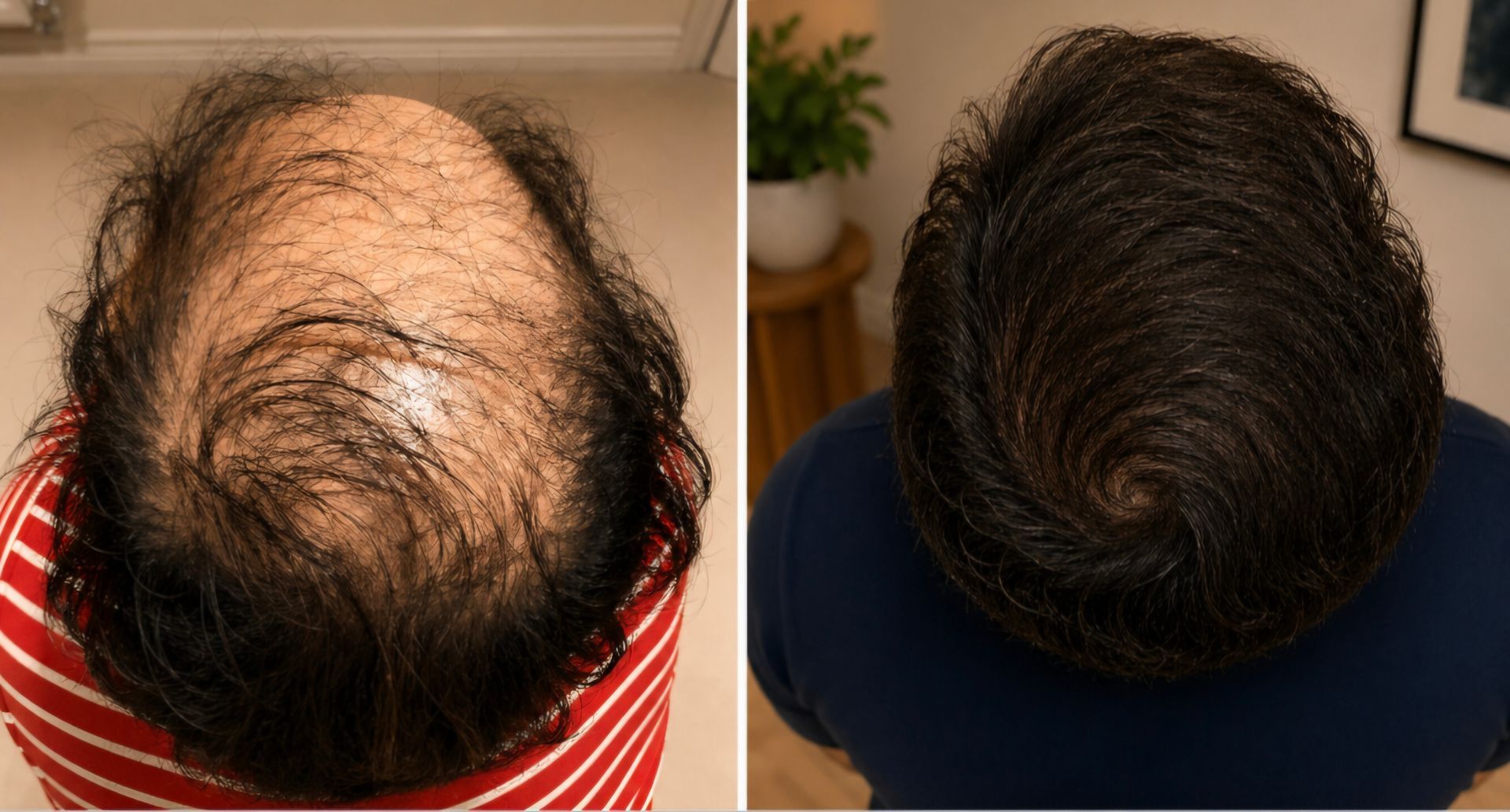
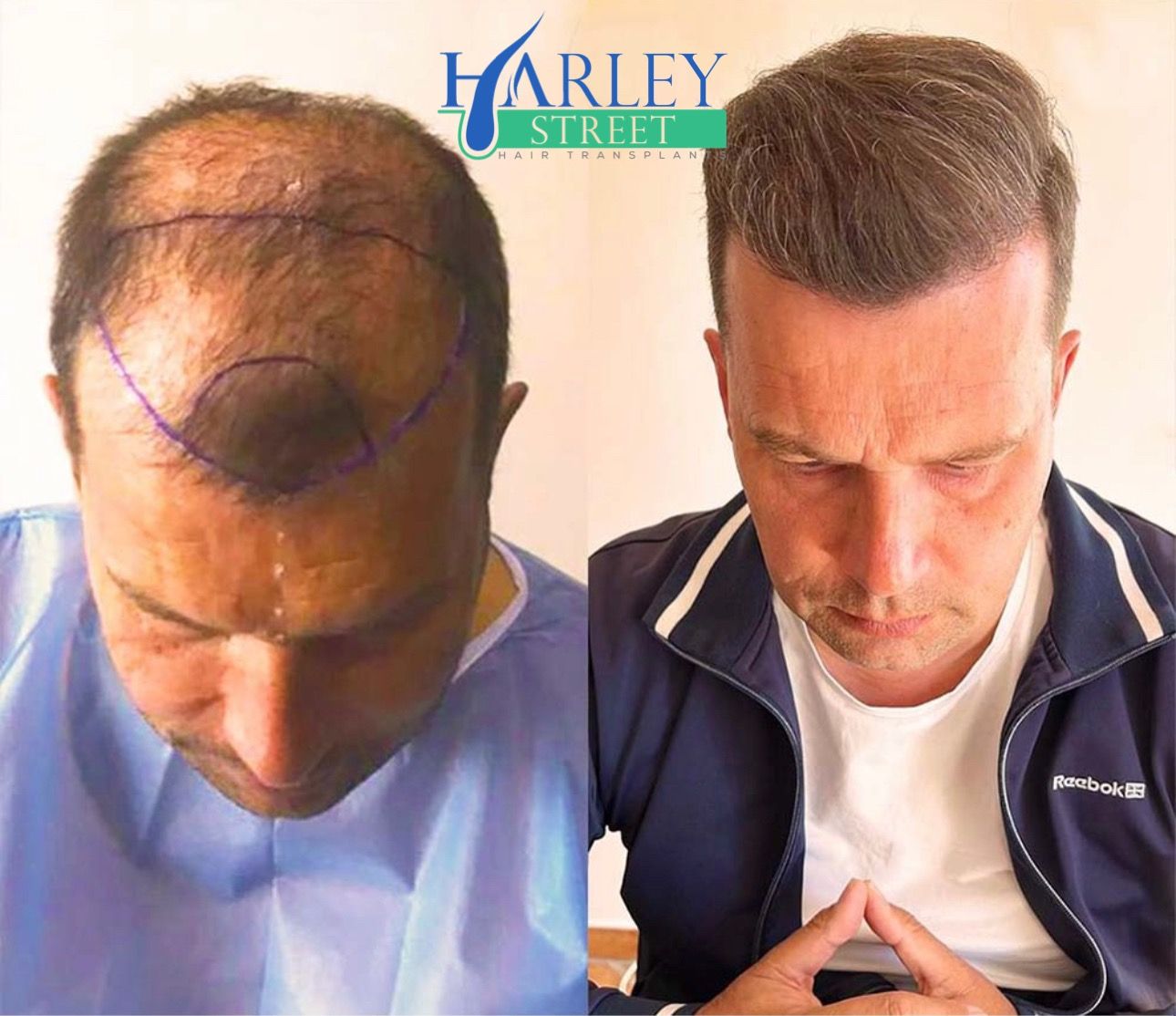
Crown hair transplant results
Before-and-after photographs from Harley Street Hair Transplants. These show crown transplant results, not the effects of medication alone. Individual results vary.
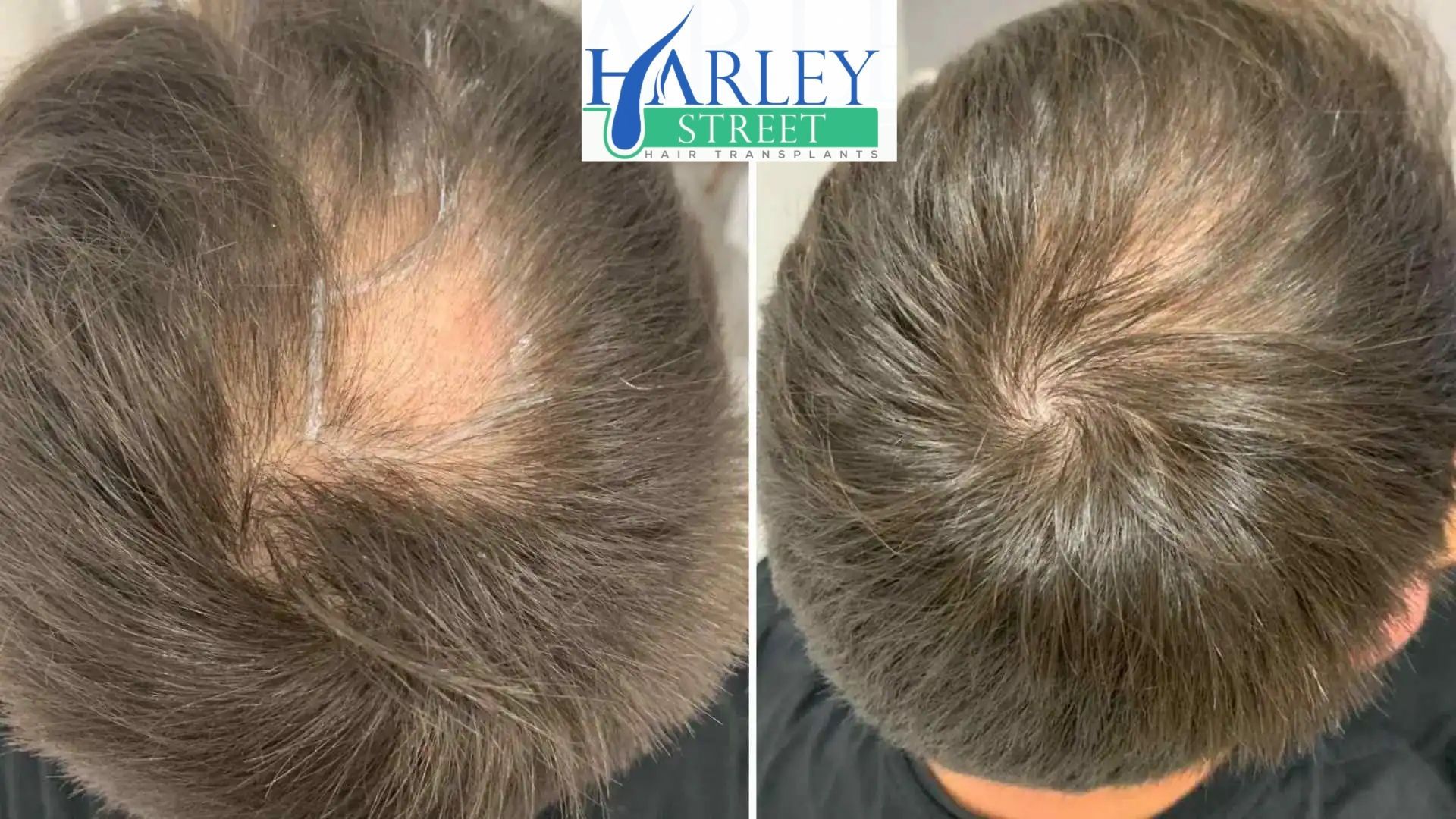
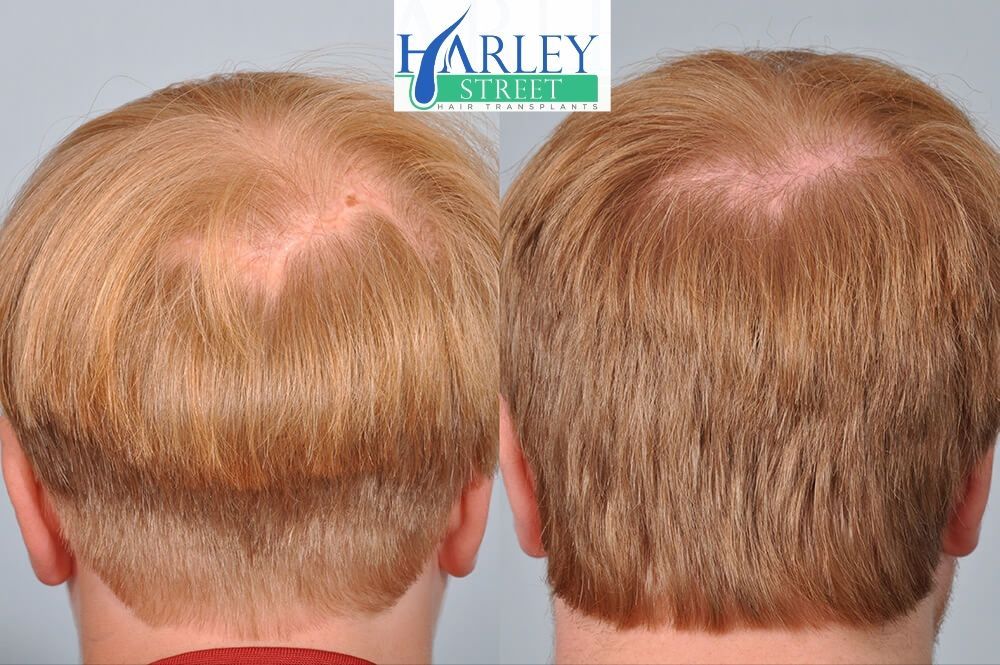
Read about crown hair transplants.
Questions and answers
Is dutasteride licensed for hair loss in the UK?
No. Its UK licence is for an enlarged prostate. Hair-loss prescribing is off-label and requires an individual prescribing decision.
Is dutasteride always better than finasteride?
No. One six-month trial found a greater average improvement in measured hair counts and width, but that does not establish the best choice for every person.
Can I use it to grow a beard?
The scalp hair-loss studies discussed here do not establish a beard-growth treatment. Do not use them to predict facial-hair results.
Can I switch from finasteride myself?
Speak to the prescriber first. The medicines are not interchangeable, and dutasteride remains in the body for much longer.
What if I am not seeing regrowth?
A review should consider stability as well as regrowth, whether the diagnosis is correct, the duration of treatment and any side effects. Do not increase treatment yourself.
Discuss your hair loss in London
Bring a list of current medicines and any dated photographs to your assessment. You can ask about the cause of thinning, what treatment could realistically achieve and whether a transplant is appropriate. Request a consultation with Harley Street Hair Transplants.
Sources
- Avodart: UK summary of product characteristics
- Gubelin Harcha and colleagues: 917-participant trial, 2014
- Jung and colleagues: dutasteride after inadequate finasteride response, 2014
- Avodart: current patient information leaflet
- MHRA: updated finasteride and dutasteride safety advice, May 2026