The Ludwig scale: describing female pattern hair loss
The three grades describe visible thinning over the top of the scalp. They do not establish the cause on their own.

On this page
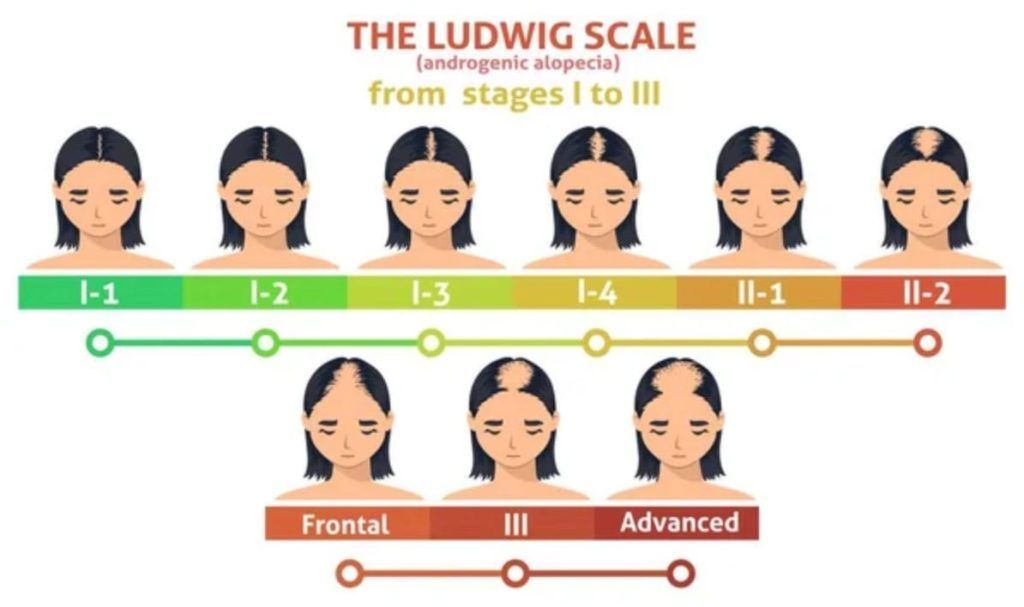
The Ludwig scale describes the severity of a common pattern of female hair loss. It uses three main grades of thinning over the top of the scalp, often with relative preservation of the frontal hairline. It helps describe appearance, but does not replace a diagnosis or decide treatment by itself.
The three grades
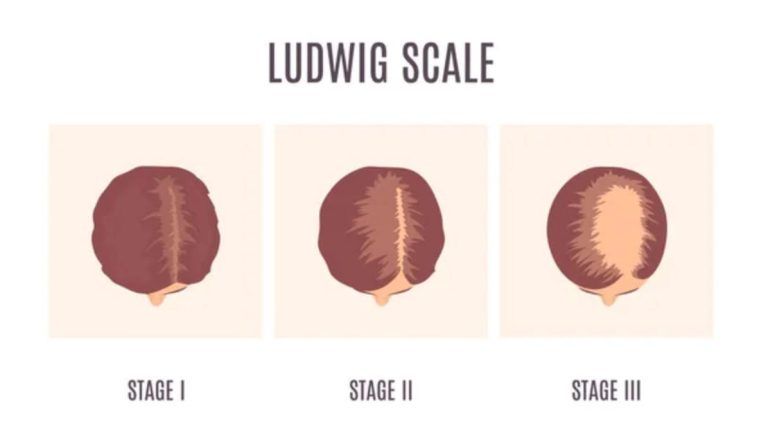
Grade I
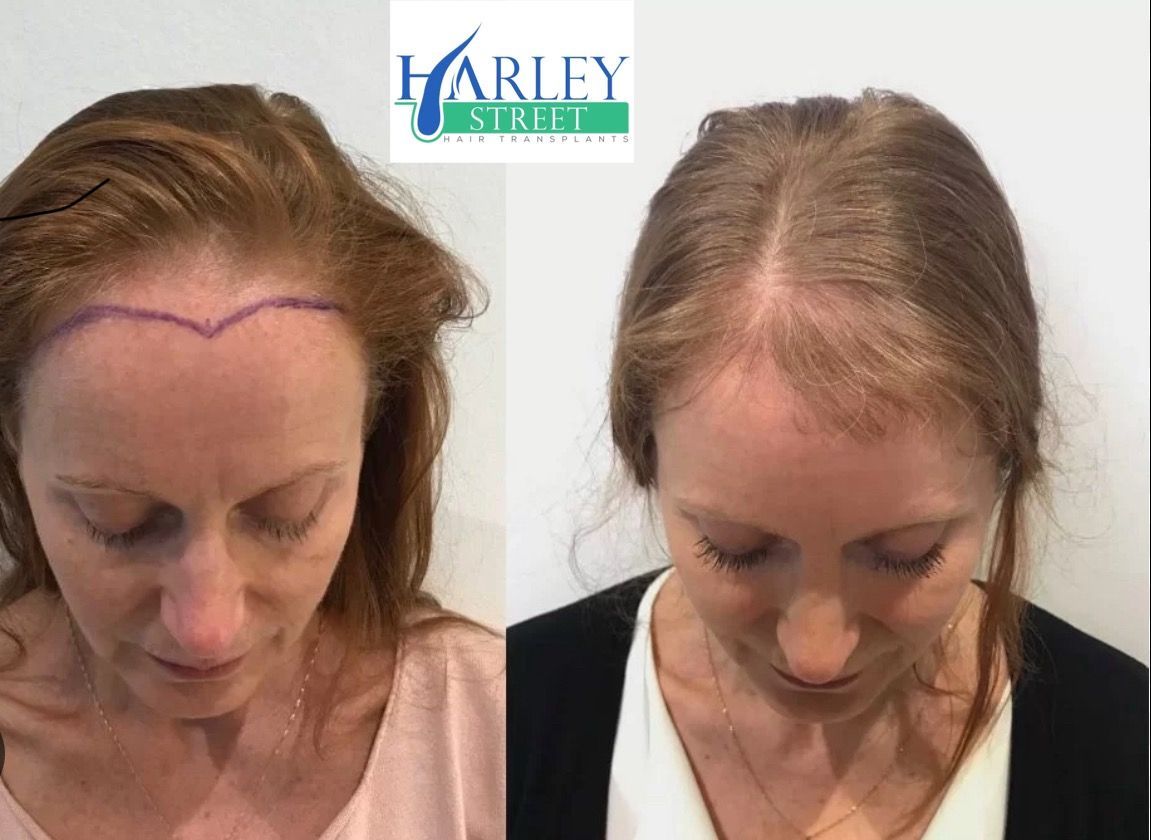
Thinning is relatively mild over the crown and top of the scalp. A parting may look wider or the scalp more visible under certain lighting. Comparison with earlier photographs can help establish whether there has been a real change.
Grade II
Thinning is more pronounced and the central area has less coverage. Styling may become more difficult. This description does not tell you the speed of progression or whether another cause of shedding is present.
Grade III
There is extensive thinning over the top of the scalp. The amount of usable donor hair and any thinning at the sides and back need careful assessment before transplantation is considered.
The British Association of Dermatologists' female pattern hair-loss information explains the condition. Not every woman follows one exact distribution, and other scales may be used to document the pattern.
What the scale cannot tell you
A Ludwig grade cannot establish whether hair loss is inherited, hormone-related or due to a separate scalp condition. It does not measure blood hormone levels or identify a nutritional deficiency. Sudden shedding can also make existing pattern loss more noticeable.
A clinician should ask about the timeline, symptoms, medicines and relevant health changes. Patchy loss, scalp soreness or inflammation need attention rather than simply being placed on a severity chart.
Making photographs more useful
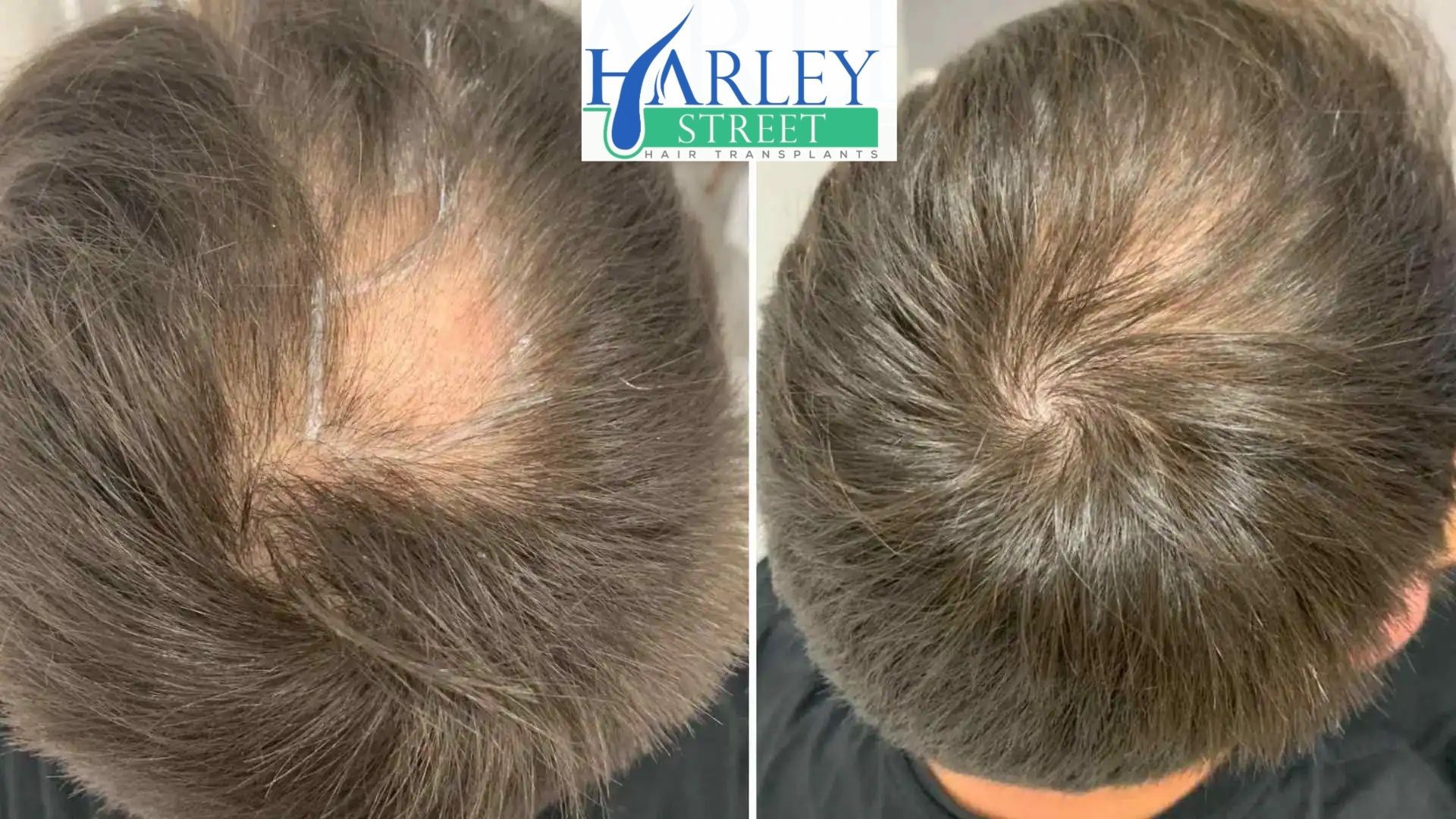
Keep the parting, lighting, angle and hair condition consistent. Comparing wet hair under a strong light with dry, styled hair can exaggerate apparent change. The aim is to support a clinical review, not to diagnose yourself from daily close-ups.
If you have been using fibres or a tinted scalp product, tell the clinician. They affect the visible coverage and may need to be removed for an accurate examination.
Treatment depends on more than the grade
Topical minoxidil may be considered for female pattern loss, but product suitability and precautions need checking. Pregnancy, breastfeeding, scalp disease and medical history affect the discussion. Our minoxidil guide explains why a product's instructions matter.
A transplant may be an option for selected patients with a suitable donor area. Diffuse thinning affecting the donor region can limit surgery. A higher grade does not automatically mean a larger operation is possible or appropriate.
Cosmetic approaches, including a different parting, fibres or a hair system, can also be discussed. They change appearance rather than treating the underlying process.
Questions and answers
Is the Ludwig scale a test for hormone problems?
No. It describes the visible pattern and severity. Hormonal concerns require assessment based on symptoms and medical history.
Does grade I mean I should ignore the change?
No. Persistent thinning can be assessed at any stage, especially if there are other symptoms or the diagnosis is uncertain.
Can a grade give an exact transplant graft count?
No. The area, hair characteristics, donor supply and agreed goals must be assessed individually.