FUE scar transplantation
Individual follicular-unit grafts are extracted and placed into selected areas of mature scar tissue.
Growth depends on scar quality, blood supply, donor hair and recipient-site planning.
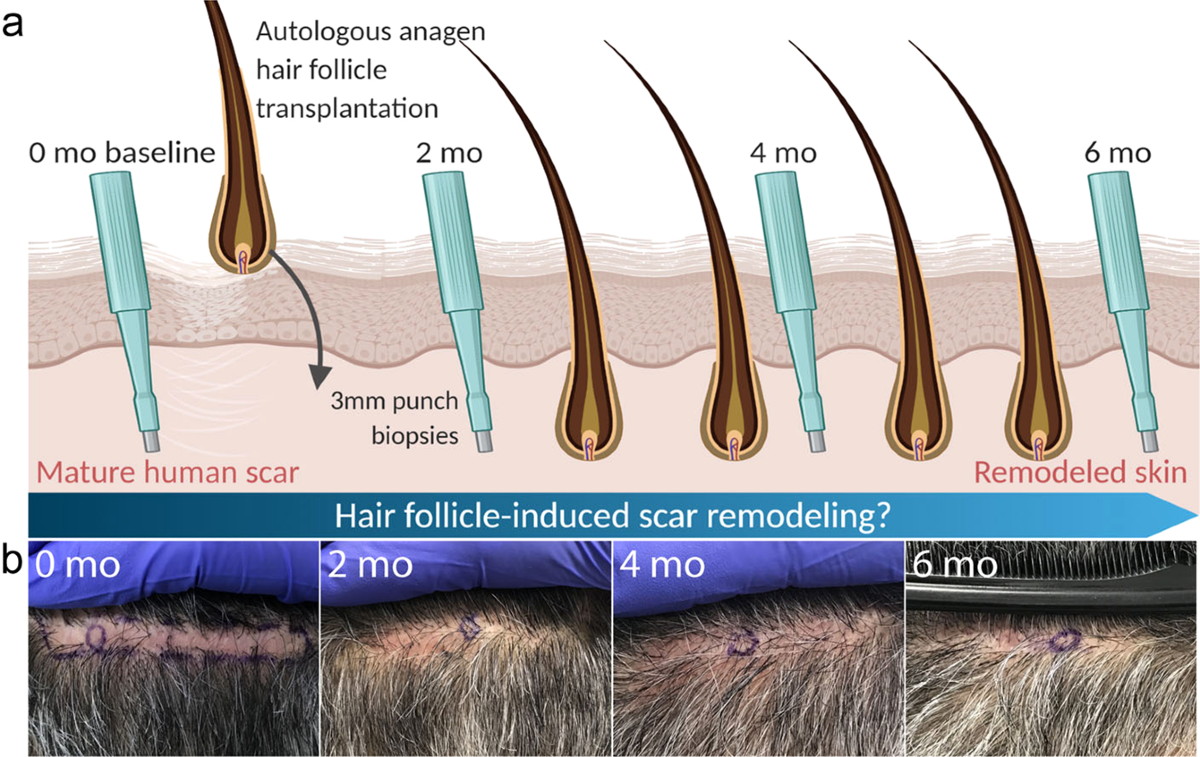
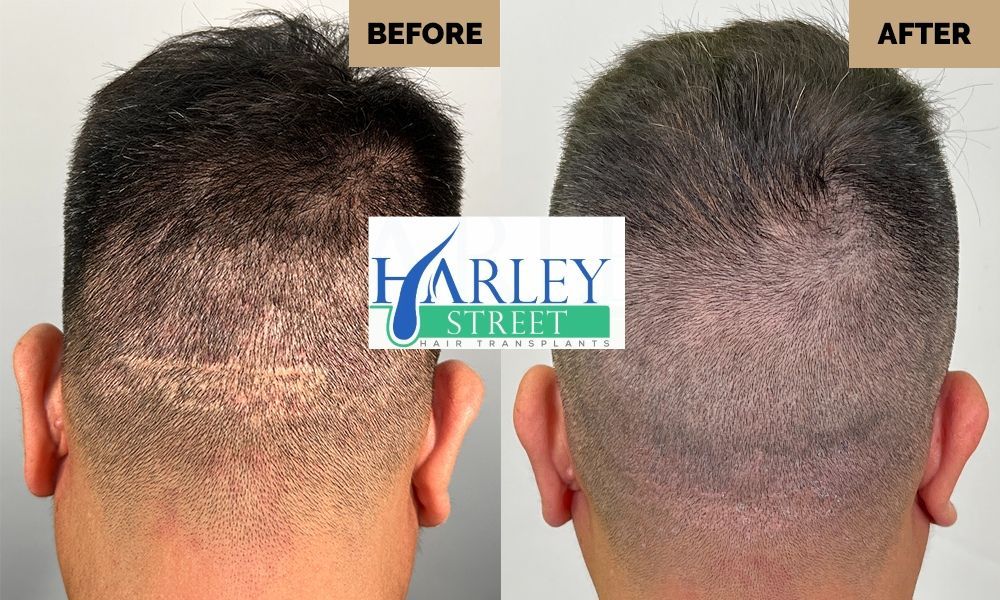
A hair transplant may help camouflage selected mature scars on the scalp, hairline, beard or eyebrow area. Suitable follicular-unit grafts are placed into and around the scar.
Scar tissue can differ from normal skin in thickness, blood supply and healing, so it needs careful assessment. The procedure does not remove the scar, and graft growth can be less predictable than in unscarred skin.
At your consultation at 22a Harley Street, London W1G 9PF, we discuss how the scar formed, any previous treatment and your donor hair. We then cover whether grafting is suitable, whether treatment may need stages and a written quote.


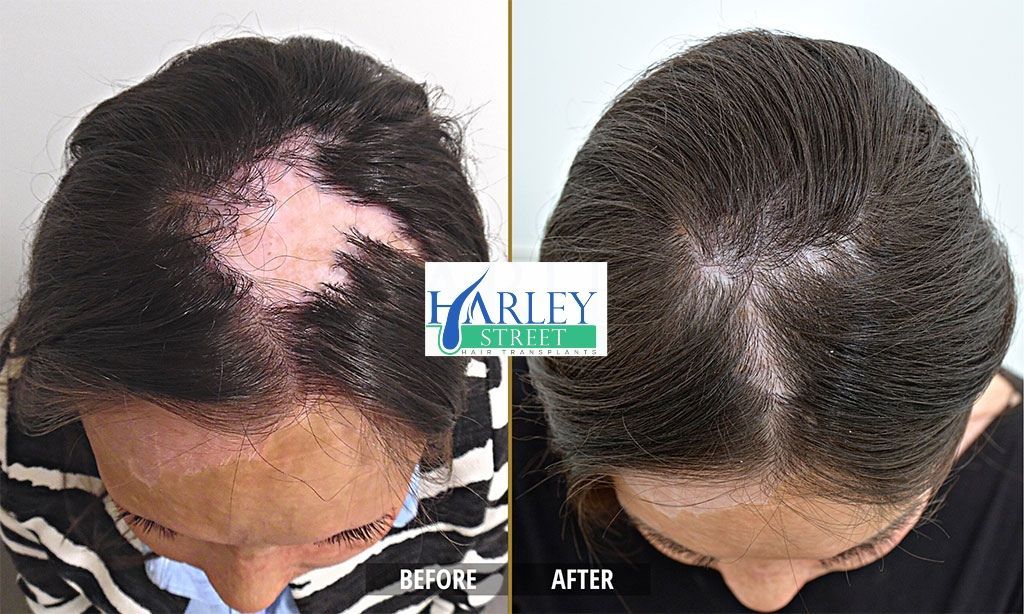
Scar-repair transplantation places suitable donor follicles into selected mature scars. The hair coverage is intended to make the scar less noticeable; the scar itself remains.
Scars from surgery, trauma, burns, skin grafts or earlier hair transplants may be considered for treatment. Each scar needs to be assessed before grafting is planned.
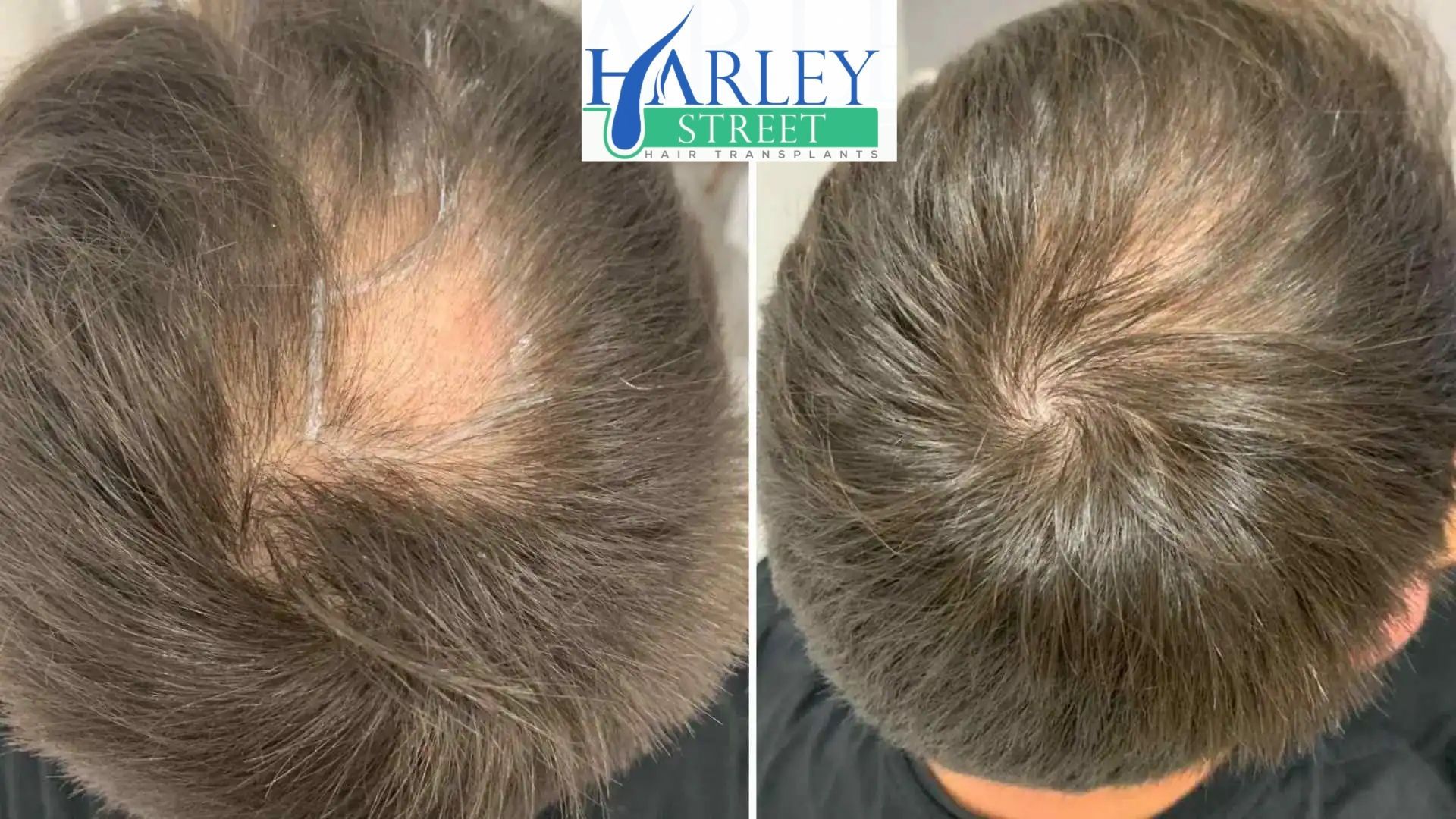
The plan depends on the scar’s position, age, thickness, flexibility and blood supply, as well as the number of suitable donor grafts available.
The examination checks the scar’s maturity, stability, colour, thickness and blood supply, and whether you need further medical assessment.
Suitable grafts are selected from the agreed donor area, with care taken to preserve the hair that remains there.
The surgeon creates sites within and around the scar, controlling their depth, angle, direction and spacing.
The grafts are placed to follow the agreed camouflage plan. If growth or density remains limited, more than one session may be considered.
We assess the scar, available donor hair and your healing and medical history. The coverage you expect must also be realistic.
Scar tissue may respond differently from normal scalp. Some patients need wider graft spacing, a test area or several sessions before the achievable camouflage becomes clear.
A transplant is one of several ways to address a scar. The choice depends on its type and location, your donor hair, hairstyle and what you want to change.
Individual follicular-unit grafts are extracted and placed into selected areas of mature scar tissue.
Growth depends on scar quality, blood supply, donor hair and recipient-site planning.
FUE-style graft extraction is followed by placement using an implanter device where clinically appropriate.
The device does not remove the need for careful scar assessment or improve every scar automatically.
Pigment is placed into the skin to reduce colour contrast between a scar and the surrounding scalp.
It does not create hair growth and may require maintenance or colour adjustment over time.
A suitable scar may be surgically revised or narrowed before further camouflage is considered.
Revision creates a new healing process and should be assessed by an appropriately qualified clinician.
The quotation takes account of the scar’s size and condition, donor requirements and graft number. The method and any recommendation for staged treatment also affect cost.
Principal hair-transplant surgeon
GMC reference 7126076
We assess whether the scar is stable and examine tissue quality and donor strength. The plan sets out graft direction, expected growth and the level of camouflage that is realistic.
No. The scar remains within the skin. Transplanted hair may help reduce its visibility by introducing coverage within and around the scarred area.
Hair grafts can grow in selected mature scars, but growth may be less predictable because scar tissue can have a different blood supply, thickness and structure from normal scalp skin.
FUE grafts may be considered to help camouflage a visible linear FUT scar where the scar and donor area are suitable.
The scar’s length, width, position and tissue quality affect the graft estimate. Surrounding hair density and the available donor hair also matter.
One session may be enough for some scars. Others need staged treatment because careful spacing or variable graft growth can limit the initial density.
Guide pricing starts from £3,499. The final quotation depends on scar assessment, graft requirements, donor suitability and case complexity.
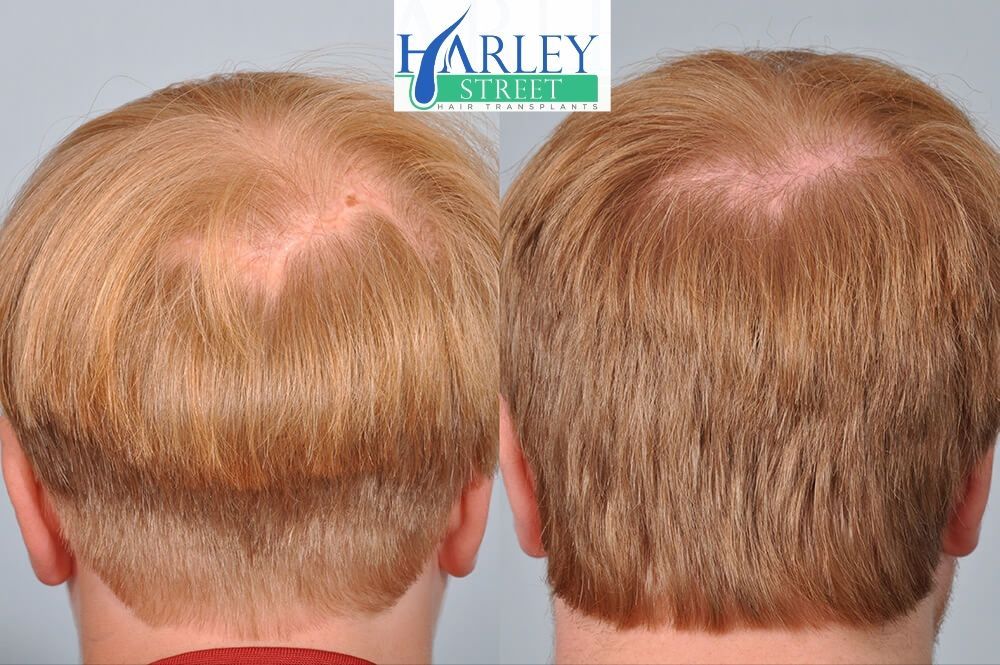
Selected feedback from patients across our clinic group. Treatment locations and procedures differ between reviews.
Paul Bassoo
Google reviewExcellent overall service.
Enzo
Google reviewVery satisfied with my results.
Subhan Buzdar
Google reviewGreat experience.
Muhammad Mohsin Saddique
Google reviewI felt listened to.
Ummad Rehman
Google reviewA very professional service.
Muhammad Saleem Popalzai
Google reviewStaff were friendly.
Discuss the scar and any previous surgery or injury. Your consultation covers donor suitability, possible FUE treatment, expected coverage, recovery, finance and a personal quotation.