Blog Details

HOME  >  BLOG DETAILS

Clinical evidence, benefits and limitations

Pumpkin Seed Oil for Hair Loss: Does It Work?

Pumpkin seed oil is promoted as a natural treatment for thinning hair. Small clinical trials have reported potentially encouraging results in male and female pattern hair loss, but the evidence remains limited and does not prove that it works for every person or every cause of hair loss.

Evidence summary: Pumpkin seed oil may have a supportive role for some people with mild-to-moderate pattern hair loss. However, it should not be presented as a proven cure, a guaranteed DHT blocker or an equivalent replacement for properly assessed medical treatment.
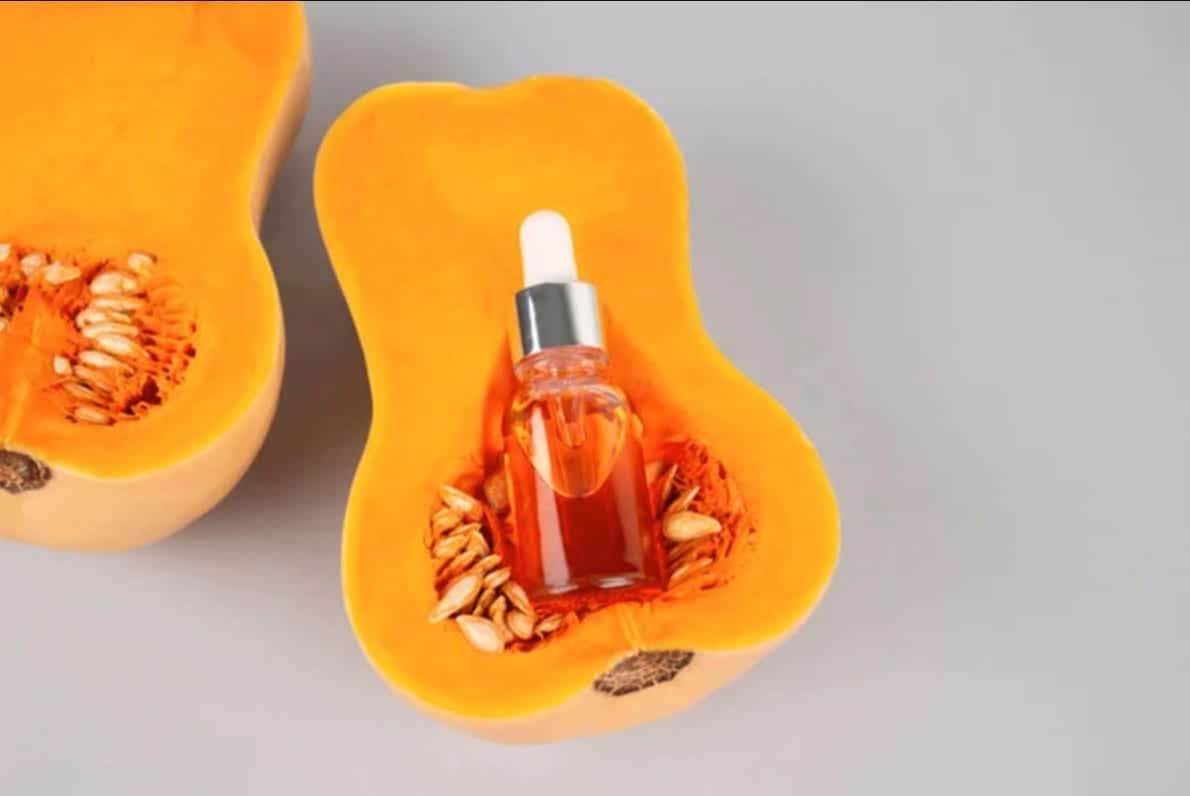
Pumpkin seed oil in a glass bottle beside pumpkin seeds
Pumpkin seed oil has been studied orally and topically, but the two methods should not be assumed to produce identical results.
Male trial 76 men studied for 24 weeks
Female trial 60 women studied for three months
Evidence level Promising but currently limited
Important Diagnosis should come before treatment

What human research has found

Clinical studies of pumpkin seed oil and hair growth

Two frequently cited human studies examined different products, routes of administration, populations and treatment periods. Their findings cannot automatically be applied to every pumpkin seed oil product.

2014 placebo-controlled trial

Oral study in men

Seventy-six men with mild-to-moderate androgenetic alopecia received either a pumpkin-seed-oil study product or placebo for 24 weeks.

  • the reported study dose was 400 mg per day;
  • hair counts and standardised photographs were used;
  • mean hair count increased by 40% from baseline in the treatment group;
  • mean hair count increased by 10% in the placebo group;
  • participant satisfaction was higher in the treatment group;
  • no significant difference in hair thickness was demonstrated.
2021 comparative trial

Topical study in women

Sixty women with female pattern hair loss were randomly assigned to topical pumpkin seed oil or 5% minoxidil foam for three months.

  • each treatment group included 30 women;
  • participants were assessed clinically and dermoscopically;
  • the pumpkin seed oil group showed improvements in several measured hair characteristics;
  • the minoxidil group also showed improvements;
  • the trial did not include an untreated placebo group;
  • three months is a relatively short hair-growth follow-up period.
Do not misread the 40% figure: The male study reported an average 40% increase from the treatment group’s own baseline hair count. It did not mean that every participant regrew 40% of previously lost hair, achieved full coverage or obtained a result comparable to surgery.

Side-by-side comparison

What the studies can—and cannot—tell us

Study feature 2014 male study 2021 female study
Hair-loss type Mild-to-moderate male androgenetic alopecia. Female pattern hair loss.
Participants 76 men. 60 women.
Method Oral study product compared with placebo. Topical pumpkin seed oil compared with 5% minoxidil foam.
Duration 24 weeks. Three months.
Main finding Greater mean improvement in hair count and participant-rated outcomes than placebo. Improvements in several clinical and dermoscopic measures occurred in both treatment groups.
Main limitation Single relatively small trial; DHT was not measured and the exact mechanism was not confirmed. Small, short comparative study without a placebo group or long-term follow-up.
What it does not prove That every oral pumpkin seed oil product causes regrowth or that 400 mg is appropriate for everyone. That topical pumpkin seed oil is equal to minoxidil over the long term.
Overall interpretation: Pumpkin seed oil is a plausible complementary option supported by early clinical findings. Larger independent trials are still needed to establish the most effective formulation, dose, application method, duration and long-term safety.

Realistic expectations

Possible benefits of pumpkin seed oil for hair

Cosmetic hair conditioning and treatment of follicular hair loss are different goals. An oil can improve the appearance or feel of the hair shaft without necessarily reversing follicle miniaturisation.

Possible pattern-loss support

Early trials suggest that selected oral or topical pumpkin seed oil preparations may support measurable improvement in some people with pattern hair loss.

Evidence remains too limited to guarantee regrowth or predict which individual patients will respond.

Hair-shaft conditioning

Used sparingly on the hair lengths, an oil may reduce friction, improve softness and temporarily increase visible shine.

This is a cosmetic effect on the existing hair shaft, not proof of new follicular growth.

Scalp emollient

A simple topical oil may help reduce dryness for some people by coating the skin and limiting moisture loss.

It should not be used to self-treat infection, psoriasis, dermatitis or scarring scalp disease.

Fatty-acid content

Pumpkin seed oil contains fatty acids and other plant compounds that are being studied for possible biological effects.

Nutrient content alone does not demonstrate that a product will reverse clinical hair loss.

Possible hormonal pathway

Researchers have proposed that plant sterols may influence pathways involving 5-alpha-reductase and DHT.

The principal male clinical trial did not measure DHT, so the mechanism was not confirmed in those patients.

Supportive—not curative

Pumpkin seed oil may be considered as a complementary option after the cause of hair loss has been assessed.

It cannot recreate follicles that are absent or replace grafts in a genuinely bald treatment area.

Different products and different evidence

Oral supplements versus topical pumpkin seed oil

Oral pumpkin seed oil

The main placebo-controlled male trial studied an oral branded preparation for 24 weeks. This does not mean that all capsules contain the same formulation or produce the same outcome.

  • supplement quality and ingredients can vary;
  • study dosing is not personalised medical advice;
  • oral products can cause systemic side effects;
  • other medication and health conditions matter;
  • results should be assessed over months, not days.

Topical pumpkin seed oil

Topical use has been studied in a small female trial and in animal research. Human topical evidence remains limited, and product strength and formulation can differ substantially.

  • topical and oral evidence is not interchangeable;
  • oils may irritate sensitive skin;
  • heavy application may leave the scalp greasy;
  • fragranced blends may contain additional allergens;
  • scalp disease should be diagnosed before treatment.

Correcting the original article

What pumpkin seed oil has not been shown to do

Unsupported claims removed

  • it has not been shown to permanently colour hair;
  • it has not been shown to restore natural hair pigment;
  • it has not been shown to make hair dye penetrate deeper;
  • there is no need to leave it on for 12–24 hours;
  • homemade essential-oil mixtures are not automatically safer;
  • it is not proven to cure every form of alopecia.

Results should not be promised

Pattern hair loss, telogen effluvium, alopecia areata, nutritional deficiency and scarring alopecia involve different biological processes.

A product studied in mild-to-moderate androgenetic alopecia should not be assumed to treat autoimmune, inflammatory, nutritional or scarring hair loss.

Read the Hair Growth Cycle Guide

Practical precautions

How to use pumpkin seed oil more safely

Product instructions should take priority over online recipes. Avoid assuming that stronger mixtures, longer contact times or combining several oils will improve hair growth.

Check the ingredients

Choose a clearly labelled product and check whether it contains fragrance, essential oils, preservatives or other active ingredients.

Test a small area

Before widespread topical use, apply a small amount to a limited area and stop if redness, swelling, itching or irritation develops.

Use a modest amount

Follow the product directions. Heavy or prolonged application is not proven to increase follicular benefits and may make the scalp uncomfortable.

Review the response

Hair growth is slow. Use consistent photographs and seek assessment if shedding, recession or scalp symptoms continue.

Avoid or seek advice first if you have a pumpkin or seed allergy, active scalp inflammation, broken skin, are pregnant or breastfeeding, take regular medication or intend to use an oral supplement for a medical condition.

Treat the cause—not only the symptom

When hair loss needs proper assessment

A natural product should not delay investigation of sudden, progressive or unusual hair loss. Treatment depends on the diagnosis.

Possible pattern hair loss

  • gradual frontal hairline recession;
  • progressive temple thinning;
  • increasing crown visibility;
  • widening central parting;
  • gradual reduction in hair calibre;
  • scalp skin otherwise appears normal.

Seek medical advice when

  • shedding begins suddenly or becomes severe;
  • hair loss forms smooth or irregular patches;
  • the scalp is painful, red, scaly or inflamed;
  • follicle openings appear absent or scarred;
  • eyebrow, eyelash or body-hair loss develops;
  • hair loss follows illness, weight loss or medication;
  • the condition is affecting your wellbeing.
NHS guidance: Obtain an idea of what is causing your hair loss before approaching a commercial clinic or selecting treatment.

Compare all appropriate options

Pumpkin seed oil, medical treatment and surgery

Pumpkin seed oil

May be considered as a complementary option for some patients, but evidence remains limited and products are not standardised.

Evidence-based medication

Minoxidil and, for suitable men, finasteride are established options for pattern hair loss. Neither is appropriate or effective for every patient.

Medication should be selected with appropriate advice, contraindication screening and discussion of possible adverse effects.

Hair transplantation

A transplant redistributes suitable donor follicles into a planned recipient area. It does not stop untreated native hair from continuing to thin.

Surgery requires a stable diagnosis, suitable donor area and realistic long-term plan.

Research used for this article

Clinical studies and reviews

Cho YH, Lee SY, Jeong DW, et al. — 2014

Randomised, double-blind, placebo-controlled 24-week trial of an oral pumpkin-seed-oil product in 76 men with mild-to-moderate androgenetic alopecia.

View the study on PubMed
Ibrahim IM, Hasan MS, Elsabaa KI, Elsaie ML — 2021

Randomised comparative three-month trial of topical pumpkin seed oil and 5% minoxidil foam in 60 women with female pattern hair loss.

View the study on PubMed
Gupta AK, Talukder M, Williams G — 2024

Review of established and emerging androgen-targeting treatments for male androgenetic alopecia, including pumpkin seed oil and other natural products.

View the review on PubMed
Gupta AK, Talukder M, Bamimore MA — 2022

Review of clinical studies involving natural products investigated for male androgenetic alopecia.

View the review on PubMed

Common questions

Pumpkin Seed Oil and Hair Loss FAQs

Does pumpkin seed oil regrow hair?

Small clinical trials have reported potentially encouraging improvements in some men and women with pattern hair loss. The evidence remains limited and does not guarantee regrowth for every patient.

What did the 2014 pumpkin seed oil study find?

In a 24-week study of 76 men with mild-to-moderate androgenetic alopecia, the treatment group had a mean hair-count increase of 40% from baseline compared with 10% in the placebo group.

Does the 40% result mean 40% of lost hair returned?

No. It was the mean percentage change in measured hair count from baseline within the study group. It does not mean every patient regrew 40% of previously lost hair or achieved full scalp coverage.

Is topical pumpkin seed oil proven to work?

A small three-month study in women reported improvements in several measured hair characteristics. Larger placebo-controlled studies with longer follow-up are needed.

Does pumpkin seed oil block DHT?

A possible effect on pathways involving 5-alpha-reductase and DHT has been proposed. However, the main male clinical trial did not measure DHT, so the mechanism was not established in those patients.

Can pumpkin seed oil replace minoxidil?

Current evidence is not strong enough to conclude that pumpkin seed oil is an equivalent long-term replacement for minoxidil. Treatment should depend on diagnosis, suitability and informed preference.

How long does pumpkin seed oil take to work?

The principal oral study lasted 24 weeks and the topical female study lasted three months. Hair growth develops slowly, and results should not be expected within days or a few applications.

Should pumpkin seed oil be left on overnight?

There is no established evidence that leaving topical pumpkin seed oil on for 12–24 hours improves hair growth. Follow the directions supplied with the product and stop if irritation occurs.

Can pumpkin seed oil colour grey hair?

There is no reliable evidence that pumpkin seed oil restores natural hair pigment, permanently colours grey hair or causes hair dye to penetrate more deeply.

Is pumpkin seed oil safe?

It may be tolerated by many people, but topical irritation, allergy or oral digestive symptoms can occur. Seek advice before using supplements when pregnant, breastfeeding, taking medication or managing a medical condition.

Can it treat bald scalp areas?

An oil cannot recreate follicles that are no longer present. Selected patients with permanent pattern hair loss may require medical management, camouflage, scalp micropigmentation or hair transplantation.

When should I arrange a hair-loss assessment?

Arrange an assessment for persistent, progressive, sudden, patchy, painful, inflamed, scarring or unexplained hair loss, or when thinning is affecting your wellbeing.

Concerned about thinning or increased shedding?

Request a consultation to review your hair-loss pattern, donor-area suitability, possible causes, treatment options, expected costs and realistic long-term planning.

Protein deficiency hair loss with protein-rich food including eggs fish meat nuts and dairy for hair
By Dr Harpreet Kalra July 24, 2026
Can protein deficiency cause hair loss? Learn how low protein affects hair growth, shedding, brittle hair, recvery, diet and when to seek expert advice.
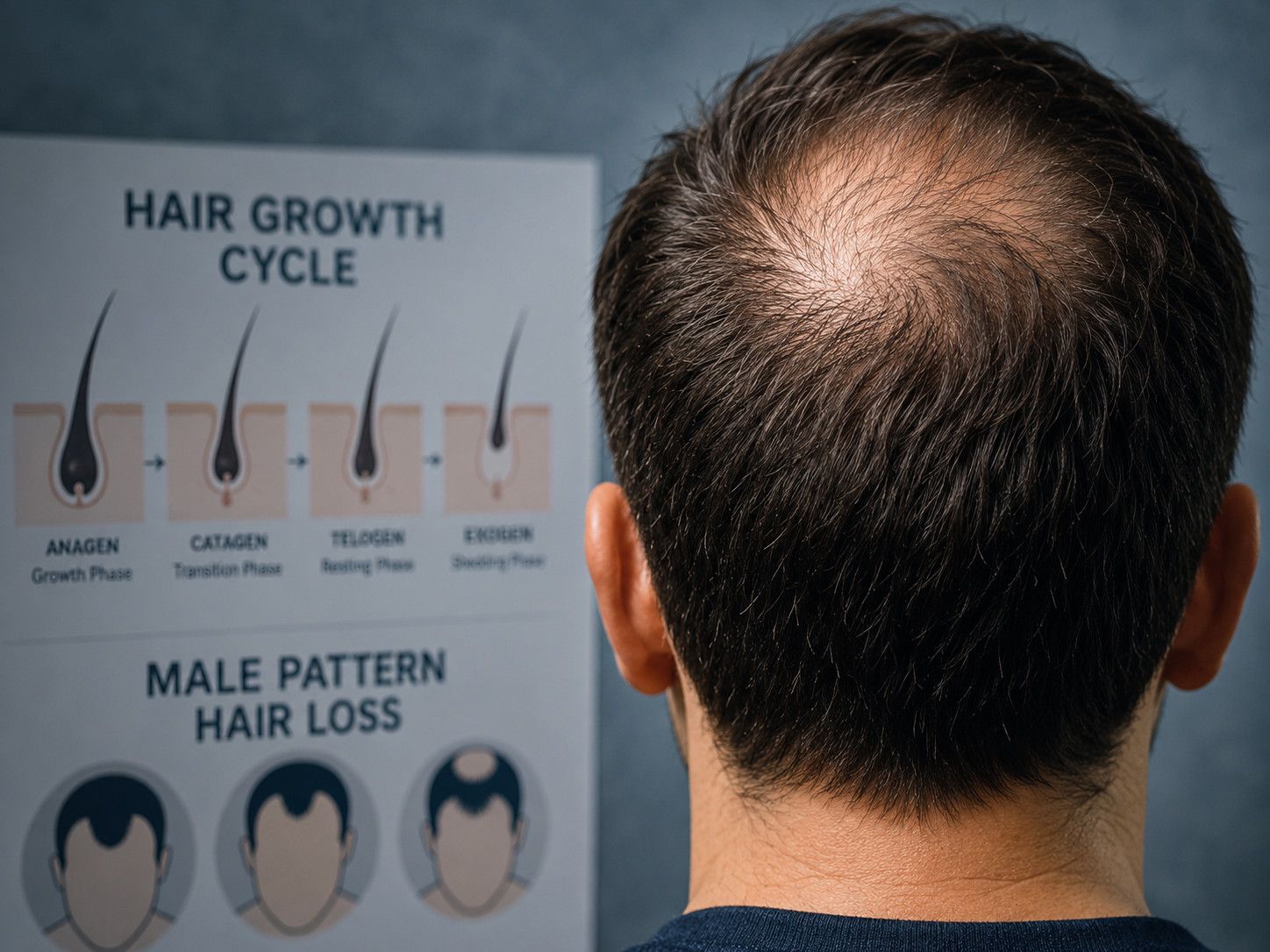
Diagram of hair growth cycle beside the back of a man’s head with thinning hair on top
By Dr. Kalra June 25, 2026
A man suffering from hair loss at the above of his head (crown).
Jack P. Shepherd has reportedly revealed his third hair transplant. Here’s what his transformation s
By Dr. Harpreet Kalra June 18, 2026
Jack P. Shepherd has reportedly revealed his third hair transplant. Here’s what his transformation shows about modern hair restoration, natural results and choosing the right UK clinic.
Image of Wayne Rooney before and after FUE hair transplant
By Harley street hair transplants May 18, 2026
Wayne Rooney’s hair transplant helped normalise male hair restoration. Learn what his transformation teaches men about hair loss, FUE, realistic results.
By Harley street hair transplants May 1, 2026
Latest Hair Transplant Techniques in 2026: What Clinics Don’t Tell You
By Harley street hair transplants April 13, 2026
Learn how minimally invasive hair transplants work, what FUE and DHI cost in the UK, and how to choose the right surgeon for natural, lasting results.
By Harley street hair transplants April 13, 2026
Learn how DHI hair transplants work, who qualifies, and why surgeon skill matters more than technology. Expert insights for UK patients considering DHI.
By Harley street hair transplants February 17, 2025
What should I do before and after my hair transplant ? 
a logo of Alliance of Hair Restoration Surgeons
By Harley street hair transplants January 12, 2025
hair transplant surgeons who are Registered with Alliance of Hair Restoration Surgeons
Picture of a NHS on a building
By Harley street hair transplants December 30, 2024
having a hair Transplant with the NHS and risks of having a hair transplant.