Blog Details

HOME  >  BLOG DETAILS

Anagen, catagen, telogen and shedding explained

How Does the Hair Growth Cycle Work?

Every scalp hair grows from an individual follicle that repeatedly passes through growth, transition, rest and shedding. Understanding this cycle helps explain normal daily hair loss, temporary shedding, pattern baldness and why hair transplant results take several months to develop.

Diagram showing anagen, catagen, telogen and early anagen phases of the hair growth cycle
Simplified illustration of the follicle changing through active growth, regression, rest and renewed growth.
Anagen Active scalp-hair growth for several years
Catagen Short transition lasting about two to three weeks
Telogen Resting phase lasting several months
Daily shedding Around 50–100 hairs can be normal

The follicle’s repeating cycle

The stages of the hair growth cycle

The three core biological phases are anagen, catagen and telogen. Exogen is the release or shedding of the old hair shaft and can overlap with telogen or the start of a new anagen phase.

1
Commonly around 2–6 years

Anagen: active growth

Anagen is the active growth phase. Cells within the lower follicle divide rapidly and produce the hair shaft. Most healthy scalp follicles are normally in anagen at any one time.

  • determines much of the potential hair length;
  • scalp anagen lasts much longer than eyebrow or body hair anagen;
  • may become progressively shorter in pattern hair loss;
  • ends when the follicle enters regression.
2
Approximately 2–3 weeks

Catagen: transition

Catagen is a short regression phase. Active hair production stops, the lower follicle shrinks and the hair becomes separated from its active blood supply.

  • only a small proportion of scalp hairs are usually in catagen;
  • the follicle becomes shorter;
  • the existing hair shaft remains temporarily in place;
  • the follicle then enters telogen.
3
Commonly around 1–4 months

Telogen: resting

Telogen is the resting phase. The follicle is relatively inactive and the old club hair remains in place while the follicle prepares for renewed growth.

  • hair does not continue lengthening during telogen;
  • a minority of healthy scalp hairs are normally in this phase;
  • systemic stressors can move more hairs into telogen;
  • renewed anagen eventually begins.
4
Shedding stage

Exogen: hair release

Exogen describes the release of the old hair shaft from the follicle. It is often treated as part of telogen rather than a completely separate biological phase.

  • the old club hair is released;
  • washing and brushing can make shed hairs more noticeable;
  • new anagen hair may already be forming underneath;
  • some daily shedding is expected.
Key point: Human scalp follicles do not all move through the cycle together. Each follicle generally cycles independently, helping the scalp maintain relatively continuous coverage.

Normal hair shedding

How much daily hair loss is normal?

It is common to lose approximately 50–100 scalp hairs each day, although the number noticed varies with hair length, washing frequency, brushing and styling habits.

Normal shedding may appear as

  • hairs in the shower or bath;
  • loose hairs on a brush or comb;
  • hair on clothing or bedding;
  • more noticeable shedding on wash days;
  • a club-shaped bulb at the end of a shed telogen hair.

Arrange an assessment when

  • shedding increases suddenly or persists;
  • the scalp is becoming progressively more visible;
  • hair loss occurs in defined patches;
  • there is itching, pain, scaling, redness or scarring;
  • eyebrow, eyelash or body-hair loss also develops;
  • hair loss follows illness, weight change or a new medication.
Diagnosis before treatment: Hair loss can have many causes. The NHS advises obtaining an idea of the cause before approaching a commercial hair clinic or deciding on treatment.

When the normal cycle changes

How hair-loss conditions affect the cycle

Hair loss may involve excessive shedding, reduced growth, follicle miniaturisation, inflammation, breakage or permanent follicle damage. The pattern and cause matter more than the number of loose hairs alone.

Condition What happens Typical pattern Planning point
Androgenetic alopecia Genetically susceptible follicles progressively miniaturise and spend less time producing strong terminal hairs. Patterned frontal, temple, mid-scalp or crown thinning. Long-term progression and donor supply must be considered before transplantation.
Telogen effluvium More follicles than usual enter the resting phase after a physiological or psychological stressor. Diffuse shedding across the scalp, often noticed several weeks or months after the trigger. The trigger should be assessed before surgical treatment is considered.
Anagen effluvium Active growth is disrupted abruptly, commonly by treatments or conditions affecting rapidly dividing follicle cells. Rapid diffuse hair loss or breakage during the growth phase. Medical assessment is required.
Alopecia areata An autoimmune process disrupts hair production in affected follicles. Often produces smooth, clearly defined patches, although patterns vary. Hair transplantation is generally not the first response to active autoimmune hair loss.
Scarring alopecia Inflammation damages or destroys follicles and can replace them with scar tissue. Patchy or diffuse loss with possible redness, scale, discomfort or loss of follicle openings. Dermatology assessment and disease control are essential before cosmetic planning.

Excessive resting-phase shedding

What is telogen effluvium?

Telogen effluvium occurs when a larger-than-usual proportion of scalp follicles move into the resting phase. Shedding may become noticeable two to several months after the triggering event.

Possible triggers include

  • significant illness or fever;
  • surgery or physical trauma;
  • childbirth and hormonal change;
  • major psychological stress;
  • rapid weight loss or restrictive eating;
  • iron deficiency or thyroid disorders;
  • certain medications.

Assessment may involve

  • the timing and pattern of shedding;
  • recent illness, surgery or emotional stress;
  • dietary and weight changes;
  • medication history;
  • examination for pattern or patchy hair loss;
  • blood tests where clinically appropriate;
  • dermatology referral when the diagnosis is unclear.

After surgical hair restoration

How the growth cycle affects a hair transplant

Transplanted hairs do not usually continue growing uninterrupted after surgery. The visible hair shafts may shed while the transplanted follicles remain within the scalp and later begin a new growth phase.

First 1–2 weeks

Healing and graft protection

Redness, small scabs and temporary swelling may be present. The recipient and donor areas should be managed according to the clinic’s written aftercare instructions.

Early weeks

Shedding can occur

Many transplanted hair shafts shed during the early post-operative period. This does not automatically mean that the follicular graft has been lost.

Around months 3–4

Early growth may begin

New hairs may start to emerge gradually. Early growth can be fine, uneven and staggered because individual follicles do not all re-enter anagen together.

Months 5–9

Visible improvement develops

More transplanted hairs may become visible and begin gaining length and calibre. Different scalp areas can progress at different rates.

Months 9–18

Later maturation

Density, texture and cosmetic coverage may continue to develop. Crown restoration can mature more slowly than the frontal hairline in some patients.

Supporting hair and scalp health

Can you control the hair growth cycle?

You cannot manually force every follicle into anagen. The appropriate action depends on whether shedding is physiological, nutritional, hormonal, genetic, inflammatory, medication-related or associated with another medical condition.

Identify the cause

A diagnosis is more useful than taking random supplements. Sudden, persistent or unusual hair loss should be assessed appropriately.

Maintain a balanced diet

Protein, iron and other nutrients contribute to normal hair production, but supplementation is most useful when a deficiency or restricted diet is identified.

Avoid unnecessary damage

Excessive heat, harsh chemical processing, tight hairstyles and rough handling can damage the hair shaft even when the follicle itself remains healthy.

Do not self-diagnose from shedding alone: Pattern hair loss, telogen effluvium and other conditions can occur at the same time. Persistent hair loss may need assessment by a GP, dermatologist or suitably qualified clinician.

Common questions

Hair Growth Cycle FAQs

What are the main stages of the hair cycle?

The three main biological phases are anagen, the active growth phase; catagen, the short regression phase; and telogen, the resting phase. Exogen describes the release or shedding of the old hair shaft.

How long does the anagen phase last?

Scalp anagen commonly lasts approximately two to six years, although duration varies between individuals, follicles, age and body sites.

Does hair grow during telogen?

No. The existing hair shaft does not continue lengthening during telogen. The follicle is relatively inactive until it begins a new anagen phase.

Is losing 50 to 100 hairs a day normal?

Approximately 50 to 100 shed scalp hairs per day can be normal. The number noticed varies with hair length, washing frequency and grooming routines.

What is telogen effluvium?

Telogen effluvium is diffuse shedding caused by more follicles than usual entering the resting phase. Possible triggers include illness, surgery, childbirth, stress, weight loss, dietary change, medication and some medical conditions.

Why does transplanted hair shed?

The visible transplanted hair shafts may shed during early recovery while the follicular grafts remain in the scalp. New growth then develops gradually as the follicles enter a new growth phase.

When does transplanted hair start growing?

Early growth may begin around months three to four, although it is often fine and uneven initially. Improvement generally develops over the following months.

When should I seek medical advice for hair loss?

Arrange an assessment for sudden, persistent, patchy, painful, inflamed, scarring or unexplained hair loss, or when the scalp is becoming progressively more visible.

Concerned about increased shedding or thinning?

Request a consultation to discuss your hair-loss pattern, donor area, treatment options, expected costs and whether medical assessment should come before surgical planning.

Protein deficiency hair loss with protein-rich food including eggs fish meat nuts and dairy for hair
By Dr Harpreet Kalra July 24, 2026
Can protein deficiency cause hair loss? Learn how low protein affects hair growth, shedding, brittle hair, recvery, diet and when to seek expert advice.
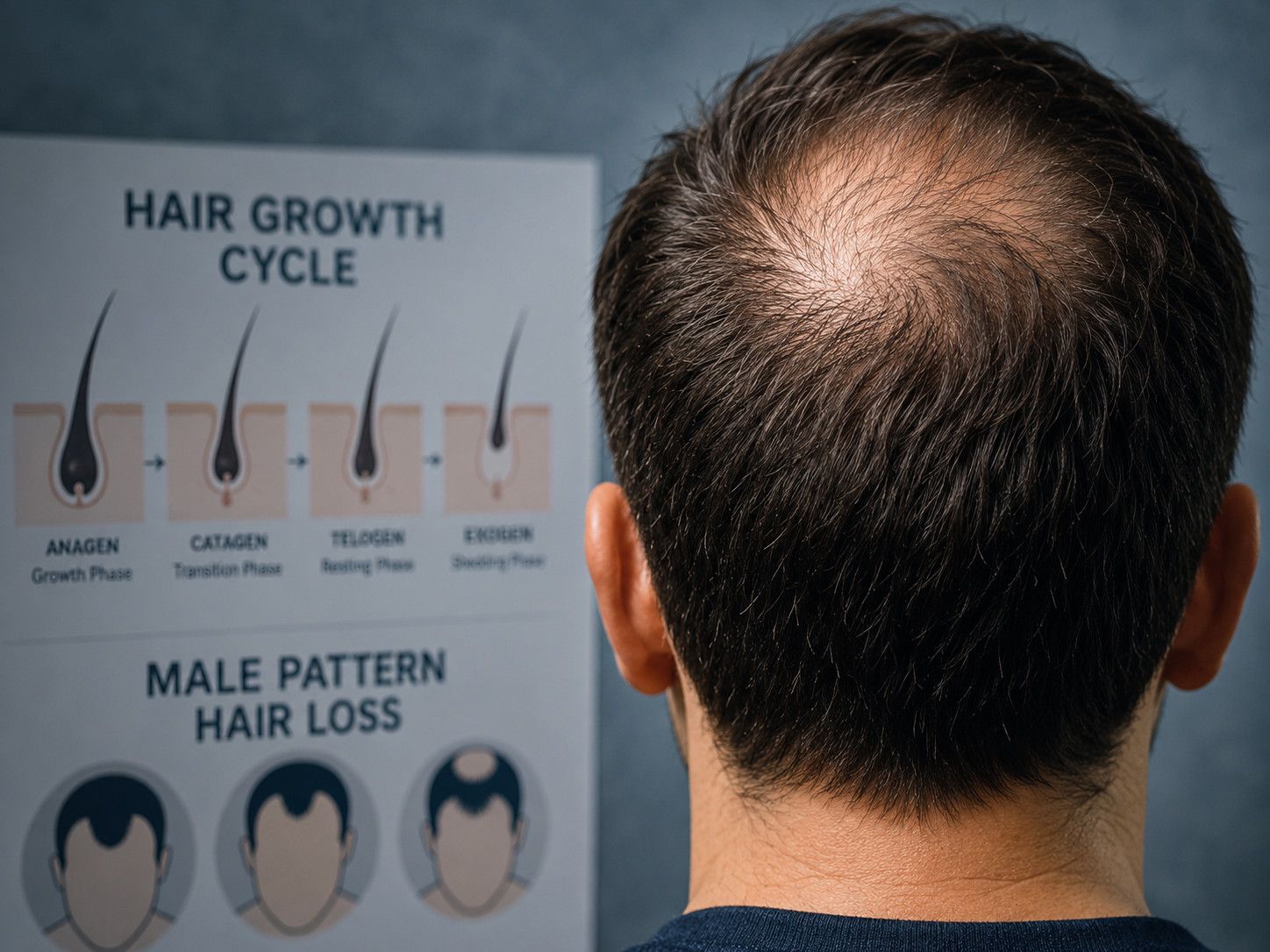
Diagram of hair growth cycle beside the back of a man’s head with thinning hair on top
By Dr. Kalra June 25, 2026
A man suffering from hair loss at the above of his head (crown).
Jack P. Shepherd has reportedly revealed his third hair transplant. Here’s what his transformation s
By Dr. Harpreet Kalra June 18, 2026
Jack P. Shepherd has reportedly revealed his third hair transplant. Here’s what his transformation shows about modern hair restoration, natural results and choosing the right UK clinic.
Image of Wayne Rooney before and after FUE hair transplant
By Harley street hair transplants May 18, 2026
Wayne Rooney’s hair transplant helped normalise male hair restoration. Learn what his transformation teaches men about hair loss, FUE, realistic results.
By Harley street hair transplants May 1, 2026
Latest Hair Transplant Techniques in 2026: What Clinics Don’t Tell You
By Harley street hair transplants April 13, 2026
Learn how minimally invasive hair transplants work, what FUE and DHI cost in the UK, and how to choose the right surgeon for natural, lasting results.
By Harley street hair transplants April 13, 2026
Learn how DHI hair transplants work, who qualifies, and why surgeon skill matters more than technology. Expert insights for UK patients considering DHI.
By Harley street hair transplants February 17, 2025
What should I do before and after my hair transplant ? 
a logo of Alliance of Hair Restoration Surgeons
By Harley street hair transplants January 12, 2025
hair transplant surgeons who are Registered with Alliance of Hair Restoration Surgeons
Picture of a NHS on a building
By Harley street hair transplants December 30, 2024
having a hair Transplant with the NHS and risks of having a hair transplant.