Minoxidil for hair loss: uses, results and side effects
A practical guide to topical and oral minoxidil, foam and solution, expected results, early shedding, side effects and safe use for hair loss.

Contents
- What minoxidil can and cannot do
- How minoxidil works
- Foam, solution and tablets
- How to apply a topical product
- When results may become visible
- Early shedding and when to get advice
- Side effects of topical minoxidil
- Oral minoxidil needs its own assessment
- Women, pregnancy and facial hair
- Stopping, ongoing cost and treatment choices
- Questions and answers
- Sources
What minoxidil can and cannot do
Minoxidil can help some people with pattern hair loss maintain or improve scalp hair growth. It does not work for everyone, does not treat every cause of thinning and usually needs continued use to maintain benefit. Topical products are applied to the scalp; oral treatment requires a separate prescribing assessment. [1]
Before choosing a product, establish why the hair is thinning. Sudden shedding, patchy loss, a painful scalp or changes after illness deserve assessment. A medicine for pattern hair loss will not correct every underlying problem.
How minoxidil works
Minoxidil is a vasodilator, meaning it widens blood vessels. Its exact action in hair growth is not completely understood, but it can support the growing phase of the hair cycle and increase hair-shaft diameter in responsive follicles. It is not a DHT-blocking medicine. [2]
The distinction matters when comparing it with finasteride or dutasteride. Medicines with different actions may have different uses, precautions and monitoring needs; the most suitable option depends on the diagnosis and the individual.
Foam, solution and tablets
Topical minoxidil is available in different strengths and formulations. Do not assume that every 5% product has the same instructions. For example, the UK Regaine women’s once-daily 5% foam and men’s 5% foam have different application schedules. Check the exact pack and leaflet. [2, 3]
Oral minoxidil was developed as a blood-pressure medicine. Low doses are sometimes prescribed off-label for hair loss. Tablets are not an over-the-counter substitute for a scalp foam, and an online application guide is not a prescription. [4]
How to apply a topical product
Apply the measured amount to the affected scalp rather than coating the hair. Follow your product’s directions for frequency and quantity, wash your hands afterwards and keep it away from the eyes and face. Do not apply it to broken or inflamed skin. [3, 5]
Using more, applying it more often or covering a larger area will not reliably improve the result and may increase unwanted effects. Keep the medicine away from children. Alcohol-containing preparations are flammable: follow the pack’s precautions around flames, smoking and heat. [3]
A routine has to be practical enough to maintain. Before buying several months’ supply, consider the formulation, scalp sensitivity and the time needed for application and drying.
When results may become visible
Hair growth is slow. The women’s once-daily foam information describes an assessment period of 12–24 weeks, with instructions to stop if no improvement is seen at 24 weeks. Other products have different review points. Follow your own leaflet and clinician’s advice rather than one universal timeline. [2]
Dermatology guidance also emphasises that treatment may need several months before benefit is clear. Compare the same scalp areas under similar lighting and hair length. A reduced rate of loss may be valuable even without dramatic regrowth. [6]
There is no reliable way to promise your result from somebody else’s before-and-after photograph. Differences in diagnosis, treatment combinations and follow-up make those comparisons especially uncertain.
Early shedding and when to get advice
Some people notice an early increase in shedding as hair cycles change. This does not happen to everyone and is not proof that treatment will work. A product leaflet may specify when persistent shedding should prompt stopping and medical advice; follow that instruction. [2, 6]
Do not dismiss severe or prolonged loss, scalp inflammation or new bald patches as a normal phase. Arrange an assessment, particularly if the pattern differs from the thinning you originally wanted to treat.
Side effects of topical minoxidil
Scalp irritation, dryness, scaling, itching and unwanted hair growth on nearby skin can occur. A different formulation may sometimes be considered, but first check whether the reaction needs treatment or whether minoxidil should be stopped. [5]
Stop using the product and seek medical advice for chest pain, a rapid heartbeat, faintness, dizziness, swelling or unexplained weight gain. Breathing difficulty, collapse or a serious allergic reaction needs emergency help. Do not assume that a scalp product cannot have effects elsewhere in the body. [3]
Oral minoxidil needs its own assessment
A prescriber should review blood pressure, heart and kidney history, other medicines and the monitoring plan before considering oral minoxidil. Pulse and blood-pressure checks may be needed during treatment. The dose is an individual prescribing decision. [1, 4]
Possible effects include unwanted facial or body hair, fluid retention, ankle swelling, palpitations and low blood pressure with dizziness or fainting. Chest pain or breathlessness should be assessed urgently. Tell the clinician about blood-pressure treatment and alcohol use. [4]
Do not copy a dose from a social-media post or use a topical solution by mouth. Those are different preparations with different safety requirements.
Women, pregnancy and facial hair
Minoxidil is used for women’s pattern hair loss as well as men’s. It is inaccurate to say that women can only ever use 2%: a specific women’s 5% foam is licensed in the UK. Suitability still depends on the exact product and the person using it. [2, 7]
Do not use minoxidil during pregnancy or breastfeeding. If you are planning a pregnancy, discuss stopping and alternatives with a clinician. Applying a scalp medicine to eyebrows or a beard is outside its usual licensed scalp use and should not be treated as a harmless cosmetic experiment. [3, 7]
Stopping, ongoing cost and treatment choices
The effect depends on continued use. When treatment stops, hair maintained by it can be lost over the following months. One missed application is not the same as stopping permanently: follow the leaflet and do not double the next amount. [5]
Compare the ongoing cost of the exact formulation, pack size and application schedule. For oral treatment, ask about prescribing and monitoring fees too.
Finasteride and dutasteride have separate benefits and risks, discussed in the guides below. A transplant addresses the distribution of donor hair and does not cure every cause of future thinning. If surgery is planned, agree with the treating team whether and when to use any scalp product during recovery.
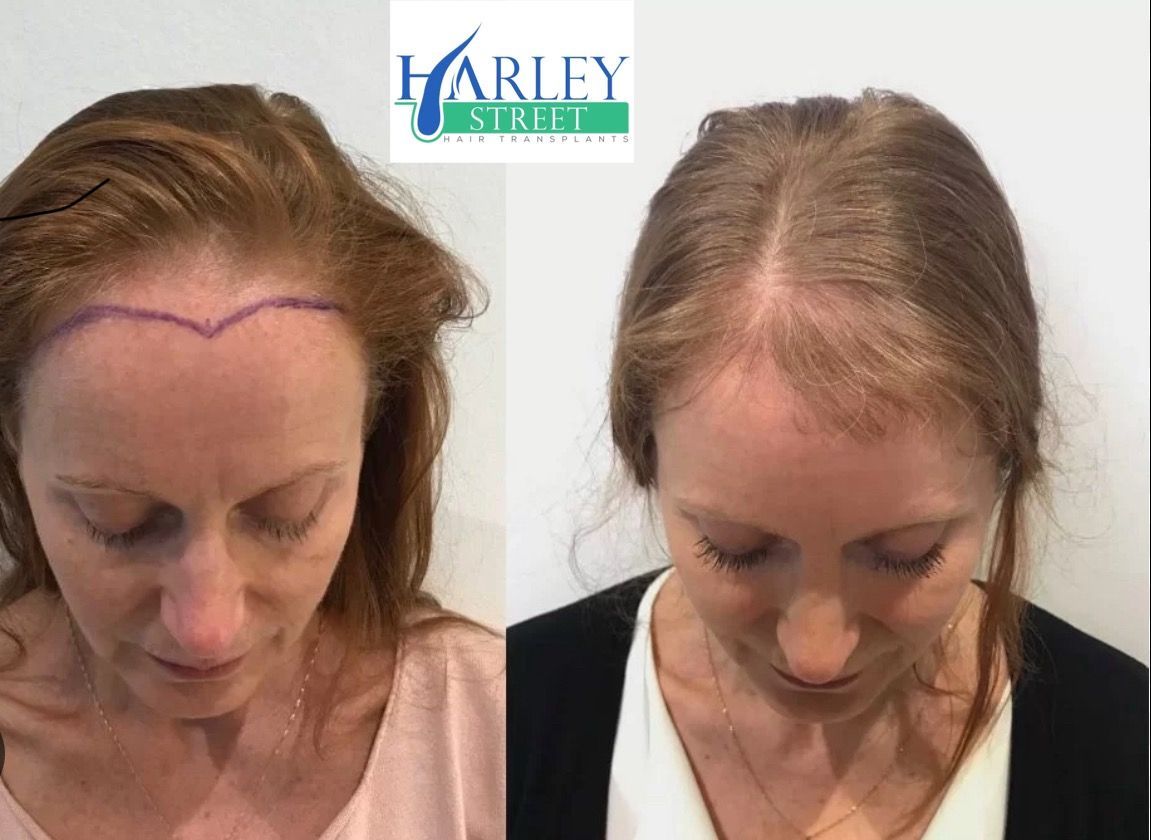
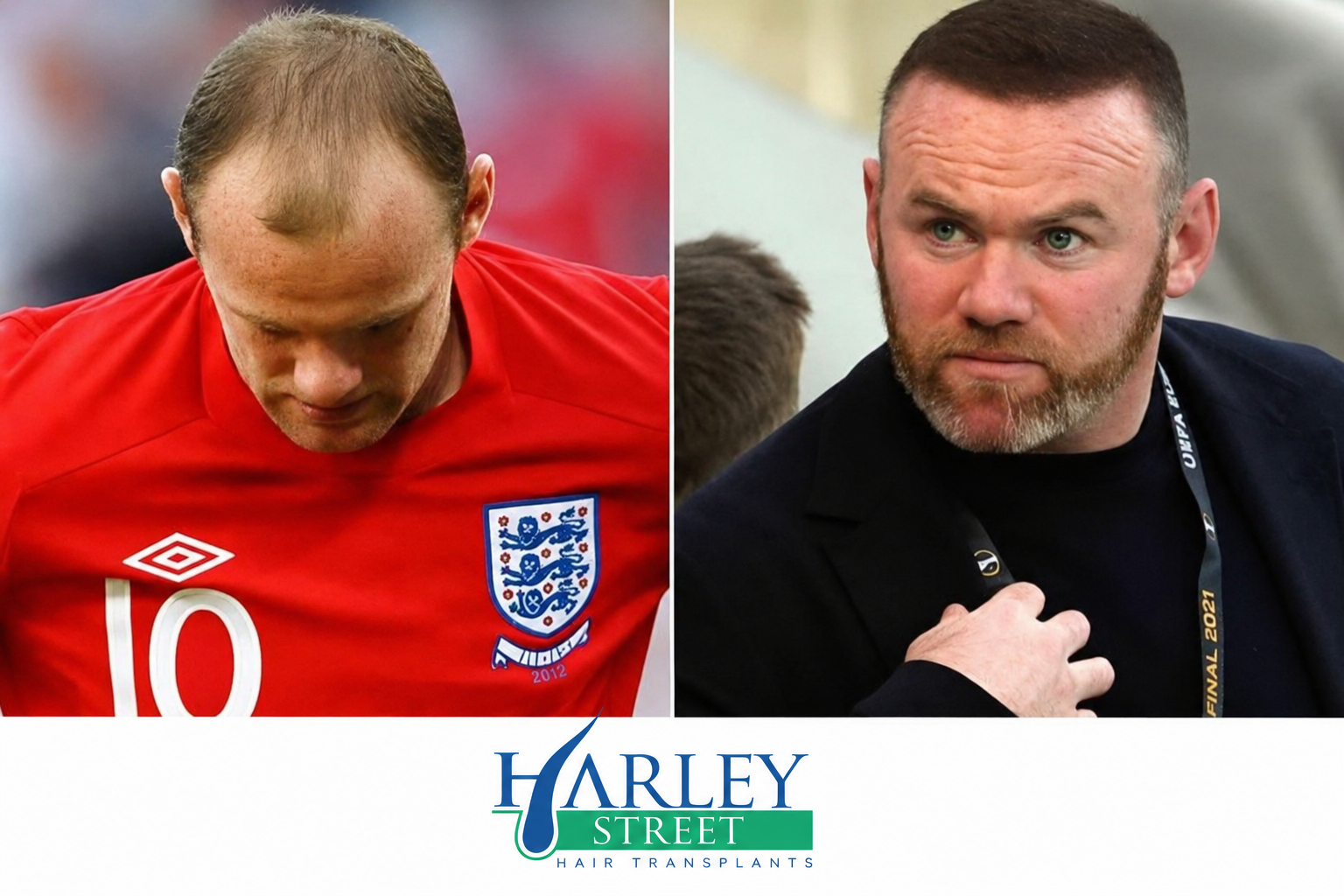
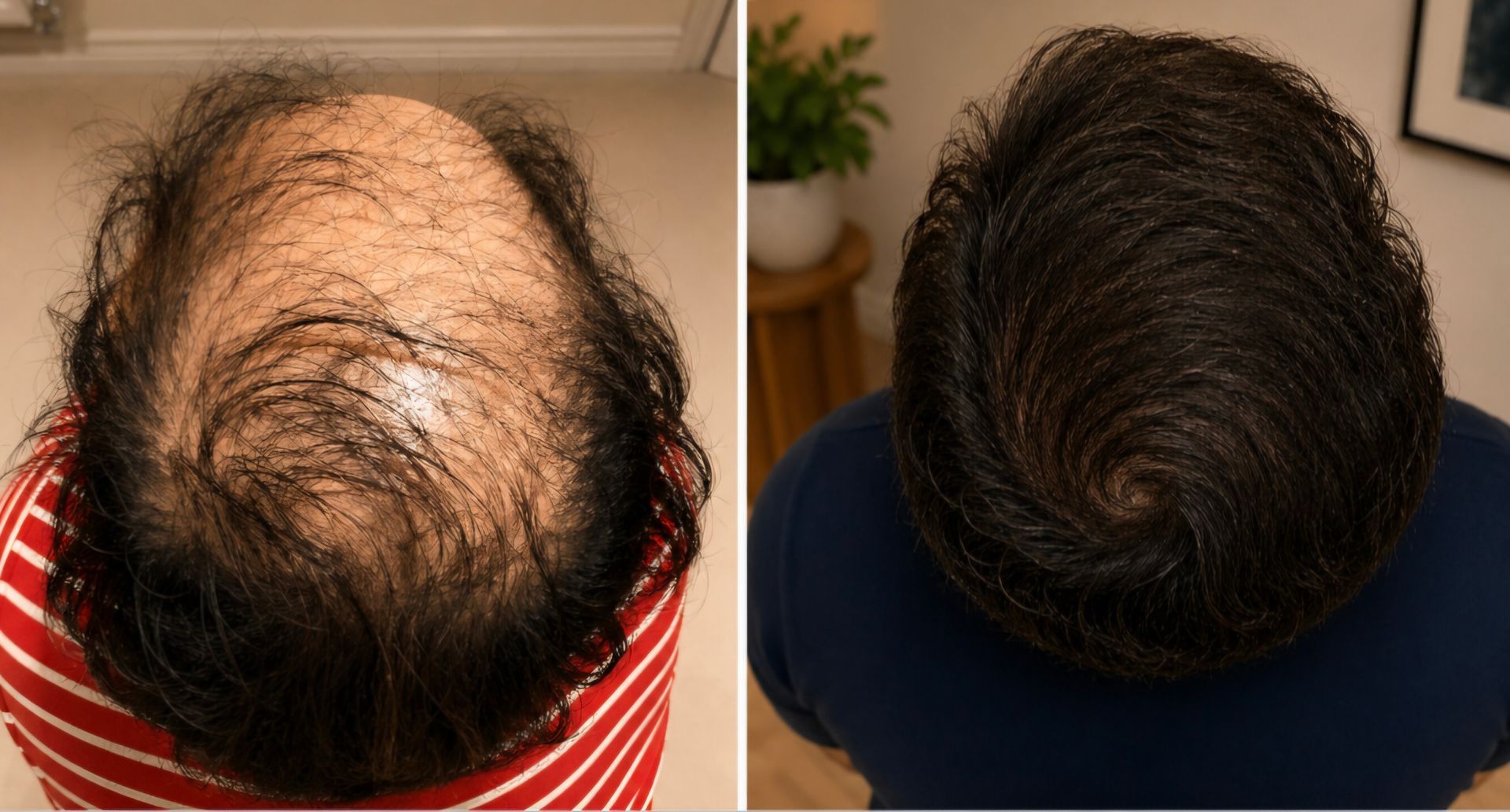
Crown hair transplant results
Before-and-after photographs from Harley Street Hair Transplants. These show crown transplant results, not the effects of medication alone. Individual results vary.
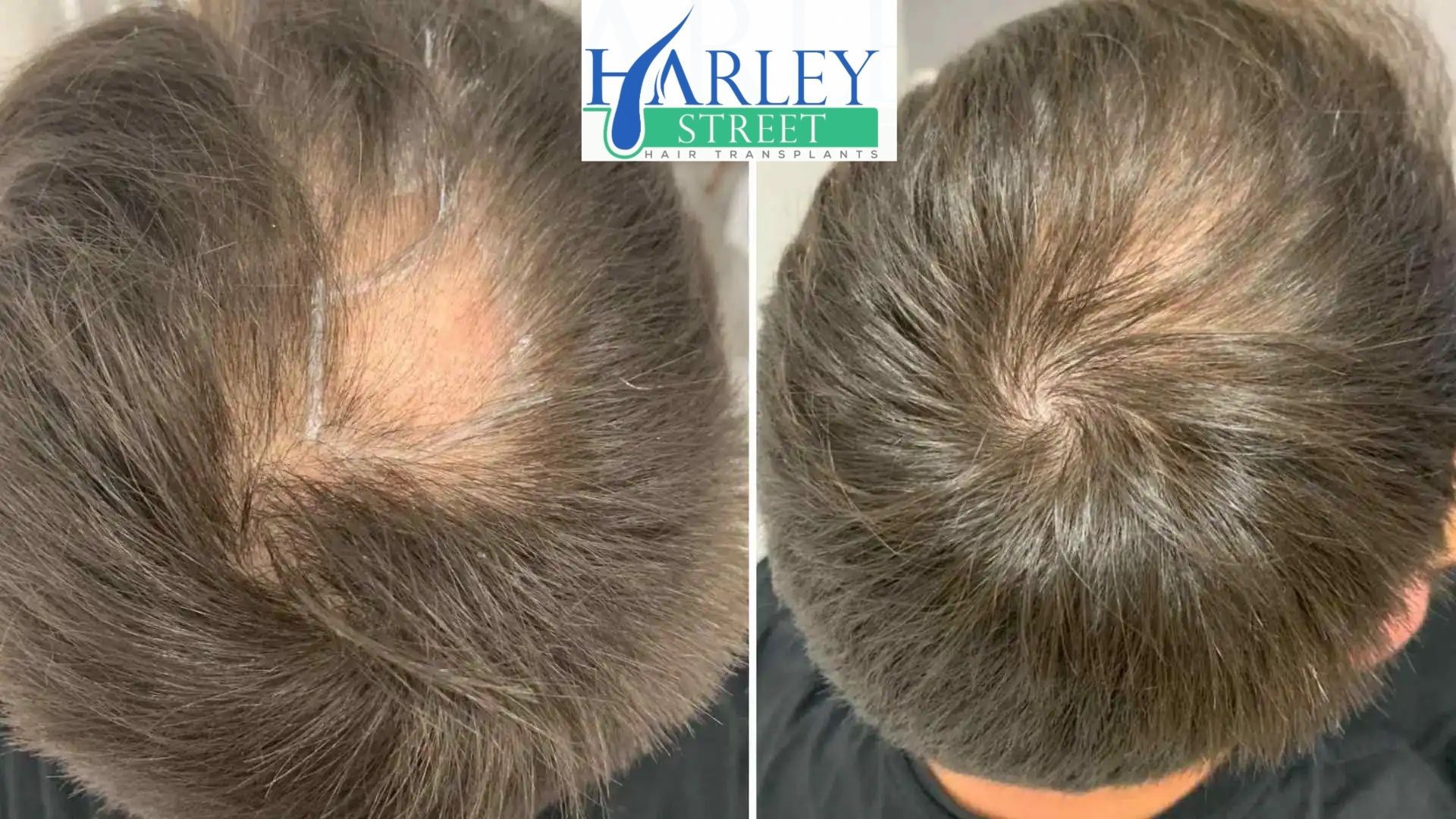
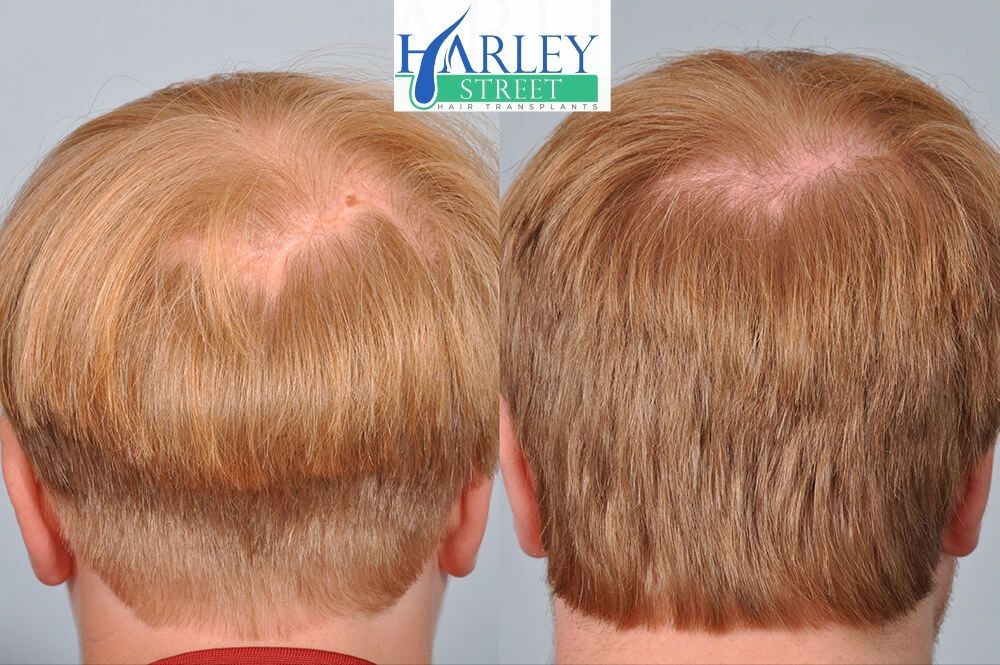
Read about crown hair transplants.
Questions and answers
Is foam better than solution?
There is no single best formulation for everyone. They differ in ingredients, application schedules and how they feel on the scalp. Check the exact product and discuss irritation with a pharmacist or clinician.
Does everyone shed at the start?
No. Early shedding can happen, but it is neither compulsory nor a guarantee of later growth. Follow the leaflet’s advice about persistent shedding.
Can women use 5% minoxidil?
Some can use a product specifically licensed for them, such as the women’s once-daily 5% foam. That does not make every 5% formulation interchangeable.
Can I take oral minoxidil without seeing a prescriber?
No. Oral treatment for hair loss needs a prescribing assessment and an agreed monitoring plan.
Do I have to use minoxidil after a transplant?
Not every patient needs it. The team should assess ongoing native-hair loss, suitability and timing, particularly while the scalp is healing.
Discuss your hair loss in London
Bring a list of current medicines and any dated photographs to your assessment. You can ask about the cause of thinning, what treatment could realistically achieve and whether a transplant is appropriate. Request a consultation with Harley Street Hair Transplants.
Sources
- Royal Berkshire NHS: minoxidil for hair loss
- Regaine for Women 5% once-daily foam: product information
- Regaine for Men 5% foam: product information
- Gloucestershire Hospitals NHS: oral minoxidil information
- Gloucestershire Hospitals NHS: topical minoxidil information
- British Association of Dermatologists: male pattern hair loss
- British Association of Dermatologists: women’s pattern hair loss