Winter hair care: reducing dryness and breakage
A gentler routine can help the hair shaft. Persistent thinning or an inflamed scalp needs a separate assessment.

On this page
In winter, hair may feel drier, tangle more easily or break during styling. Adjusting how you wash, dry and handle it can help. These changes do not treat inherited pattern loss or an inflammatory scalp condition.
Work out whether you are seeing breakage or shedding
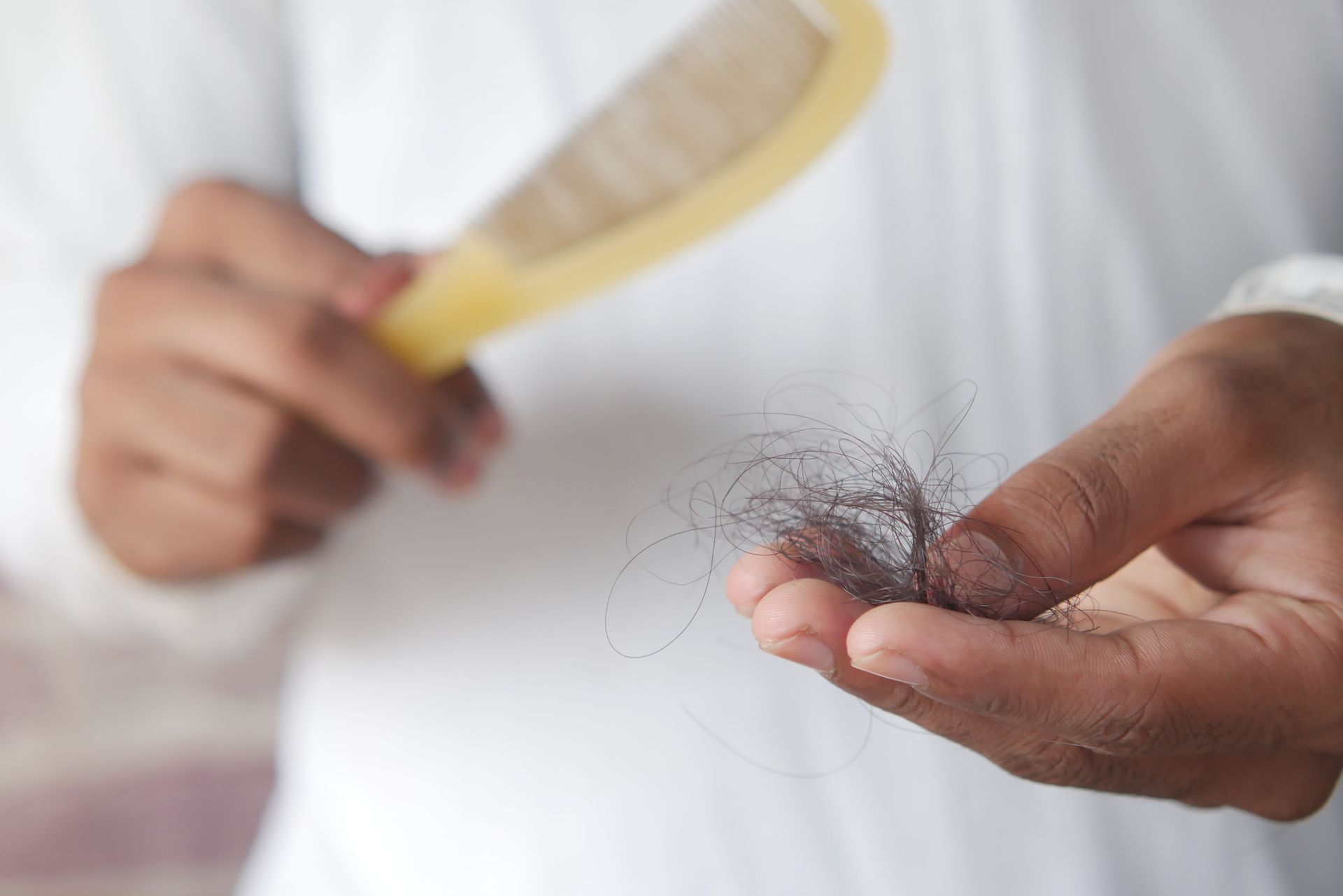
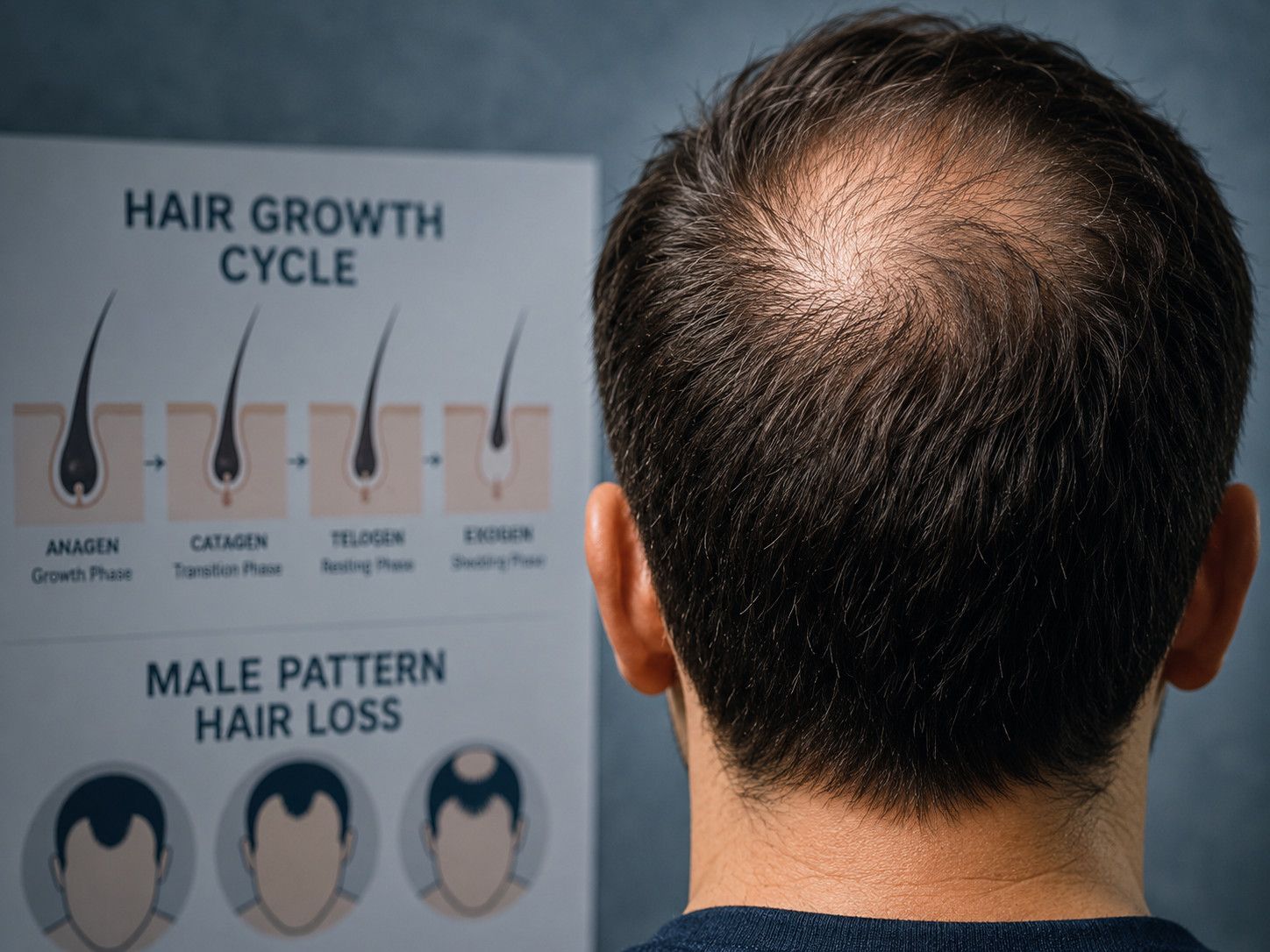
Broken strands may appear as shorter pieces or uneven lengths. Shed hairs are usually full-length strands released as part of the hair cycle. The distinction is not always obvious, especially with short or tightly curled hair, so persistent thinning deserves assessment.
If you have noticed more hair in the shower, look at the wider timeline. Illness, diet changes or other triggers from several months earlier can be relevant. Our telogen effluvium guide explains why seasonal timing alone does not prove the cause.
Adjust washing and conditioning to your hair
Choose a washing frequency that keeps your scalp comfortable and clean. There is no single weekly schedule that suits every scalp, hair texture or activity level. Use conditioner where it helps detangling and reduces friction through the lengths.
The American Academy of Dermatology's healthy-hair guidance explains how washing and conditioning needs differ with oiliness and hair texture. A product that suits someone else's routine may be too heavy or too drying for yours.
Very hot water can be uncomfortable on an irritated scalp. Use a comfortable temperature and avoid vigorous rubbing with a towel. When detangling, work gently rather than pulling through a knot from the roots.
Reduce avoidable heat and friction
Use the lowest effective heat setting and limit repeated passes with heated tools. Allowing some air-drying time can reduce the amount of heat needed. Keep straighteners and curling tools away from irritated or damaged skin.
A hat can protect against the weather, but it should fit comfortably and not rub or pull the hairline. Keep it clean, and change a style if you notice pain or tension. Tight ponytails or braids under headwear can add avoidable pulling.
The AAD guide to preventing hair damage gives practical advice on heat, handling and chemical treatments. Gentler care protects the strand; it does not increase the number of follicles.
Do not treat every flaky scalp with more oil
Flaking, redness and itching can have several causes. Some need a targeted shampoo or other treatment. Adding oils or fragranced products may irritate the scalp or make it harder to identify the problem.
Seek advice if symptoms persist, worsen or occur alongside patches or thinning. The AAD information on seborrhoeic dermatitis treatment explains one possible cause and why treatment is chosen for the condition.
Questions and answers
Will a winter hair-care routine stop pattern baldness?
No. It may reduce damage and improve manageability, but inherited pattern loss needs a separate discussion if you want treatment.
Should everyone wash their hair less in winter?
No. Adjust the routine to your scalp, texture and activities. Persistent irritation is a reason to seek advice rather than keep changing the schedule blindly.
Do I need supplements because it is winter?
Follow public-health or clinical advice relevant to you, but do not assume that a hair supplement will treat shedding. A suspected deficiency should be assessed in context.