Hair loss in men: recognising the pattern and choosing a next step
Receding temples are one pattern of hair loss. Sudden shedding and scalp symptoms need a different assessment.

On this page
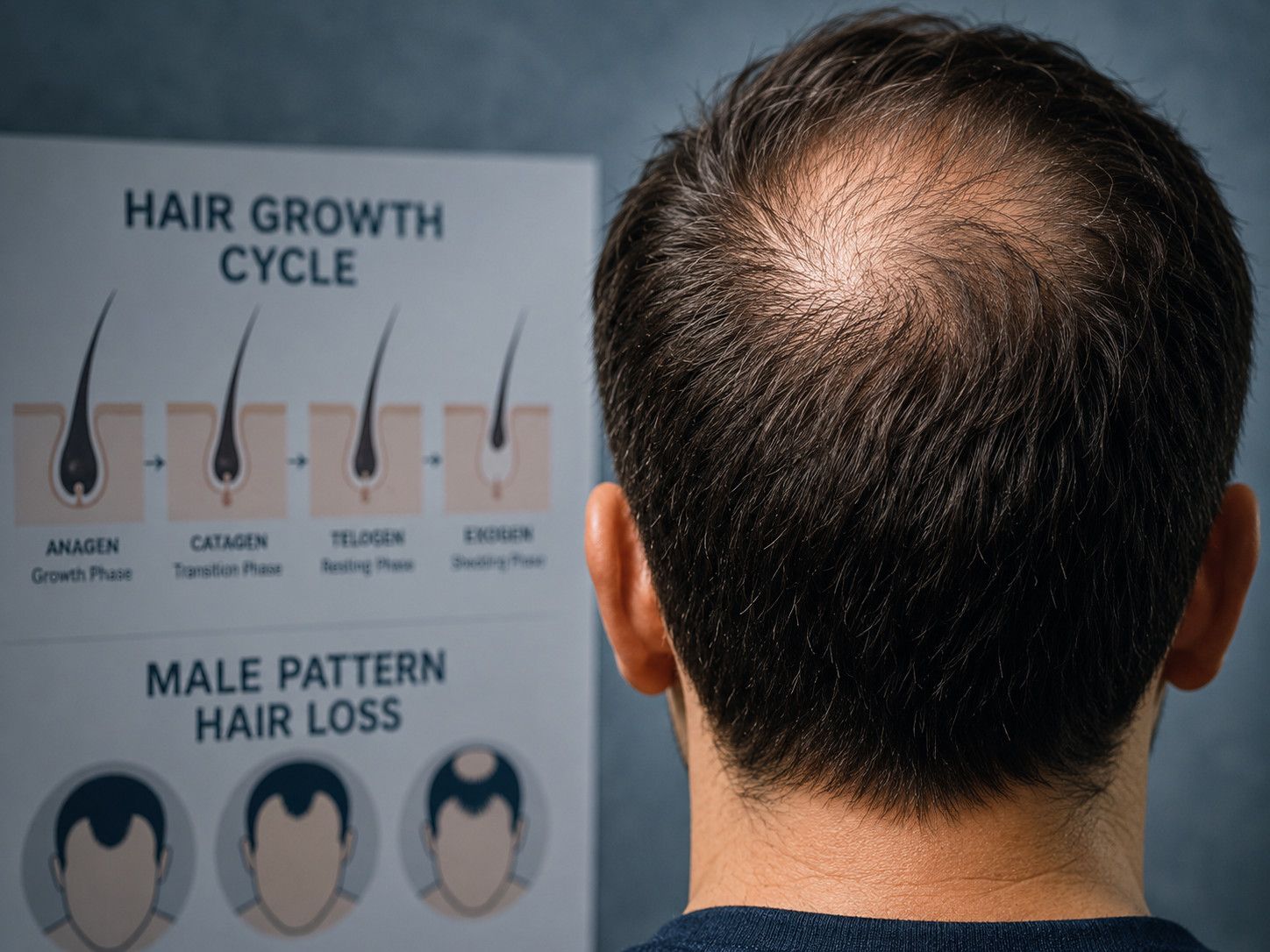
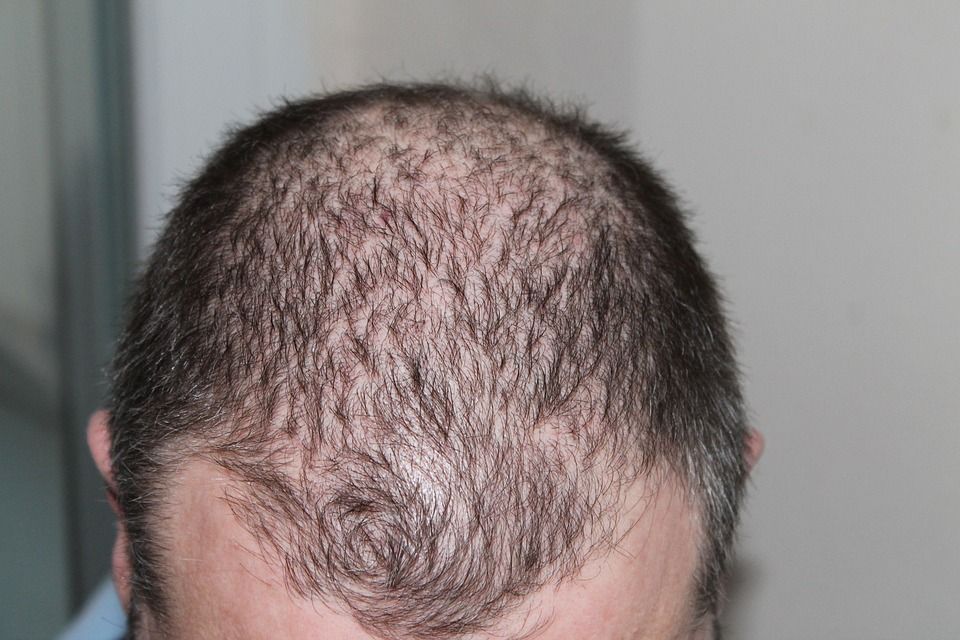
Gradual recession at the temples or thinning at the crown commonly occurs with male pattern hair loss. It is not the only reason men lose hair. Sudden shedding, smooth patches or a sore, inflamed scalp should be assessed rather than assumed to be the same condition.
What happens in male pattern hair loss?
In susceptible follicles, successive hairs become finer and shorter. Inherited factors and the response to androgens, including dihydrotestosterone, are involved. It is not simply a sign that someone has too much testosterone or has failed to look after their hair.
The British Association of Dermatologists' male pattern hair-loss leaflet explains the condition and treatment options. The pattern and speed vary, so another family member's hairline does not provide an exact forecast of your own.
What else can cause thinning?
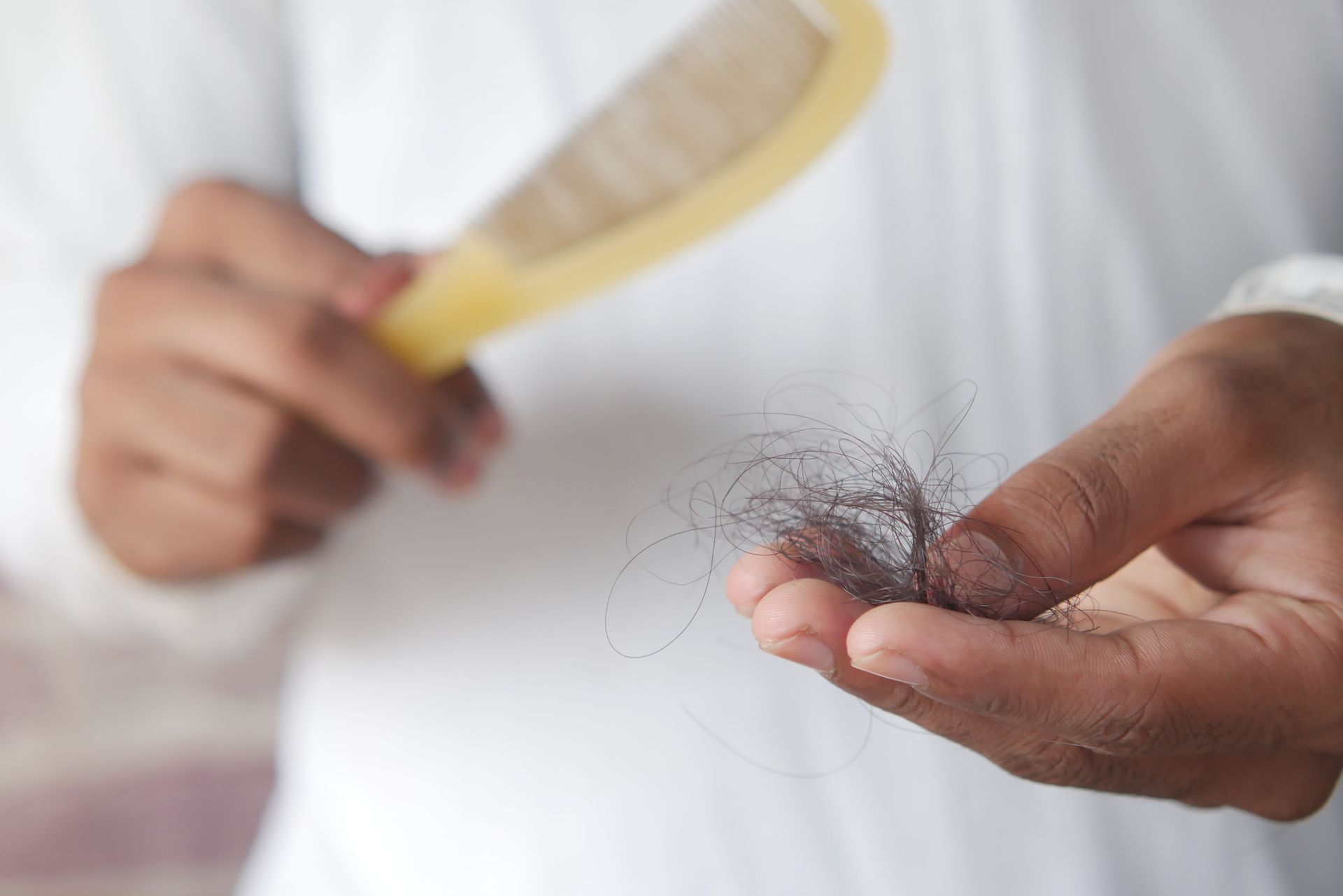
Diffuse shedding may follow illness, surgery, major weight change or another trigger. This can become noticeable months later. Telogen effluvium can also occur alongside pattern loss, making an existing thin area more obvious.
Patchy loss can occur with alopecia areata, while inflammation and some scalp conditions can damage follicles. Broken hairs from traction or harsh styling are different from whole hairs shedding from the root. A clinician uses the history and scalp examination to distinguish these possibilities.
Recording the change
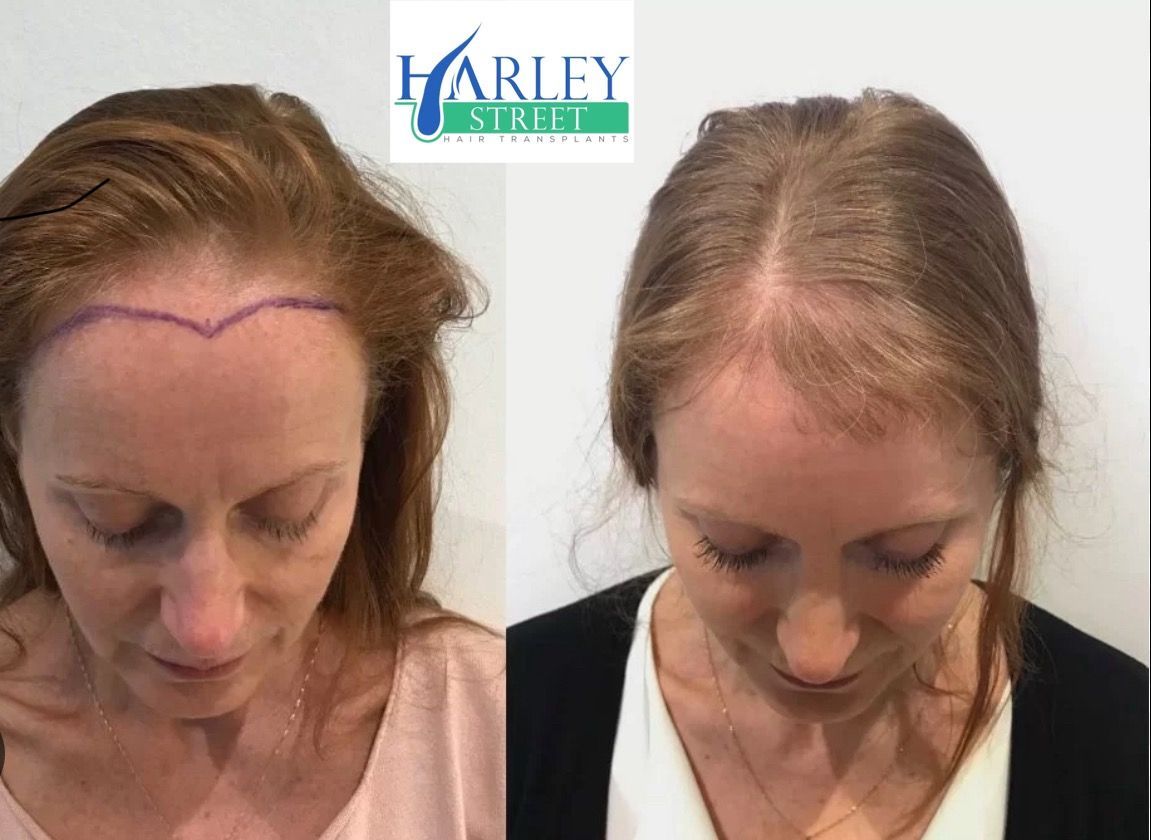
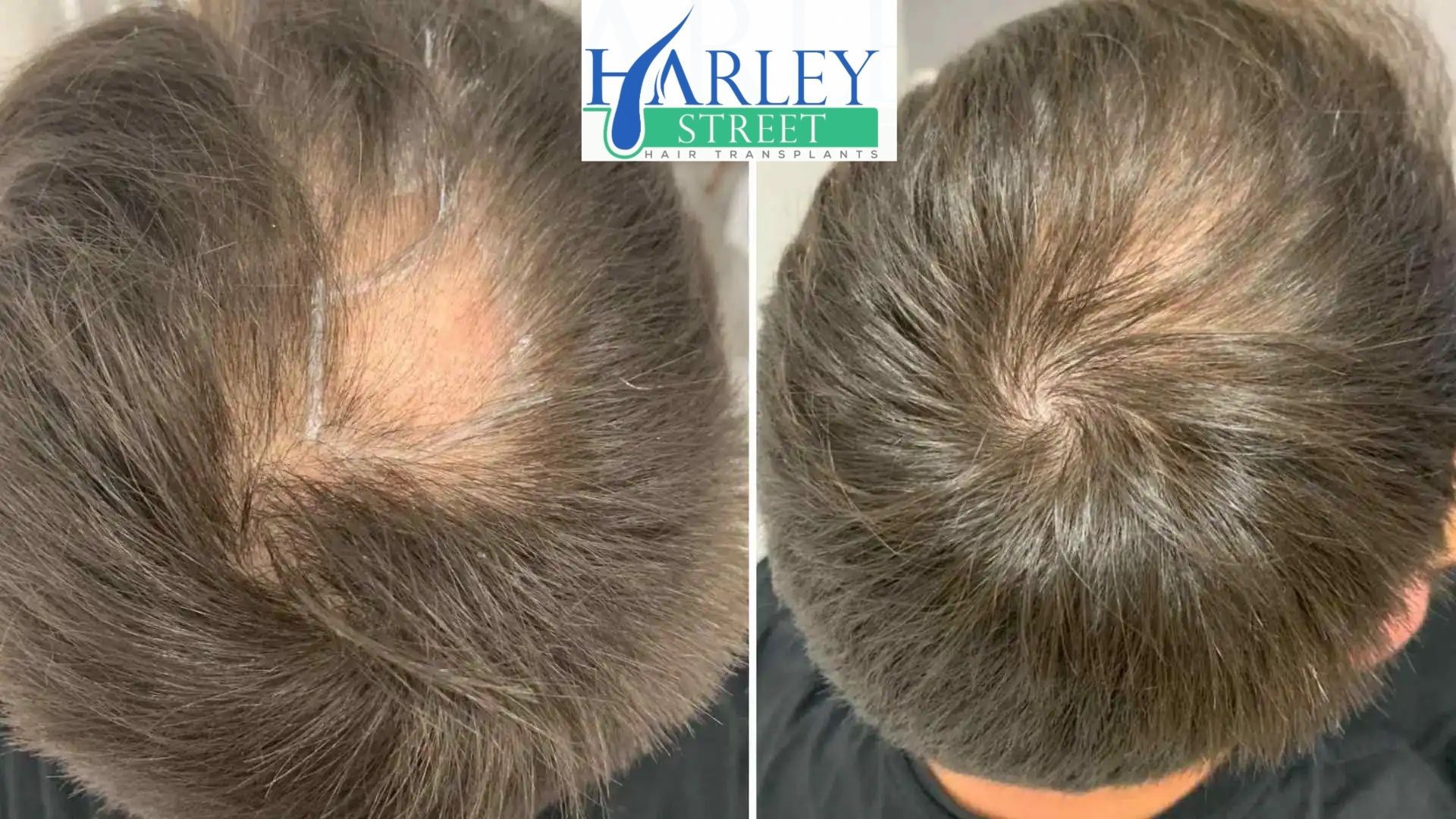
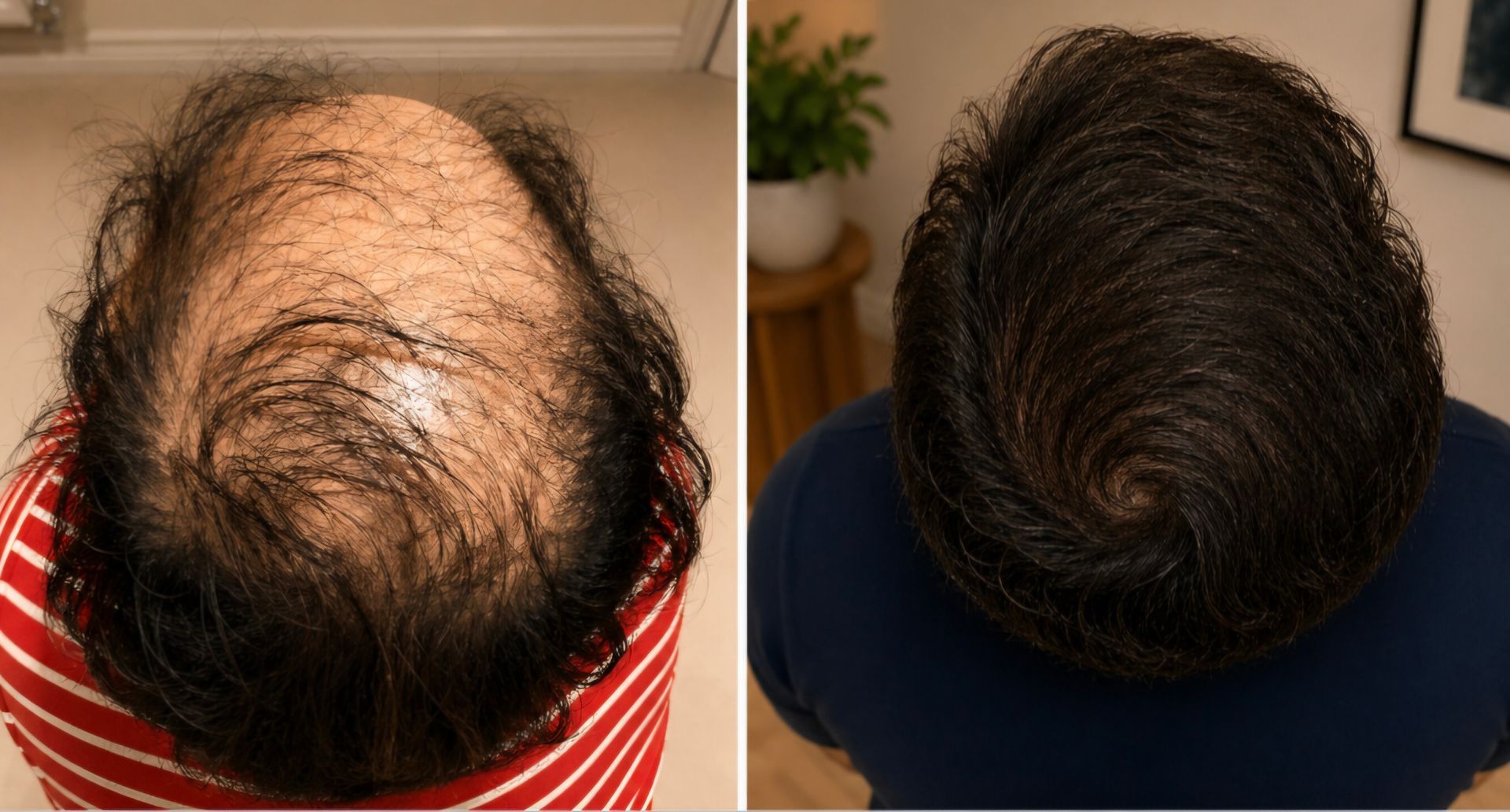
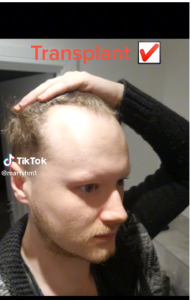
Older photographs can help show whether recession has progressed. For new comparisons, keep the lighting, angle and hair condition similar. A wet scalp under a bright ceiling light can appear much thinner than dry hair in softer light.
The Norwood scale describes common male patterns. It is a communication tool, not a test that predicts an exact graft count or proves the cause of loss.
Medication and other non-surgical choices
Topical minoxidil and prescribed finasteride may help some men with pattern loss. They have different precautions and adverse effects, and benefit generally requires continued treatment. A clinician or pharmacist should check suitability rather than assume that every man can use them.
Finasteride needs particular discussion of psychiatric and sexual adverse effects. Read the MHRA's current safety advice and discuss your history with the prescriber. Products described as natural also need scrutiny; the label does not establish effectiveness or safety.
A shorter cut, fibres, a hair system or no cosmetic treatment are valid choices. They can be considered alongside medical care where a scalp condition requires it.
Where transplantation fits
Surgery may improve selected areas when the diagnosis, donor supply and long-term plan are suitable. It moves existing follicles and does not stop all future thinning. Scarring, poor growth and an unsatisfactory result remain possible.
A consultation should discuss what can be covered, what may remain thin and how the design would work if loss progresses. The essentials of transplant surgery explains those decisions in more detail.
Questions and answers
Does a receding hairline mean I have high testosterone?
Not necessarily. Follicular susceptibility matters. Hairline appearance alone does not establish a hormone level or diagnose a hormonal disorder.
Can shampoo cure male pattern hair loss?
Shampoo can clean the scalp or treat particular scalp symptoms. Ordinary hair care does not reverse inherited follicular miniaturisation.
When should I seek help promptly?
Arrange assessment for sudden patches, rapid unexplained loss, pain, inflammation or scarring. Persistent gradual thinning can also be discussed before choosing treatment.