Blog Details
HOME > BLOG DETAILS
Discover DHI technique: advanced hair transplants explained
Many people assume all hair transplants involve the same basic process: remove some hair, make cuts, insert follicles. That assumption leads to poor decisions. DHI, or Direct Hair Implantation, is a fundamentally different approach that uses precision tools to place each follicle individually, without pre-made incisions. For anyone in the UK dealing with thinning hair or pattern baldness, understanding exactly how DHI works, what it can realistically achieve, and where its limits lie, is essential before booking any consultation. This article breaks it all down clearly.
Table of Contents
Key Takeaways
| Point | Details |
|---|---|
| DHI explained simply | DHI is an advanced hair transplant that uses a specialized pen to implant individual follicles with precision. |
| Direct vs. traditional methods | DHI differs from other techniques through direct implantation, resulting in less scarring and natural-looking hair. |
| Choose the right clinic | Success depends on choosing UK-regulated clinics and experienced surgeons over flashy marketing. |
| Not for everyone | Suitability for DHI depends on your hair and health; a proper consultation is essential. |
How the DHI technique works
DHI stands for Direct Hair Implantation. It is widely recognized as one of the most advanced hair restoration methods currently available. Unlike older transplant techniques that require surgeons to create recipient sites before placing follicles, DHI combines extraction and implantation into a more streamlined process.
Here is how the procedure typically unfolds:
- Consultation and design. The surgeon maps your hairline and identifies the donor area, usually the back and sides of the scalp where follicles are genetically resistant to balding.
- Local anesthesia. Both the donor and recipient areas are numbed. Most patients feel pressure rather than pain.
- Follicle extraction. Individual follicular units are removed one by one using a micro-punch tool, similar to the FUE (Follicular Unit Extraction) method.
- Loading the Choi Implanter Pen. Each extracted follicle is loaded directly into a hollow needle attached to the pen. This is where DHI separates itself from standard FUE.
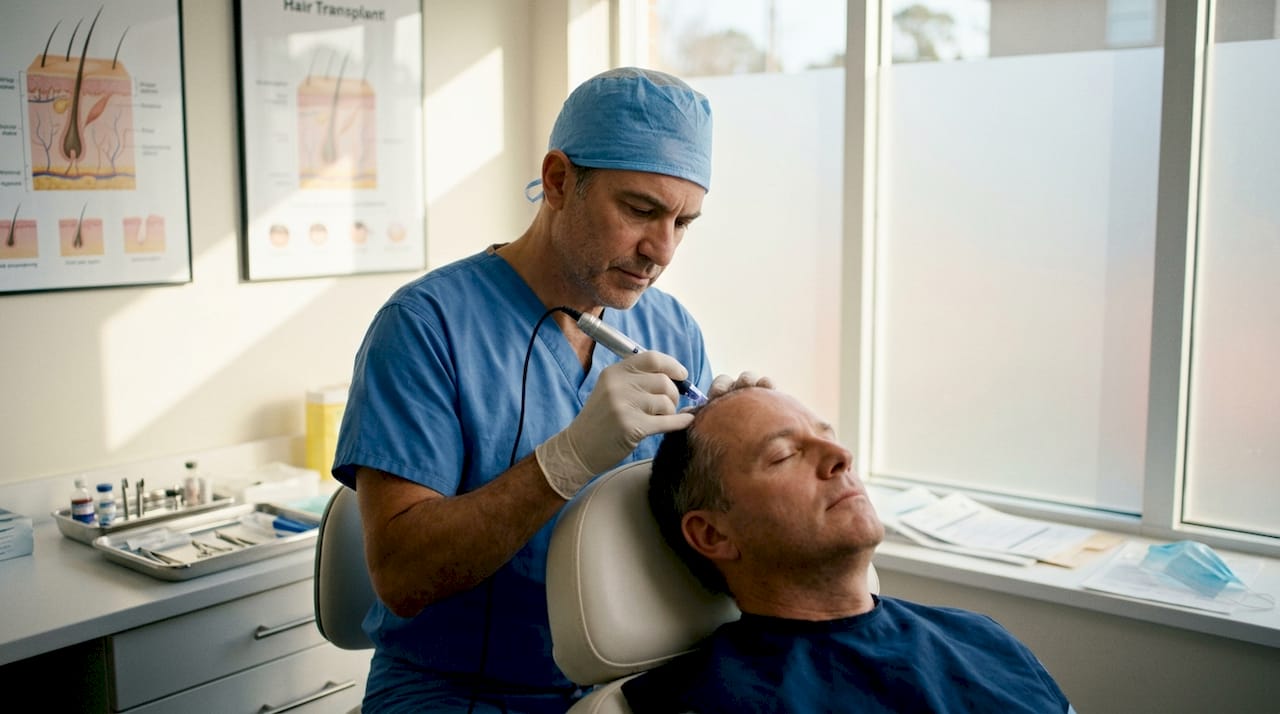
- Direct implantation. The surgeon uses the Choi Implanter Pen to puncture the scalp and deposit the follicle simultaneously. There are no pre-cut channels. The Choi Implanter Pen allows real-time control over the angle, depth, and direction of each graft.
- Post-procedure care. The scalp is cleaned and bandaged. Recovery instructions are provided.
The key advantage of this approach is precision. Because the surgeon controls placement in real time, the transplanted hair can be angled to match your natural growth pattern almost exactly. As Acibadem International notes, follicles are extracted and implanted in a single step, minimizing handling and time the graft spends outside the body. Less time outside the body means better graft survival rates.
Another important detail: DHI leaves no linear scar and requires no stitches. The micro-punch wounds are small enough to heal on their own within days.
Pro Tip: Always ask whether the doctor personally performs the implantation step. Some clinics allow technicians to handle the Choi Pen. Insist on direct surgeon involvement for the best outcome.
For a clearer picture of DHI standards in UK clinics , it helps to compare what leading London providers offer versus budget alternatives.
DHI vs. traditional hair transplant techniques
Now that you know how DHI works, it is useful to see why it stands out from other hair transplant methods.
DHI is technically a variation of FUE, but the delivery mechanism changes the experience and results significantly. Here is a direct comparison:
| Feature | DHI | FUE | FUT |
|---|---|---|---|
| Incision method | No pre-made channels | Pre-cut channels | Strip removal |
| Scarring | Minimal dot scars | Minimal dot scars | Linear scar |
| Recovery time | 7 to 10 days | 10 to 14 days | 2 to 3 weeks |
| Precision of placement | Very high | Moderate | Moderate |
| Graft handling | Minimal | Moderate | Moderate |
| Cost | Higher | Moderate | Lower |
| Best for | Density, hairline work | General restoration | Large area coverage |
As Acibadem International confirms, DHI is a variation of FUE but uses a specialized pen for direct implantation, which is what gives it the edge in precision.
FUT (Follicular Unit Transplantation) involves removing a strip of scalp from the donor area and dissecting it into individual grafts. It leaves a visible linear scar and requires stitches. Recovery is longer and more uncomfortable. FUT is generally used when a large number of grafts are needed in a single session.
Standard FUE removes follicles individually and places them into pre-cut channels in the recipient area. It is less invasive than FUT but still requires two separate steps: creating incisions and then inserting grafts.
Who benefits most from DHI?
- People targeting the hairline or temples where natural direction matters most
- Patients who want to add density to existing hair without shaving the entire scalp
- Those with early to moderate hair loss who want minimal downtime
- Anyone prioritizing natural-looking results over cost savings
If you are weighing transplant options in London, understanding these distinctions helps you have a more informed conversation with your surgeon.
Benefits and limitations of the DHI technique
With major differences compared, let us focus on the true strengths and limitations of the DHI method.
Key benefits of DHI:
- Natural-looking results. Real-time control over angle and depth means transplanted hair mimics your natural growth pattern closely.
- No visible scarring. No stitches or linear scars. The small punch wounds heal quickly.
- Shorter recovery. Most patients return to light activity within a week.
- Higher graft survival. Less handling and reduced time outside the body improve follicle viability.
- No need to shave the full head. DHI can often be performed without shaving the recipient area entirely, which matters to patients with existing hair.
Realistic limitations:
- Cost. DHI is typically more expensive than FUE or FUT because it is more labor-intensive.
- Session limits. Fewer grafts can be placed per session compared to FUT, which may require multiple procedures for extensive hair loss.
- Surgeon dependency. Results vary significantly based on the operator’s skill.
On that last point, it is worth being direct. No definitive empirical benchmarks prove DHI universally superior. Success rates vary by clinic and surgeon, not just by technique.
“The technology is only as good as the hands using it. Prioritize CQC-regulated clinics and direct doctor involvement over any marketing claim about a specific method.”
This is not a reason to avoid DHI. It is a reason to choose your provider carefully. Clinics offering UK doctor-performed hair restoration with full CQC (Care Quality Commission) registration give you a measurable standard of safety and accountability.
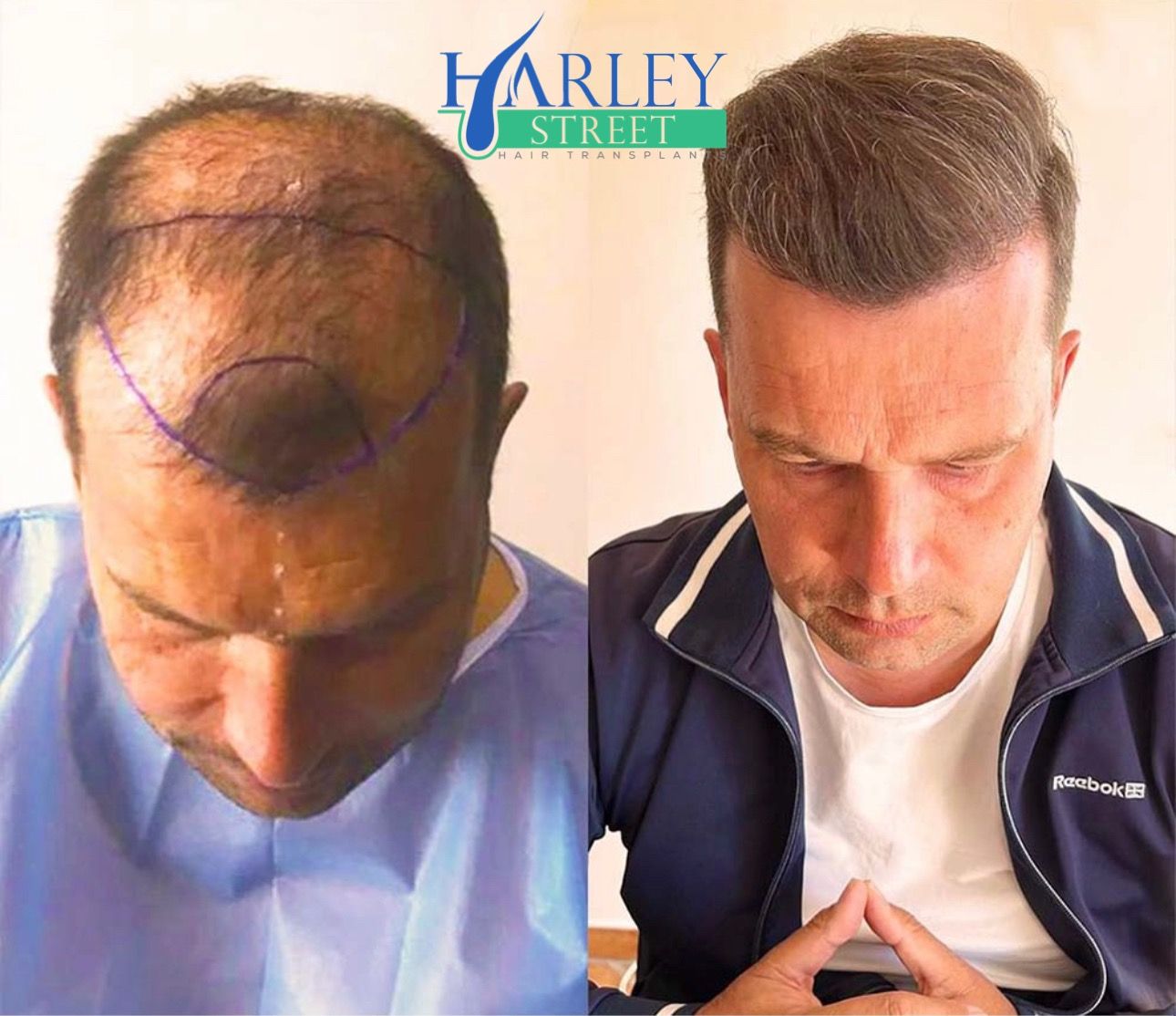
Pro Tip: Ask your surgeon to show you their personal before-and-after results, not just the clinic’s general gallery. The surgeon performing your procedure is what matters most.
Who is a good candidate for DHI?
Understanding if DHI is right for you can help target your next consultation.
DHI works best for a specific profile of patient. Follicles from the back and sides of the scalp are typically used as donor grafts, so having a healthy, dense donor area is essential.
You may be a strong candidate if you:
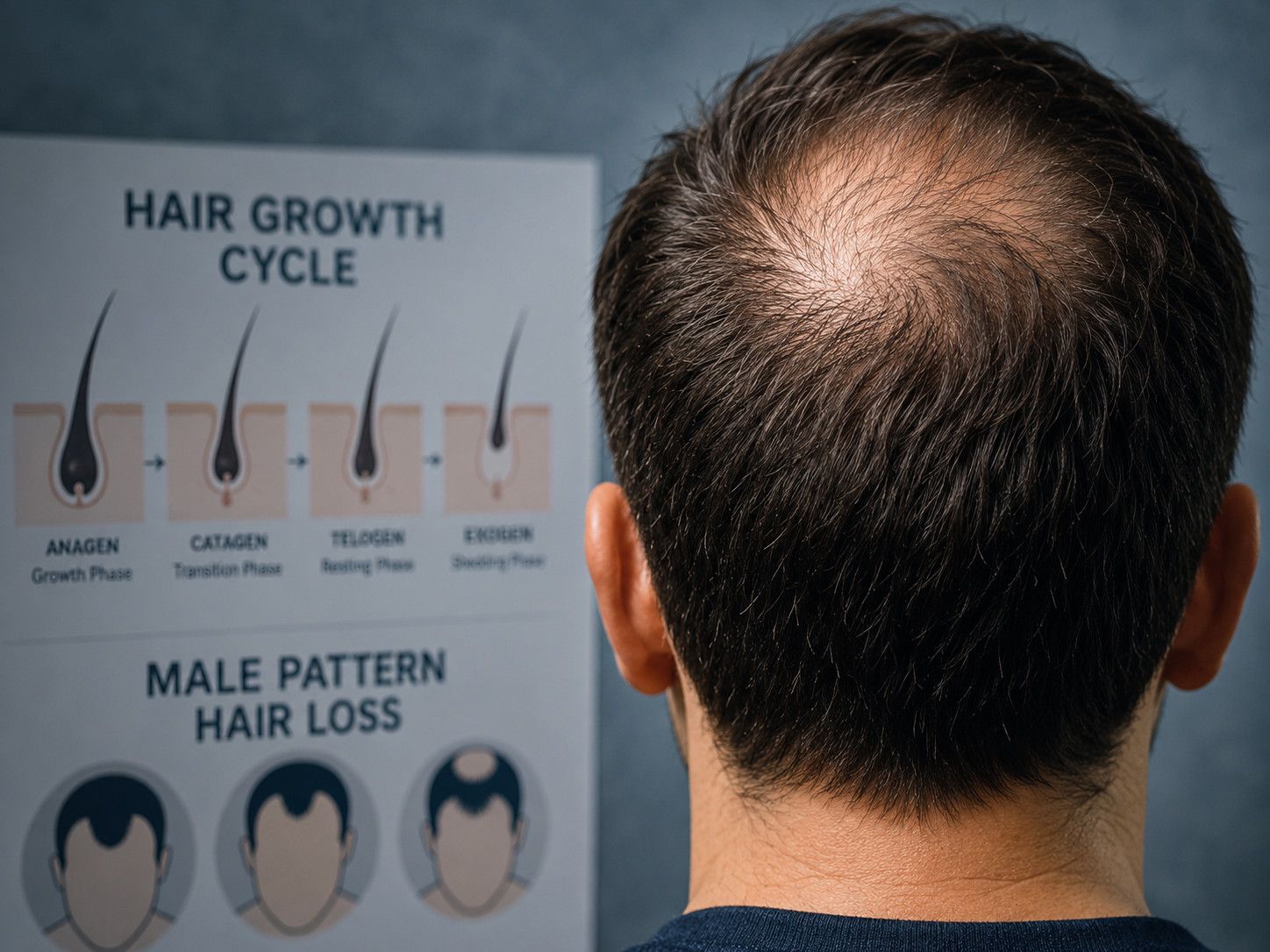
- Have androgenetic alopecia (male or female pattern hair loss)
- Have a stable donor area with sufficient follicle density
- Are between 25 and 65 years old with predictable hair loss patterns
- Want to restore hairline definition or add density to thinning areas
- Have realistic expectations about gradual regrowth over 12 months
You may not be an ideal candidate if you:
- Have diffuse hair loss across the entire scalp, including the donor area
- Are managing autoimmune conditions like alopecia areata
- Have active scalp infections or significant scarring in the recipient area
- Are very young with unpredictable future hair loss progression
| Criteria | Good candidate | Not recommended |
|---|---|---|
| Hair loss type | Pattern baldness | Diffuse or autoimmune |
| Donor area | Dense and healthy | Thin or depleted |
| Age range | 25 to 65 | Under 22 (usually) |
| Health status | Generally healthy | Active scalp conditions |
| Expectations | Realistic, gradual | Expecting instant results |
A thorough consultation with a qualified surgeon is the only way to confirm suitability. During that consultation, ask about graft estimates, expected density, and the number of sessions you may need. Seeking personalized hair transplant advice from an experienced team ensures you get answers specific to your scalp and goals.
What most clinics won’t tell you about DHI
Here is the part most promotional content skips. DHI’s results depend far more on the surgeon’s skill than on the technology itself. The Choi Implanter Pen is a tool. Like any tool, it performs only as well as the person using it.
Many UK patients get drawn in by flashy marketing, celebrity endorsements, or heavily discounted packages. The uncomfortable truth is that rates vary by clinic and surgeon, and prioritizing CQC-regulated UK clinics over marketing claims is the most reliable way to protect your investment and your health.
When you consult a clinic, ask directly: who performs the implantation step? Is the surgeon CQC-registered? Can you speak to previous patients? A reputable clinic will welcome these questions. One that deflects or oversells should raise concern.
Finding a trusted clinic means looking beyond the website and verifying credentials, surgeon involvement, and patient outcomes independently.
Your next step: Expert DHI consultations in London
If you are serious about DHI, the right move is a face-to-face consultation with a qualified, CQC-regulated surgeon who performs the procedure personally.
Harley Street Hair Transplant London offers expert consultations with experienced hair restoration surgeons who specialize in DHI and other advanced techniques. The team works with each patient individually, assessing donor area health, hair loss stage, and personal goals before recommending any treatment. You will receive honest, evidence-based guidance rather than a one-size-fits-all sales pitch. Book your free consultation today and take the first step toward permanent, natural-looking hair restoration with a team you can trust.
Frequently asked questions
Is the DHI technique painful?
DHI is performed under local anesthesia and most patients report minimal discomfort. The procedure is less invasive with no stitches, which also reduces post-procedure soreness.
How long does it take to see DHI transplant results?
Most patients notice visible hair growth within 4 to 6 months, with full results typically visible after 12 months as transplanted follicles complete their growth cycle.
Are DHI hair transplants permanent?
Yes. Follicles from donor areas are genetically resistant to balding, meaning transplanted hair typically grows for life with proper care.
How do I choose a safe DHI clinic in the UK?
Always choose a CQC-regulated clinic where a qualified doctor performs the procedure directly, and ask to see verified patient outcomes before committing.
Recommended