
Contents [show] [hide]
The lateral slit technique in hair transplantation
A lateral slit is a tiny opening made across the direction in which a transplanted hair will grow. Its width and angle help determine how the graft sits, how closely it can be placed beside its neighbours and how much scalp the hair will cover as it grows. This matters when planning hair density with a limited supply of donor hair.
Once the donor hair has been collected, the team examines the follicular units under magnification and prepares them for placement. The surgeon can make the openings in two orientations. A sagittal slit runs along the intended direction of growth. A lateral slit, also called a coronal slit, runs across it.
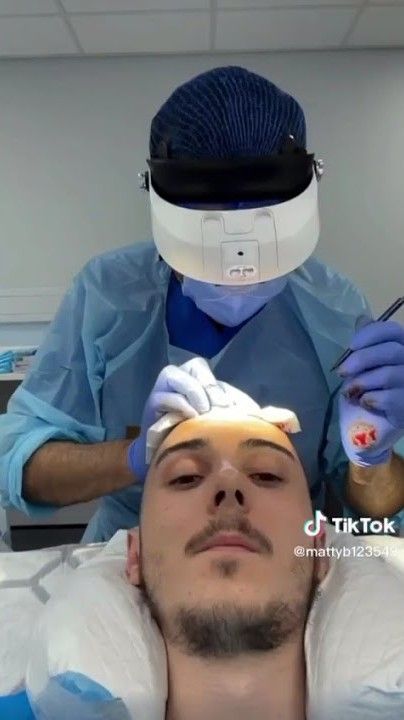
Sagittal grafting
In a sagittal opening, the long edge of the blade follows the direction of the neighbouring hairs. This is sometimes called a vertical slit. The name describes the cut as seen from above. The hair itself can still emerge at a shallow angle. If grafts stand too upright at the hairline, more scalp shows between the hairs and the front can look sparse. The surgeon therefore considers the angle as well as the direction of each opening.
Lateral grafting
- A lateral opening can position the hairs within a graft side by side across the scalp. Seen from the front, this arrangement can give an impression of greater density.
- The surgeon can set a shallow exit angle so that the growing hairs lie close to the skin. This is particularly important at the temples, where the surrounding hair tends to lie flat.
- Hairs that lie at a similar angle can overlap, like roof tiles. This ‘shingling’ effect helps cover the spaces between grafts and makes the scalp underneath less visible.
- At close range, the front edge of the hairline is where changes in direction are easiest to see. Using fine, single-hair grafts there and following the neighbouring hair can help the new growth blend in. At the crown, the direction changes around the whorl.
- With advanced hair loss, there may be too few donor grafts to restore every thinning area at the original density. The surgeon can plan where overlap will give the most visible coverage. Hair thickness and the number of hairs in each graft also affect the result.
- Where that coverage can be achieved with fewer grafts, more hair can be left in the donor area for later treatment if hair loss progresses.
Surgery day and two weeks later
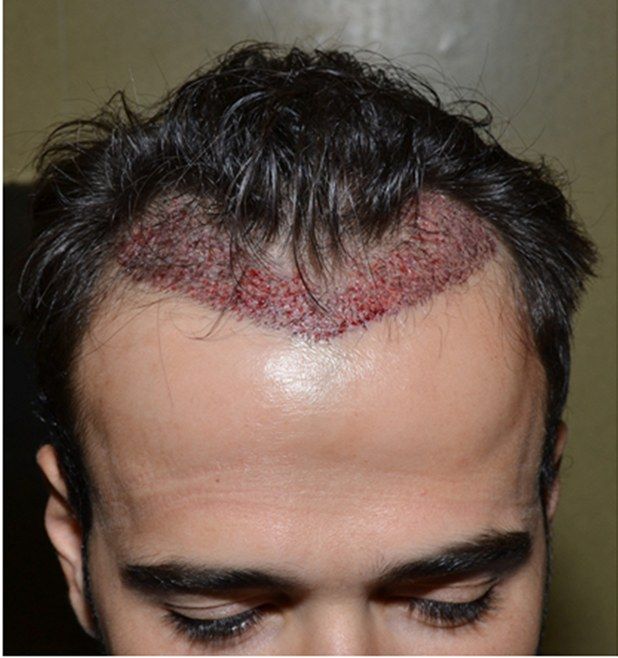
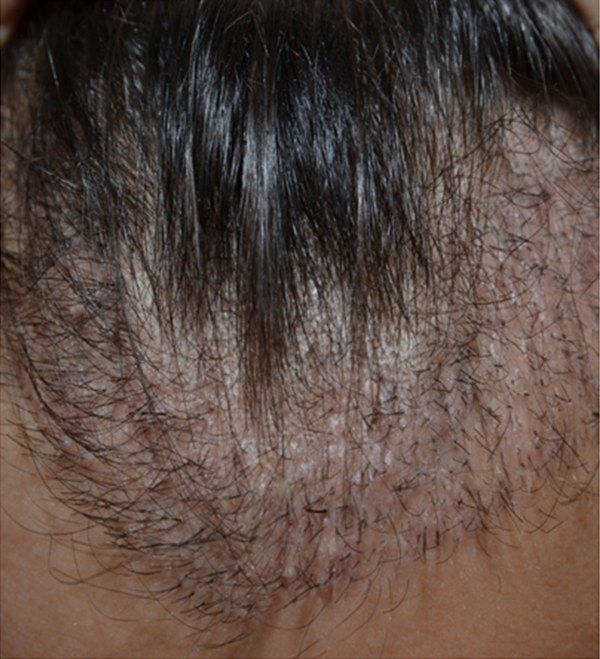
Photographs of one patient in a study that also used an experimental cell treatment. Cropped from figure 5 of Zanzottera and colleagues (2014), licensed under CC BY 4.0.
Custom-sized openings
A fine graft containing one hair needs less space than a graft containing several hairs. The surgeon selects a blade width and incision depth to suit the graft. A well-fitting site supports it at the planned angle and depth without squeezing it during placement.
Where hair is already growing, there is less room to work. Small, carefully placed openings help the surgeon work between existing follicles and limit disruption to the surrounding tissue and its blood supply. This matters for graft survival and for the hairs already present, which can temporarily shed after surgery. Matching the openings to the grafts is one part of achieving coverage that blends with those existing hairs.
London consultations
To discuss graft placement at your hairline or crown, request a virtual consultation or contact our London team below.
Harley Street Hair Transplants22a Harley Street
London W1G 9PF