Hairline feminisation
A feminising plan may soften frontal recession, restore temple areas, create a more rounded facial frame or lower selected parts of the hairline where donor supply allows.
View Hairline RestorationGender-affirming hair restoration in London
Gender-affirming hair restoration may include hairline feminisation, temple restoration, scalp density improvement or beard and facial-hair restoration. Every plan should reflect the patient’s individual goals, donor supply, facial proportions, hair-loss pattern and long-term needs.
Personalised restoration
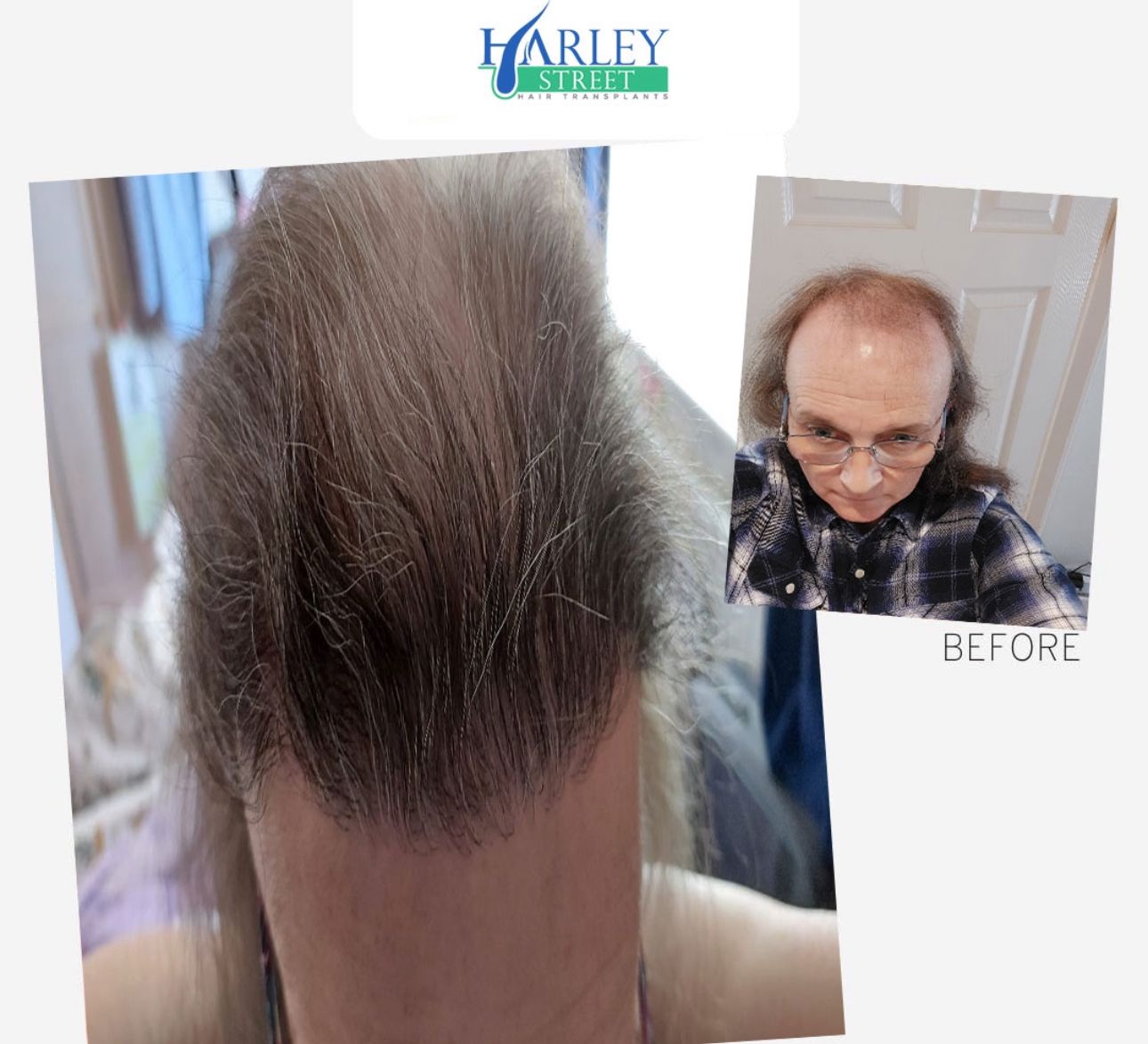
Gender-affirming hair restoration is planned around the appearance the patient wishes to create rather than applying one standard hairline or facial-hair design. The treatment may involve the frontal hairline, temples, mid-scalp, crown, sideburns, moustache, beard or jawline.
A feminising plan may soften frontal recession, restore temple areas, create a more rounded facial frame or lower selected parts of the hairline where donor supply allows.
View Hairline RestorationTreatment may address previous pattern hair loss, frontal thinning, mid-scalp thinning or crown loss. The plan must account for existing hair and possible future progression.
View Crown RestorationBeard, moustache, sideburn and jawline restoration may be considered for selected patients seeking stronger or more even facial-hair coverage.
View Beard TransplantSuitability before surgery
Suitability depends on donor strength, scalp condition, medical history, hair-loss stability, treatment area, graft requirements and whether the desired outcome is realistic for the available donor supply.
Surgeon-led assessment
Planning should assess the donor area, hair calibre, curl pattern, facial proportions, existing hair loss, treatment goals, medical history, expected density, recovery and long-term graft requirements.
The written treatment plan should identify the method, estimated graft requirement, treatment area, expected limitations, procedure location, total cost, recovery instructions and clinician responsibilities.
Transfeminine hairline planning
A feminising hairline is not created by drawing the same rounded line on every patient. Design should respond to facial structure, existing recession, donor supply, age, hair calibre and the patient’s preferred appearance.
Selected areas may be lowered or softened to reduce visible recession and create a more balanced frame around the upper face.
Temple work is highly sensitive to graft angle, direction and density. Poor placement can look unnatural even when growth is successful.
Larger areas may require staged treatment rather than excessive graft use in one procedure. The first result should mature before further density is considered.
Transmasculine facial-hair planning
Facial-hair restoration may be considered when natural beard growth is limited, patchy or uneven. Grafts are generally obtained from the scalp donor area and placed to follow the planned facial-hair direction.
Treatment stages
The exact procedure depends on whether the plan concerns the frontal hairline, temples, scalp density, crown or facial hair.
The consultation reviews your preferred appearance, treatment priorities, hair-loss history, medical background, donor area and expectations.
Donor density, hair calibre, curl pattern, previous treatment, scalp health and possible future hair loss are assessed before graft numbers are proposed.
The hairline, temple, scalp or facial-hair design is planned around facial balance, natural direction, realistic density and the available donor supply.
Grafts may be obtained using FUE, DHI-style planning or selected FUT treatment depending on suitability.
Follicular units are placed into the planned area according to the required angle, direction, spacing and distribution.
Instructions should cover graft protection, washing, sleeping, exercise, swelling, scabbing, donor care, shedding and progressive growth.
Treatment comparison
A technique should be selected because it suits the donor area and treatment plan—not because one method is marketed as automatically better for every patient.
| Option | How it may be used | Important planning point |
|---|---|---|
| FUE | Individual follicular units are extracted for selected hairline, scalp, temple or facial-hair restoration. | Extraction must be distributed carefully to protect the donor area. |
| DHI | Usually combines FUE-style harvesting with implanter-device placement. | It may suit selected visible areas but is not automatically superior to standard FUE planning. |
| FUT | A strip of donor scalp is divided into follicular-unit grafts. | It may be discussed in selected cases but leaves a permanent linear donor scar. |
| Beard transplant | Donor grafts are placed into beard, moustache, sideburn, chin or jawline areas. | Grafts used for facial hair reduce the donor supply available for future scalp restoration. |
| PRP | A non-surgical option that may be discussed for selected thinning areas where follicles remain. | PRP does not recreate a lost hairline or replace follicles that are no longer present. |
Healing and gradual growth
Recovery depends on the harvesting method and whether treatment involves the scalp, hairline or facial-hair area. A visible healing phase should be expected.
Personalised quotation
Cost should be confirmed after consultation, donor-area assessment and treatment design. Hairline, scalp and facial-hair cases can require very different graft numbers and surgical plans.
Common questions
It is personalised hair restoration planned around gender-affirming appearance goals. It may involve hairline feminisation, temple restoration, scalp density improvement or beard and facial-hair restoration.
Selected patients may be suitable for hairline feminisation involving frontal reshaping, temple restoration or softening of recession. The design depends on facial proportions, donor supply, existing hair loss and realistic density.
Selected patients may be suitable for beard, moustache, sideburn, chin or jawline restoration. Donor grafts usually come from the scalp and must be balanced against possible future scalp-hair needs.
Neither method is automatically better for every patient. The recommendation depends on donor quality, treatment area, hair characteristics, graft numbers, scarring preferences and the planned placement method.
FUT may be discussed for selected patients, but it involves strip harvesting and leaves a permanent linear donor scar. Suitability requires individual assessment.
No. Growth, density, healing, scar appearance and the final result vary between patients. The consultation should explain likely limitations and realistic goals.
Larger hairline, scalp or facial-hair plans may require staged treatment. Further surgery should only be considered after healing, growth and remaining donor supply have been assessed.
Cost depends on treatment area, estimated graft numbers, donor quality, chosen method, complexity and whether staged treatment is required. A personalised written quotation should follow assessment.
You can request a private consultation to discuss your treatment goals, preferred name and pronouns, donor area, medical history, costs, recovery and realistic expectations.
Contact Harley Street Hair Transplants or call 020 8088 1333 to request a consultation at the London clinic and discuss your individual restoration goals.
Useful next pages
Request a private consultation to review your preferred hairline, scalp or facial-hair goals, donor suitability, treatment options, costs, recovery and realistic long-term planning.
