Follicular Unit Extraction in London
FUE Hair Transplant London
FUE stands for Follicular Unit Extraction. It is a hair transplant method where individual follicular-unit grafts are taken from the donor area and placed into thinning or balding areas. At Harley Street Hair Transplants, FUE may be considered for hairline restoration, crown hair transplants, beard transplants, eyebrow transplants and selected scar-repair cases.
FUE planning should start with donor-area assessment, suitability and realistic expectations.
What is an FUE hair transplant?
An FUE hair transplant removes individual follicular units from the donor area, usually at the back and sides of the scalp, before placing those grafts into the planned recipient area. The aim is to move hair from a stronger donor zone into areas affected by thinning or hair loss.
FUE avoids the linear strip scar associated with FUT hair transplant surgery, but it is not scarless. FUE creates many small round extraction marks in the donor area, so careful donor planning is still essential.
Who may be suitable for FUE?
FUE may suit patients with:
- receding hairline or temple recession;
- crown thinning or crown baldness;
- stable male pattern hair loss;
- selected female hair-loss patterns;
- patchy beard growth;
- eyebrow thinning or over-plucking history;
- selected scar-repair requirements.
FUE may not be suitable if:
- the donor area is weak or overharvested;
- hair loss is unstable or rapidly progressing;
- the scalp has untreated inflammation or disease;
- expectations are unrealistic for the available grafts;
- medical history makes surgery unsuitable;
- non-surgical treatment should be tried first.
A consultation should assess your hair transplant donor area, treatment goals and long-term hair-loss pattern before recommending surgery.
How the FUE procedure works
Hairline or treatment-area design
The treatment area is planned before surgery. A hairline transplant should be age-appropriate, natural-looking and designed with future hair loss in mind. Crown work needs careful graft management because the crown can use many grafts.
Donor graft extraction
Individual follicular units are extracted from the donor area. The aim is to spread extraction carefully so the donor does not look patchy or overharvested.
Graft sorting and placement
Grafts are checked and placed into the recipient area at the planned angle, direction and density. Correct placement is especially important for the frontal hairline, temples, eyebrows and beard.
Aftercare and recovery
Aftercare instructions should cover sleeping, washing, swelling, scabbing, exercise, shedding and when to contact the clinic. Read the aftercare guide and hair transplant timeline for general guidance.
FUE vs DHI vs FUT
FUE, DHI and FUT can all be used for hair restoration, but they are not the same. The right choice depends on your donor area, graft requirement, hair type, treatment area and long-term plan.
| Technique | How it works | Key point |
|---|---|---|
| FUE | Individual follicular units are extracted from the donor area and implanted into thinning areas. | No linear strip scar, but still creates small round extraction scars. |
| DHI | Usually combines FUE-style extraction with implanter-device placement. | Can suit selected cases but is not automatically better for everyone. |
| FUT | A strip of donor scalp is removed and dissected into follicular-unit grafts. | Can provide graft numbers in selected cases but leaves a linear donor scar. |
What can FUE treat?
Hairline recession
FUE can be used for hairline transplant planning where the donor area is suitable and the design is age-appropriate.
Crown thinning
A crown hair transplant needs realistic density planning because the crown can take many grafts and may mature slowly.
Temple recession
Temple hair transplant planning must consider angle, direction, facial balance and future loss.
Beard gaps
A beard transplant can use FUE grafts for selected patients with patchy facial hair or poor cheek/jawline density.
Eyebrow thinning
An eyebrow transplant is highly design-sensitive and requires careful angle control.
Scar repair
Hair transplant scar repair may be possible in selected cases after assessment of scar tissue and blood supply.
FUE donor area planning
The donor area is one of the most important parts of FUE planning. Donor hair is limited. Once grafts are removed, they do not normally regrow in the same extraction sites, so the donor area must be used carefully.
A good donor plan considers:
- donor density and hair calibre;
- safe donor zone boundaries;
- future hair loss risk;
- possible future procedures;
- haircut length and scar visibility;
- whether graft numbers are realistic.
Why overharvesting matters
Overharvesting can leave the donor area looking thin, patchy or uneven. FUE should not be judged only by how many grafts can be removed in one session. It should be planned around what the donor area can safely support.
Read more in the donor area guide.
FUE recovery timeline
Most patients should expect a visible healing phase, followed by shedding and gradual regrowth. The result should be judged over months, not days.
First 2 weeks
Healing, redness, swelling, scabbing and donor-area tenderness may occur. Follow your washing and sleeping instructions carefully.
Weeks 3–8
Shedding can happen. This may make the treated area look thinner again, but it does not automatically mean the grafts have failed.
Months 3–12+
Early growth may begin from several months onwards. Hairline results often mature earlier than crown results, which can take longer.
FUE hair transplant cost
Your current FUE page lists FUE cost from £3,000. The final cost depends on the treatment area, graft numbers, donor quality, complexity and whether the case involves hairline, crown, beard, eyebrow or scar repair planning.
Cost depends on:
- number of grafts required;
- size of the treatment area;
- hairline, crown or combined work;
- donor area quality;
- procedure complexity;
- aftercare and follow-up requirements.
View costs and booking options
Visit the hair transplant cost page for pricing information, or read about the no-deposit scheme if you want to understand booking and payment options.
Before and after FUE results
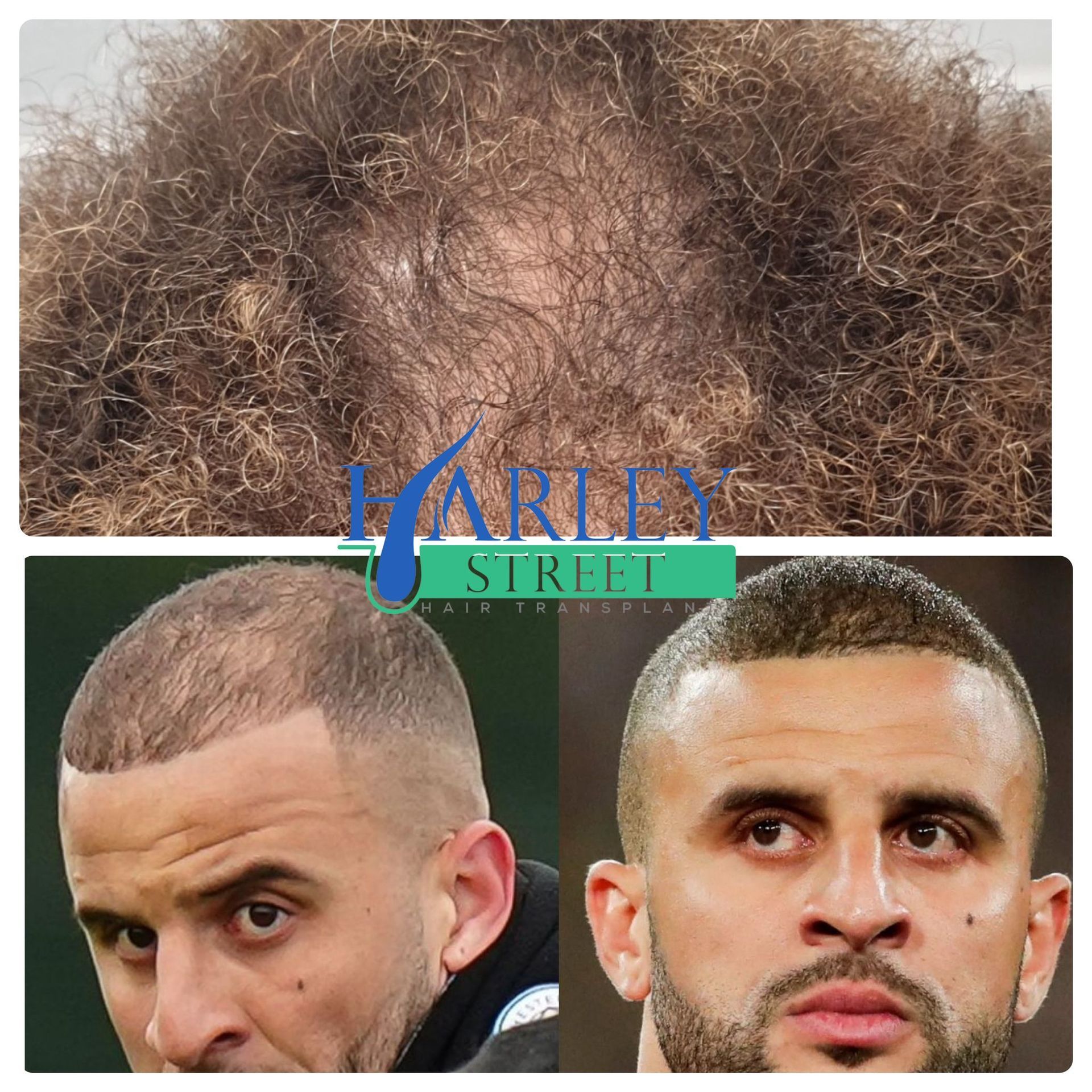
Before and after examples can help patients understand the type of improvement that may be possible, but they should not be treated as a guarantee. Results vary depending on donor area, graft survival, hair type, native hair, aftercare and the original plan.
Use results properly
Look for cases with similar hair type, hair-loss pattern, graft numbers and treatment area. A crown result should not be compared directly with a small frontal hairline case.
View gallery
Visit the before and after results page to review examples before booking a consultation.
